Why Send Tortoises Around the Moon?
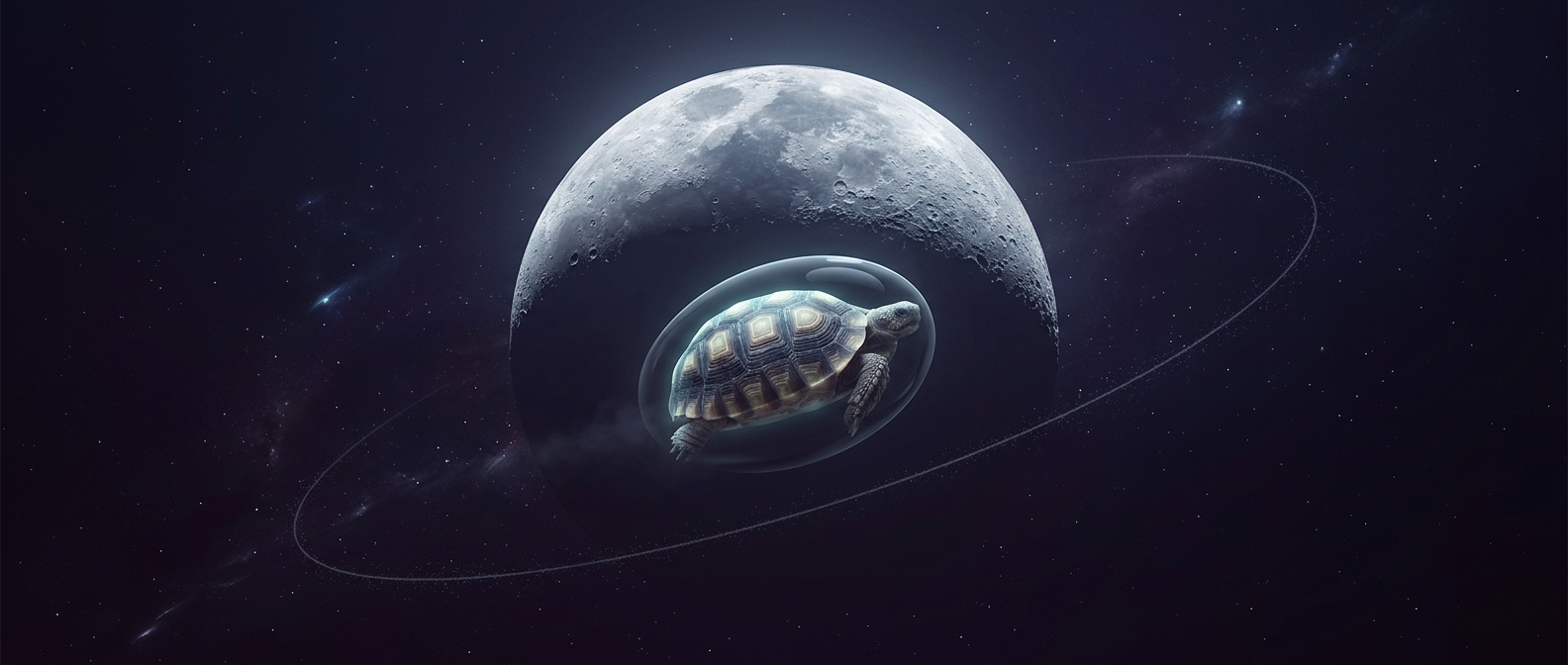
Before putting people on a lunar trajectory, engineers needed to learn what the trip might do to a living body. Zond 5 offered a test without a crew: its tortoises and other small organisms rode inside an uncrewed spacecraft that traveled around the Moon and headed back to Earth.
The journey exposed them to stresses that a ground test could not reproduce all at once: a powerful launch, days in space, weightlessness, and the return through Earth’s atmosphere. The animals served as biological passengers, helping show whether a living organism could make the full trip and come back alive. They were not there to explore the Moon; they were there to test the spacecraft’s ability to carry life.
A Small Payload, a Large Step
The passenger list included wine flies and mealworms as well as tortoises. Using small animals let the mission carry living cargo without the life-support systems and safety provisions a human crew would require. That made the flight a practical rehearsal of the route, not a substitute for all the questions that human spaceflight would raise.
Zond 5 returned to Earth after its lunar loop. Its unusual cargo made the mission’s purpose tangible: before a person could follow that path, a spacecraft had to prove it could take living passengers out around the Moon and bring them home.