Why a Small Target Can Be Easier to Spot Up Close
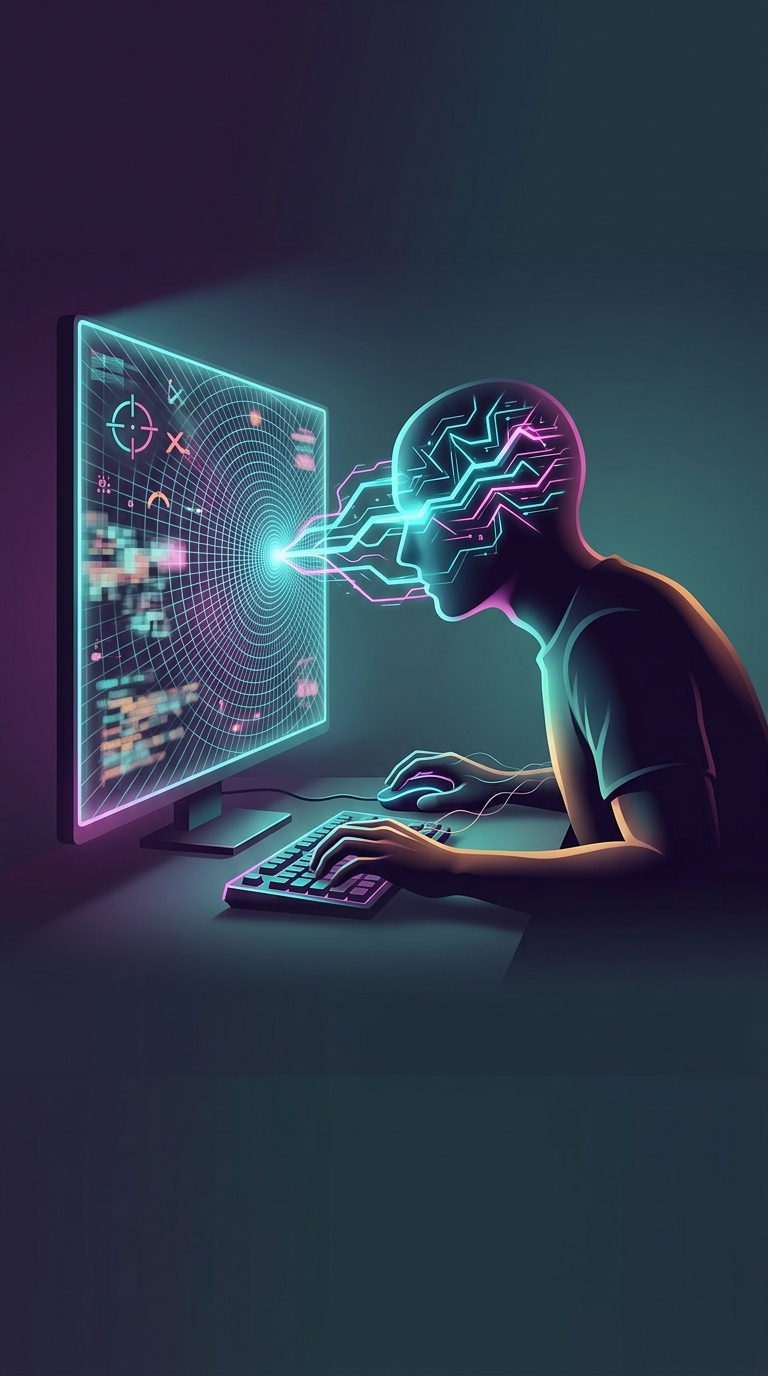
A player sitting close to a monitor makes everything on-screen occupy a larger part of their field of view. An enemy that appears only a few pixels tall from farther away takes up more of the player’s vision when they move closer, making subtle movement or a brief glimpse easier to notice. The monitor has not gained detail; the image simply looks larger to the viewer.
That can matter in a first-person shooter, where a player may have only a moment to recognize a shape, track a moving opponent, and aim. Sitting close can also make the game feel more immersive and help the player concentrate on the central action.
The Tradeoff: Detail Versus Overview
Getting closer is not an unqualified advantage. A screen that fills more of the visual field can be harder to take in all at once. Players may find it more difficult to notice activity near the edges, and a cramped posture can become uncomfortable. The best distance depends on the monitor, the game, and the player’s preferences—not on a universal professional rule.
Competitive players also often use similar equipment and settings repeatedly. Familiarity can make a chosen screen position feel natural: their eyes and attention are tuned to the size and placement of the game image. That consistency may matter as much as the distance itself.
A Personal Setup, Not a Secret Technique
The close posture is therefore a practical compromise. It can make opponents seem larger and easier to read, but it does not improve reaction time by magic or reveal information that is absent from the display. A player who moves closer gains a more prominent view of the action while giving up some visual overview—one reason professional setups can look intense without being identical.