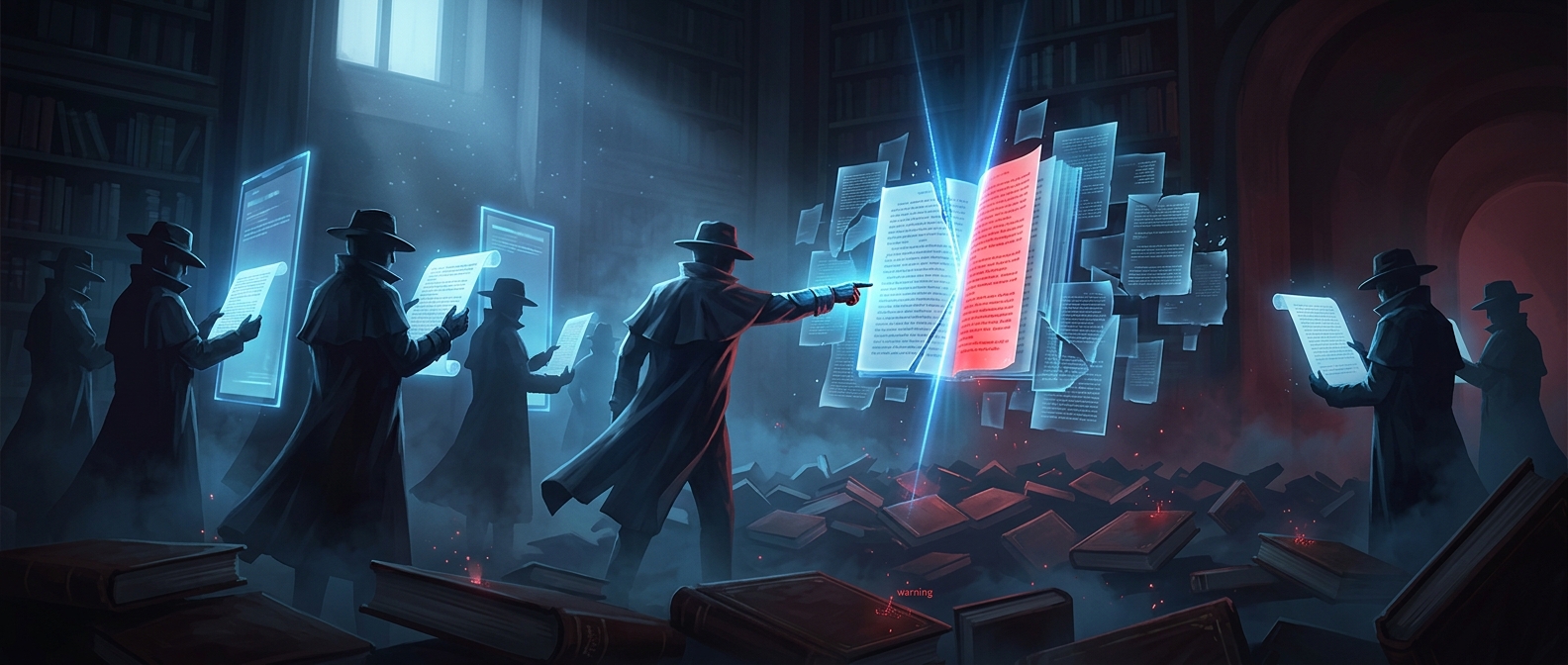
Familiarity Makes Repetition Easier to Notice
A reader who moves through many romance novels builds a mental library of recurring scenes, expressions, and turns of phrase. A declaration made at a familiar kind of emotional crisis may feel conventional; a distinctive sentence or longer passage that appears in another book can trigger a different reaction: I’ve seen these exact words before.
That recognition is especially useful because copied writing can be hard to spot when a book is considered on its own. Readers compare passages against what they remember, then point to the overlap so it can be examined more closely.
The Difference Between a Trope and a Copy
Romance often returns to shared story ingredients—such as a forced-proximity setup or a rivals-to-lovers relationship. Those familiar patterns are not, by themselves, evidence of copying. The more telling clue is specific language: an unusual sequence of words or a passage whose phrasing closely matches another work.
A reader’s memory is a lead, not a final verdict. Similar wording can have innocent explanations, and determining what happened requires comparing the actual texts and considering their context. But a well-placed report can help direct that comparison, particularly when the reader identifies both passages rather than relying on a vague sense of déjà vu.
The practical consequence is that a large, engaged readership can act as an informal early-warning system: the person who notices a suspicious match may be someone who has simply read enough to remember where those words appeared before.