A Familiar Face Is a Publishing Shortcut
A romance cover has a fast job: signal the kind of story inside and persuade a browsing reader to pause. A recognizable model can help do both. If a publisher has already used a face successfully, bringing that model back reduces the uncertainty of choosing a new image—and gives the art team a reliable starting point under a deadline.
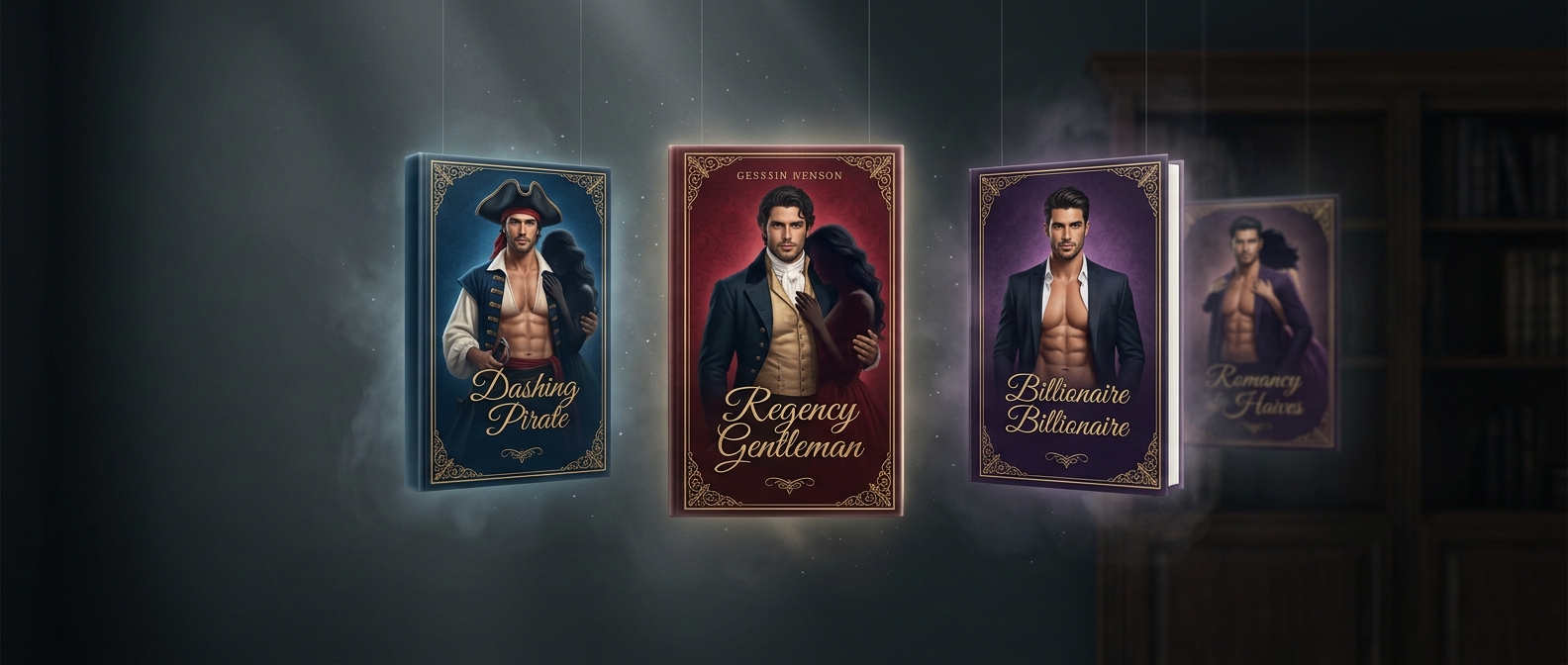
The cover is usually built around a particular book, not a single image reused unchanged. Designers can alter the model’s clothes, pose, lighting, background, and surrounding artwork to match the setting. A kilt and misty landscape suggest a Highland romance; a sharp suit and glass tower suggest a wealthy modern hero. The same face can be recast because the visual cues around it carry much of the genre and era.
Why the Roster Stays Small
Publishers and cover designers work with stock-photo libraries and other image sources, where a limited set of models may be available in poses that fit the story. A model’s expression, angle, or hand position can matter: the image has to leave room for the title and fit the cover’s layout. A familiar model may also have images that are easier to license or adapt than a newly sourced alternative.
That makes reuse a practical tradeoff. It saves time and helps maintain a recognizable look, but readers who notice the pattern may see one hero turning up in wildly different worlds. The face is the constant; styling and context do the storytelling. On a romance shelf, a few changes in costume and setting can turn the same portrait from historical warrior to billionaire—or even space pirate.