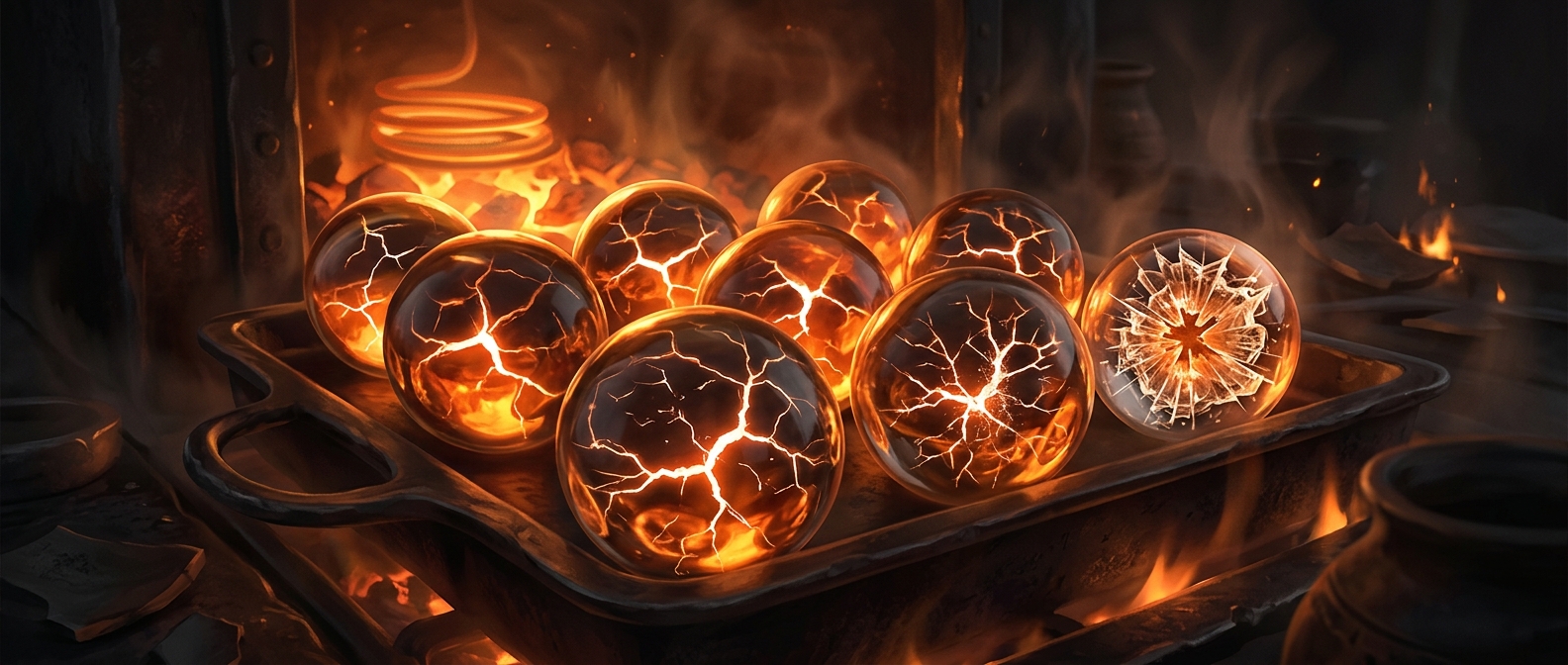
A sudden chill creates the pattern
A crackle marble begins as hot glass. When it is plunged into cold liquid, its surface loses heat much faster than its center. The outside stiffens first, while the glass inside remains hot and continues to cool afterward.
As the center cools, it contracts. But it is surrounded by a surface layer that has already cooled and hardened. That mismatch puts the glass under uneven stress, producing fine fractures within the marble. The outer layer can remain unbroken, so the cracks are trapped inside rather than opening into jagged edges.
The cooling rate matters
The pattern comes from thermal shock: stress caused by a rapid temperature change. A gradual cool-down gives the glass more time to shrink evenly; a sudden plunge creates a steep temperature difference between the surface and the core. The process has to leave the outer shell intact while allowing fractures to form underneath.
That is why the cracks look suspended inside the glass. Light passes through the fractured center and catches its many surfaces, making the pattern visible from outside even though the marble’s exterior remains smooth.