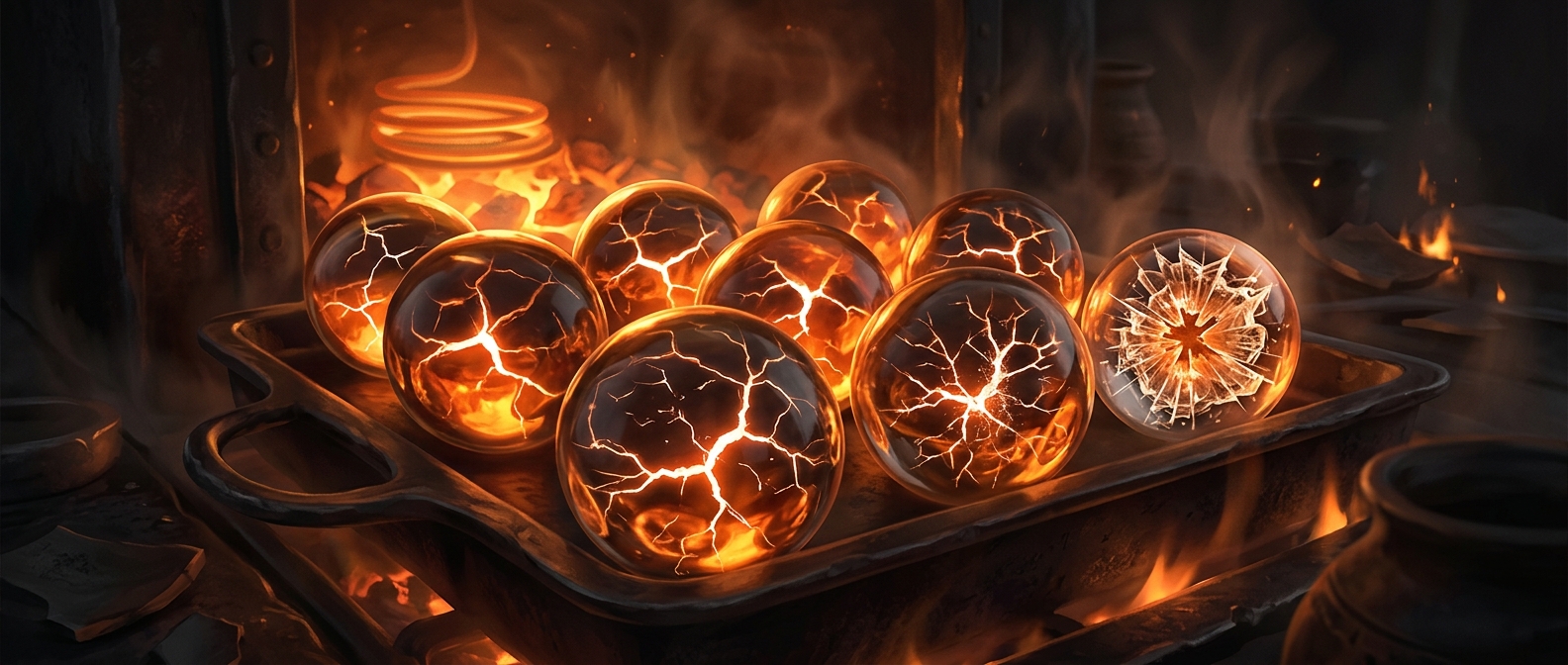
What Pompeii’s Tiny Spheres Can—and Can’t—Tell Us
Small, rounded objects found among Pompeii’s ruins resemble marbles, offering a tangible clue to play in the Roman world. Their survival is striking because ordinary play often leaves little behind: a game may be remembered in writing, but the pieces people handled can be lost, broken, or mistaken for debris.
From object to game
A sphere is suggestive, not a complete rulebook. Archaeologists can study its material, shape, wear, and where it was found to consider whether it was made or used as a plaything. But a small ball might have served other purposes, too. Without a clear set of matching pieces or a written description tied to the object, its exact use—and the rules of any game—may remain uncertain.
That distinction matters. The finds support the idea that people in Roman Pompeii played with small spherical pieces; they do not, by themselves, show that the game worked exactly like modern marbles. Similar objects can invite familiar comparisons while belonging to games with different aims or methods.
A small trace of everyday life
Pompeii’s destruction buried objects in place, preserving details of daily life that usually disappear. A modest plaything can therefore widen the archaeological picture beyond public buildings and elite possessions: it points toward leisure at an ordinary, human scale. The spheres cannot tell us who played or what they called the game, but they leave behind a concrete reminder that play, too, was part of life in the Roman city.