A Parlour Game Where Sound Matters More Than Meaning
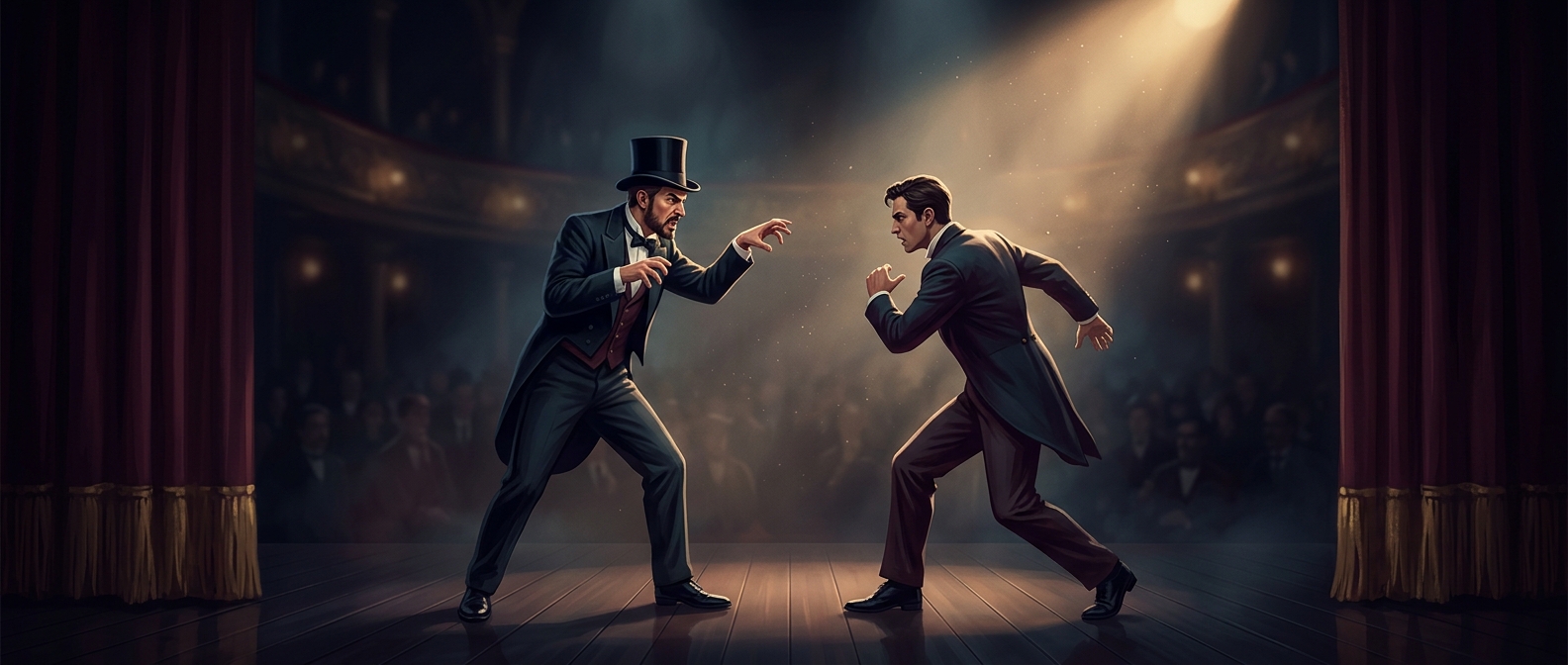
The trick is to separate a word’s sound from its meaning. One player silently acts out a word that rhymes with a hidden answer; the others try to name it. A guess can fit the mime perfectly and still fail if it does not share the answer’s ending sound.
For instance, if the secret answer rhymes with “light,” an actor might mime flying a kite. The audience has to identify the acted-out word, not simply guess another word that rhymes with the secret one. That makes each round a two-step puzzle: read the gesture, then check the word’s sound.
The Hiss Is Part of the Rules
A wrong rhyme is not just an incorrect answer—it gives the room a cue to react. Hissing makes the sound-based rule audible and turns a private mistake into a comic public moment. The audience is more than a group of guessers: its response helps police the boundary between a plausible interpretation of the mime and a word that actually belongs in the rhyme pattern.
That small rule changes how players perform. A mime must be clear enough to suggest one particular word, while guessers must resist jumping from a gesture straight to the hidden answer. The game’s fun comes from watching those two kinds of uncertainty collide: what is the actor showing, and does the guessed word really rhyme?