A word became a puzzle in parts
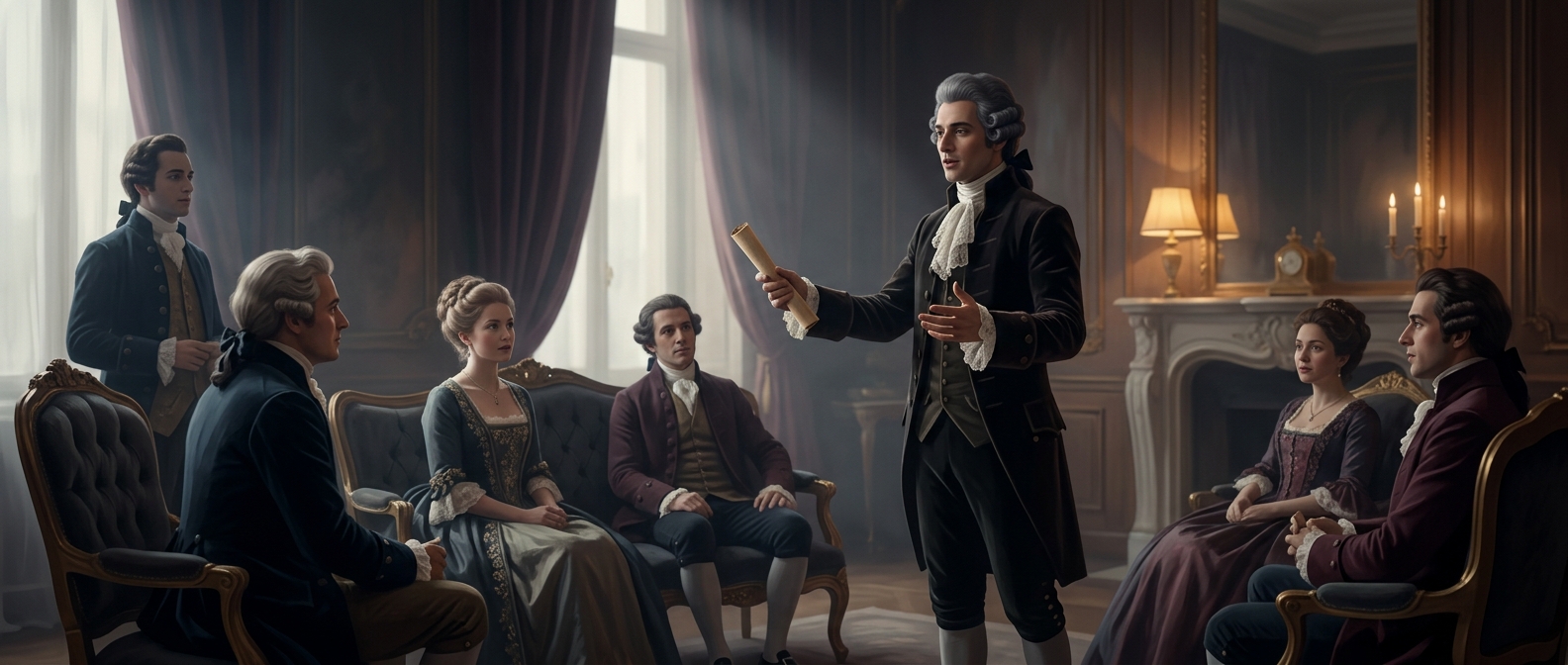
In the parlor version of charades, the answer was not acted out. Players used a short poem or riddle to lead listeners toward a word—often by hinting at its syllables one at a time, then at the word as a whole. A clue might describe a sound or meaning indirectly, so solving depended on recognizing a chain of verbal hints rather than guessing from a gesture.
That structure suited a literary party game: the person presenting the riddle could display wit through carefully chosen lines, while everyone else tested interpretations aloud. The entertainment lay partly in the answer and partly in the detour—the moment a phrase that sounded like one thing turned out to point toward another.
From wordplay to pantomime
The familiar acting version keeps the same basic task: communicate a hidden word without simply saying it. But it shifts the burden from language to bodies. Instead of composing or interpreting a poetic clue, a player breaks the answer into gestures that others can read.
That change made charades less dependent on verbal cleverness and easier to play as a group performance. The old riddle’s central idea survived: an answer is concealed, then approached through smaller clues. What changed was the medium—from lines of verse to a raised eyebrow, a mimed action, or a silent scene.