A Picture Hidden in Two Sets of Clues
A nonogram turns a small image into a deduction problem. Each row and column is labeled with numbers that describe the lengths of its consecutive filled-in runs. A clue of 3, 1, for example, means three filled cells, then at least one empty cell, then one filled cell. The numbers give the order and size of the runs, but not their exact positions.
Solvers mark cells that must be filled or empty, then use those deductions to narrow the possibilities in crossing rows and columns. A cell established by a row becomes evidence for its column, and vice versa. If the clues are designed carefully, that back-and-forth gradually reveals a picture.
Why the Idea Could Arrive Twice
The puzzle’s central move is simple but fertile: describe an image indirectly, using the same compact rule for every row and column. That makes it possible to build puzzles from pictures while giving solvers a consistent set of constraints to work through. The grid is both the canvas and the logic system.
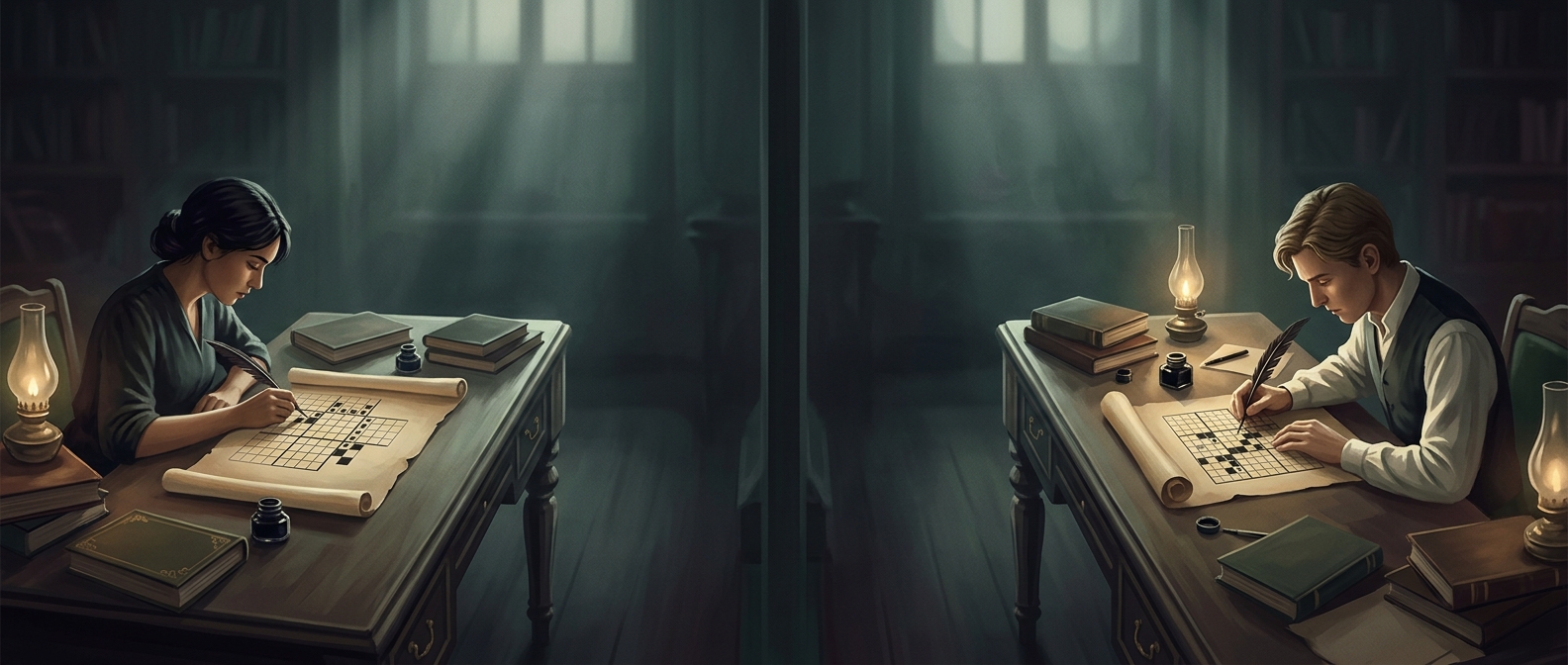
Japanese inventors Non Ishida and Tetsuya Nishio arrived at this basic idea independently in the same year, without communicating. Their parallel invention is a reminder that a clear design can emerge from more than one person’s work when it connects familiar pieces—in this case, pictures, numbered clues, and the satisfying process of eliminating impossible arrangements. The result is a puzzle in which every solved cell does double duty: it adds to the image and helps unlock the next deduction.