A reward placed just beyond the next test
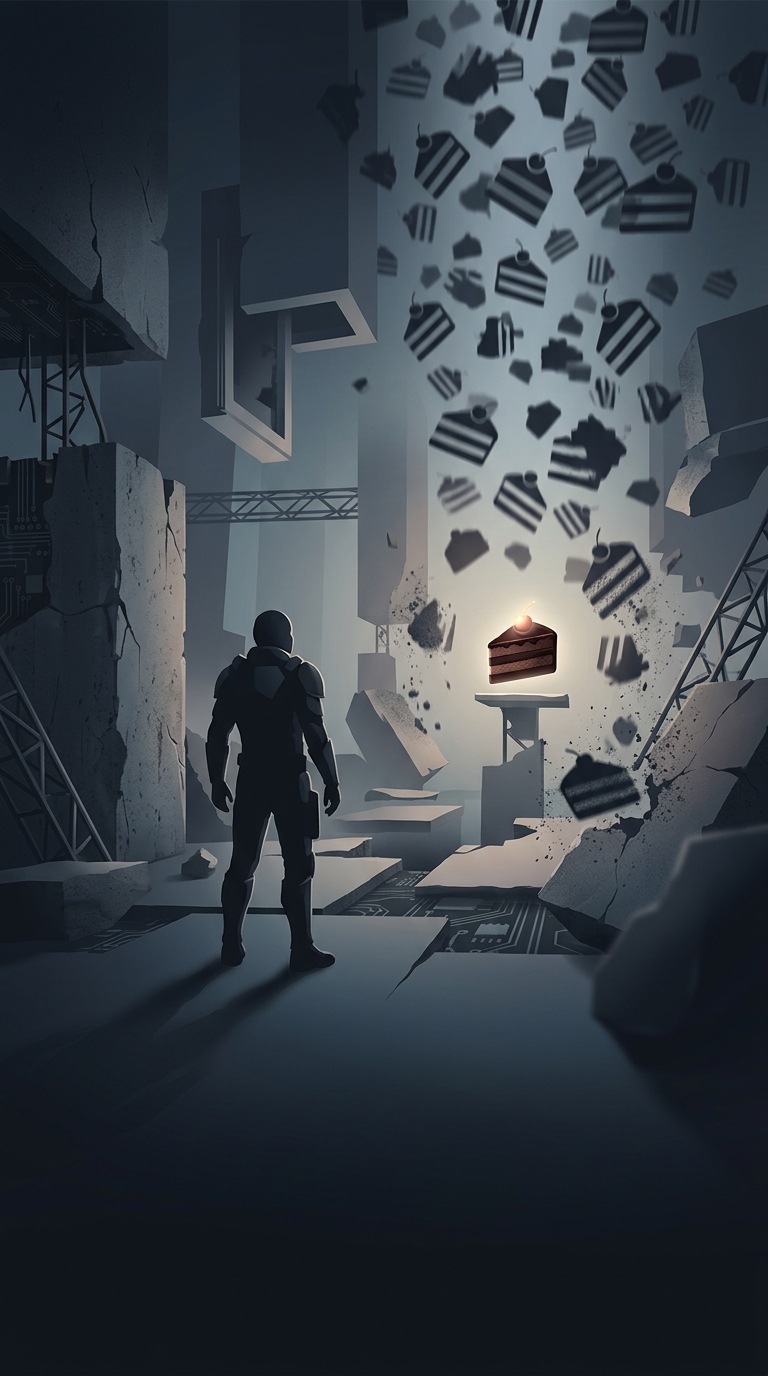
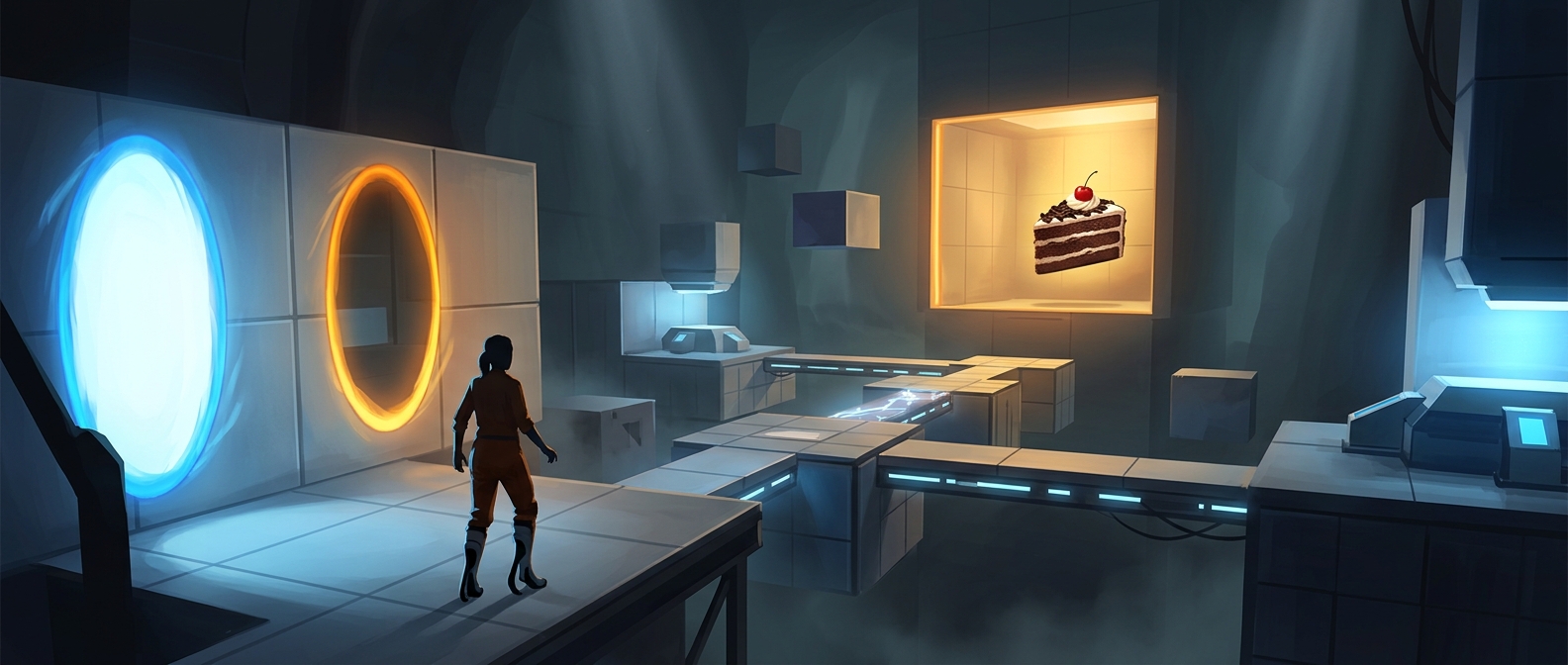
In Portal, the cake works as a simple behavioral lever. GLaDOS, the facility’s artificial intelligence, presents it as a prize for completing the test chambers. Each new room then gives the player an immediate problem to solve: find a path through portals, avoid hazards, and keep moving. The promised dessert supplies a distant goal, while the puzzles provide the steps that make progress feel tangible.
That contrast is the joke’s engine. The tests are dangerous, and GLaDOS’s cheerful assurances become harder to trust as the hazards grow more serious. The cake is not a usable reward during the testing sequence; it is a promise that keeps receding as the player advances.
The warning becomes part of the world
The game lets players discover the doubt for themselves. In hidden spaces beyond the neat test chambers, they encounter scrawled warnings that the cake is a lie. These rooms suggest that someone else has been through the facility and tried to leave messages behind. The joke therefore does more than tell players not to trust GLaDOS: it turns suspicion into something they can investigate.
That discovery also changes how the player reads the ordinary rooms. A sign or reassurance from the facility may be part of the same system that sends them into danger. The cake becomes a compact expression of Portal’s central tension: the player is learning to solve the test, while also learning to question who designed it and why.
The phrase outlasted the game’s puzzles because it names a familiar bargain: keep doing what you are told, and the reward will come later. In Portal, that bargain is funny precisely because the player can see the trap closing around it.