Venom Is Delivered Through the Bite
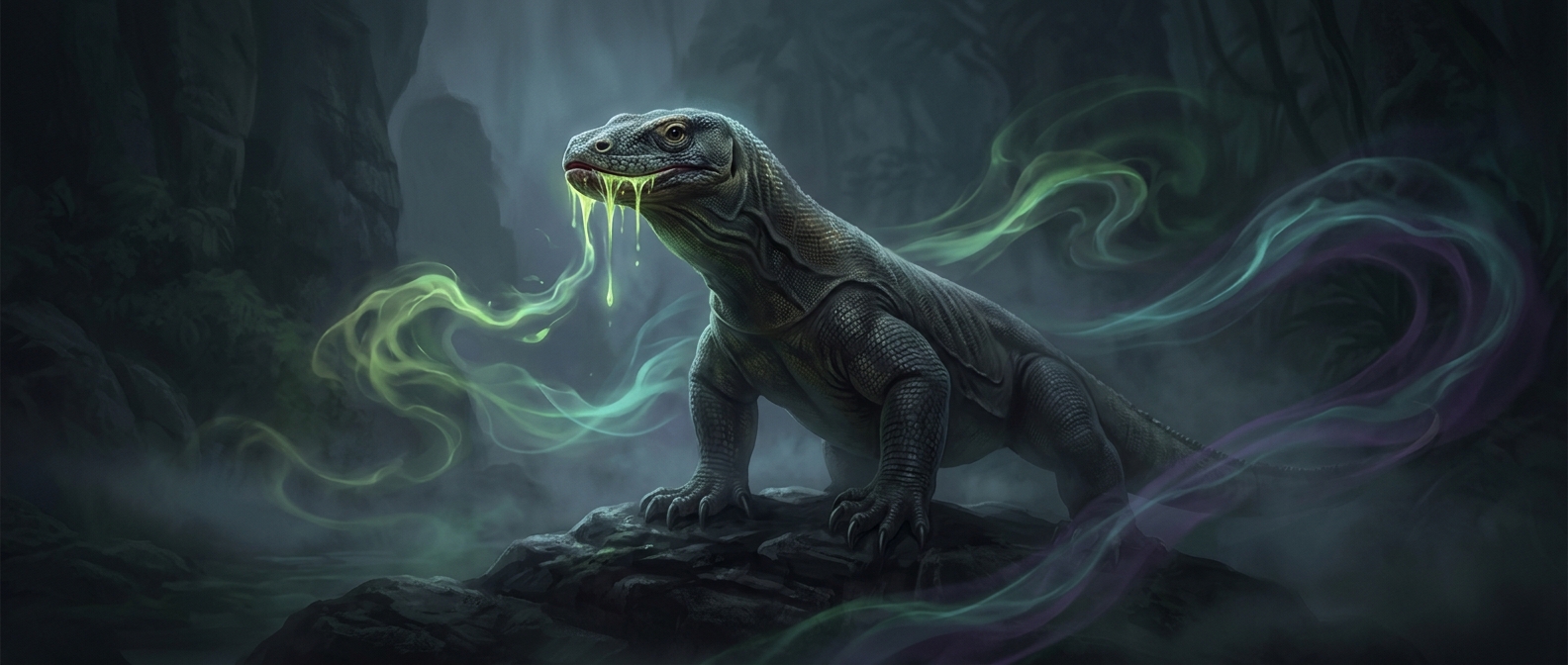
Komodo dragons do not incapacitate prey by coating it in poisonous saliva. They have venom glands in the lower jaw, connected to grooves around their teeth. When a dragon bites, the teeth make deep wounds and venom enters through them. The bite is the delivery system; saliva is not the toxin.
Venom is a mixture of substances that can affect the body. In Komodo dragons, it can interfere with blood clotting and lower blood pressure. That combination may worsen bleeding and contribute to weakness or shock, though the effects depend on the animal and the injury. The bite itself also causes serious tissue damage.
Why the Prey May Not Fall at Once
A large animal can break free after being bitten. The dragon may then follow it, relying on the combined effects of the wound and venom as the prey weakens. This is not an instant knockout: the animal’s size, the bite’s location, and how much venom is delivered all matter.
The distinction also clears up an old explanation for the dragon’s hunting success. Its mouth is not dangerous because saliva is simply teeming with special deadly germs. Komodo dragons can carry bacteria, but their venom glands provide a more direct explanation for how a bite can cause blood loss and declining blood pressure. The same jaws that tear prey open also put that venom where it can act.