How a Rabbit Can Grow “Horns”
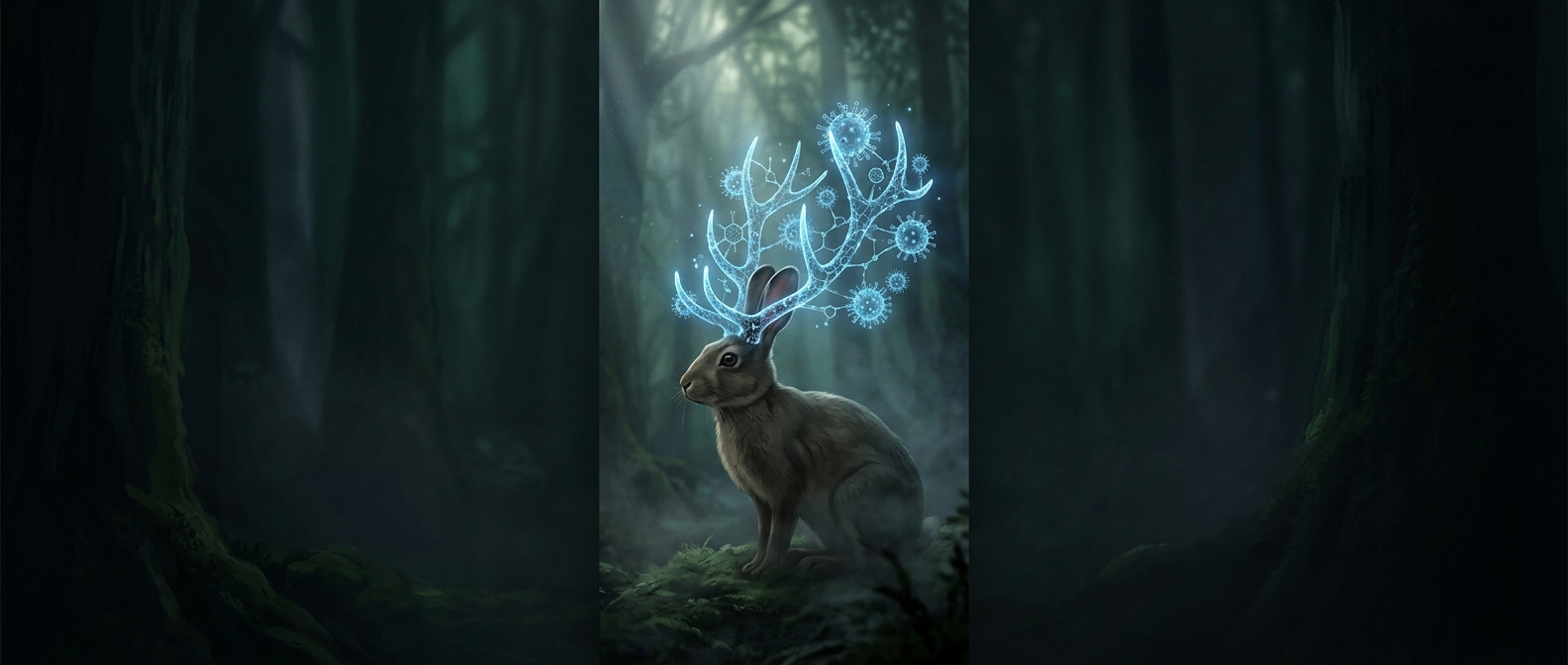
The projections are not antlers or bones. In some wild rabbits and hares, infection with a papillomavirus can trigger abnormal growths on the skin. The virus affects cells in the outer layer of skin, prompting them to multiply into wartlike masses. As these growths accumulate keratin—the tough protein found in hair and nails—they can become hard, elongated, and strikingly horn-shaped.
A Viral Growth, Not a New Body Part
An antler grows from a specialized structure on an animal’s skull. A papillomavirus-related “horn,” by contrast, is a mass of altered skin tissue. Its shape depends on how and where it grows; projections on the head may branch or jut out in ways that make an animal look almost mythical.
These growths can be more than an odd appearance. Depending on their size and location, they may interfere with a rabbit’s vision or ability to eat. Their effects vary, so a hornlike shape alone does not reveal how seriously an individual animal is affected.
Where Folklore Meets Biology
A rabbit with rough, antler-like projections offers an unusually vivid example of how an ordinary biological process can resemble a creature from a legend. The resemblance is real, but the mechanism is recognizably earthly: a virus changes skin growth, and hardened tissue gives the resulting mass its hornlike form. What looks like an animal sprouting antlers is, in fact, skin growing into an unexpected shape.