A hoofbeat that became a source of poetry
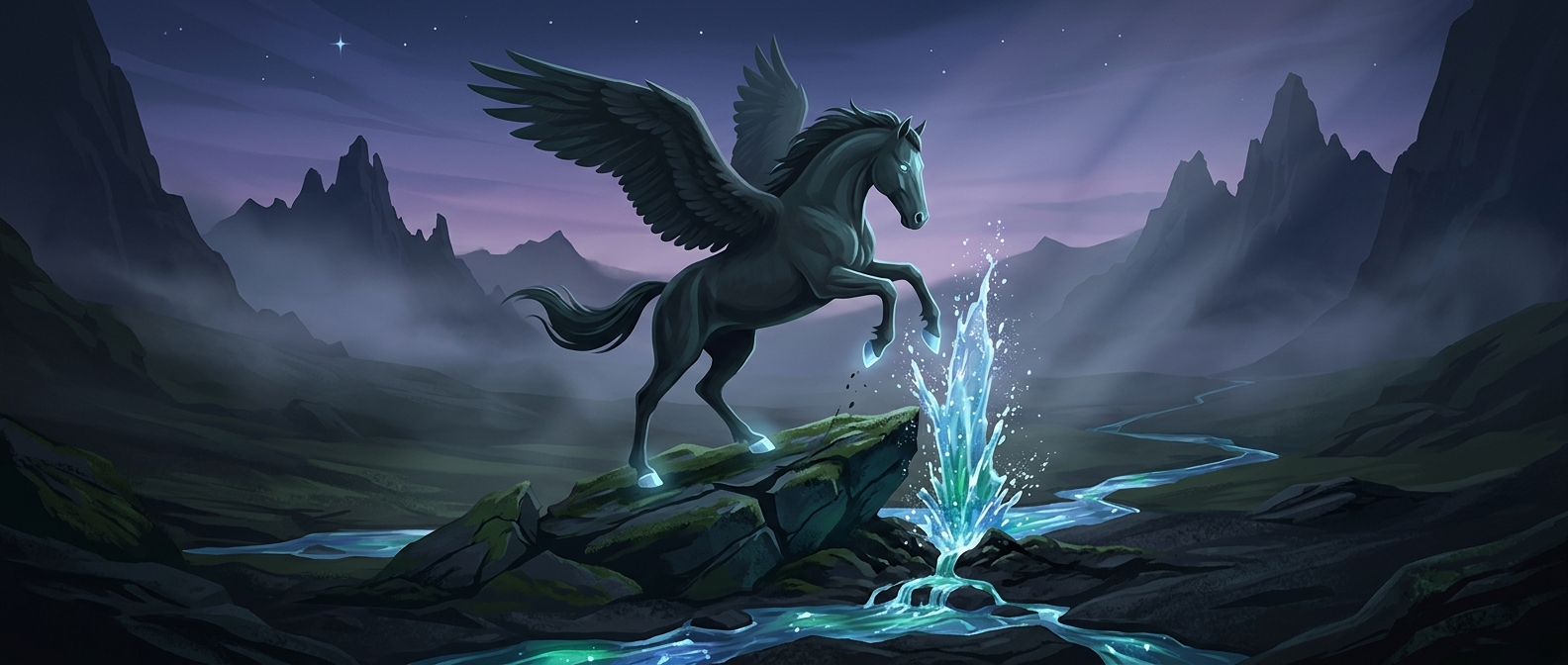
In Greek myth, Pegasus’s hoof did more than leave a mark: when the winged horse struck Mount Helicon, a spring burst from the ground. The spring was called Hippocrene, a name meaning “Horse’s Spring.”
Helicon was associated with the Muses, the goddesses who presided over poetry, music, and other arts. So the new water was not just a marvel in the landscape. It became linked with poetic inspiration: in later tradition, drinking from Hippocrene could help a poet find the words to create.
From Gorgon’s blood to a sacred spring
Pegasus was born when the hero Perseus cut off the Gorgon Medusa’s head. The myth connects that violent beginning to a very different image: a powerful horse striking rock and bringing forth fresh water. The spring’s importance comes from that transformation—from a miraculous birth to a source associated with artistic creation.
The story gave poets a vivid way to imagine inspiration as something that could arrive suddenly, like water breaking through stone. Hippocrene’s enduring place in classical literature reflects that idea: a spring could be both a feature of a sacred mountain and a symbol of the moment a poem begins.