Atlantis as a warning about power
In Plato’s account, Atlantis does not fall simply because its people become wealthy or technically capable. Its decline is moral: prosperity feeds arrogance, and the Atlanteans begin to use their strength for conquest rather than restraint. The island’s destruction gives that change a dramatic consequence.
The story’s political logic
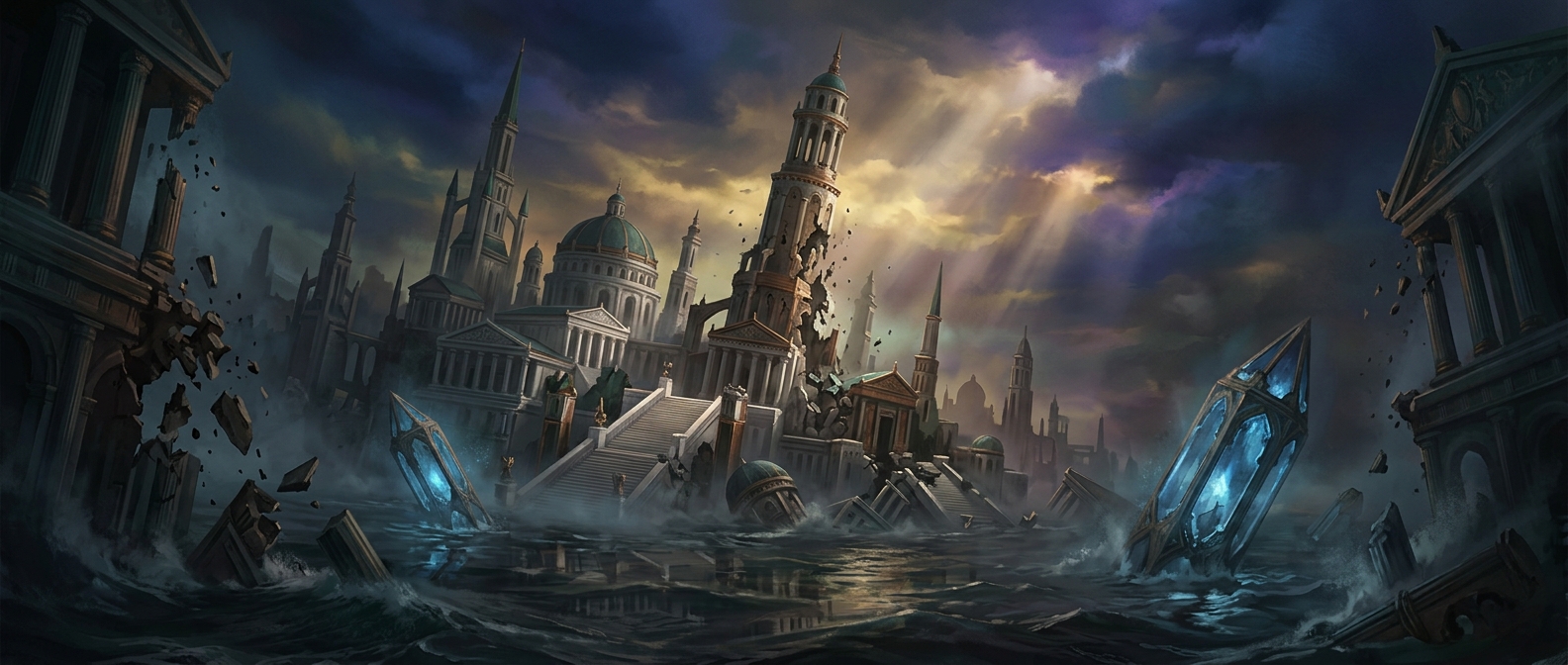
Plato presents Atlantis in two dialogues, Timaeus and Critias, as a powerful society whose earlier order gives way to greed and ambition. As its rulers lose their sense of justice, they seek to dominate other peoples. The gods, seeing that the society has become corrupt, bring about its downfall in a cataclysm.
That sequence makes the disaster part of the argument, not just an adventure ending. Atlantis’s physical power cannot protect it once its leaders abandon the virtues that were supposed to guide that power. The island’s sinking turns an abstract political warning—strength without self-control invites ruin—into an image a reader can remember.
What the tale asks its audience to notice
Plato’s account is a philosophical story, not a verified historical record. Its enduring force lies in the connection it draws between a society’s conduct and its fate: a state can appear mighty while becoming unstable from within. In the tale, the first sign of danger is not the flood. It is the point at which power stops serving justice and starts serving appetite.