A crystal at the center of Cayce’s Atlantis story
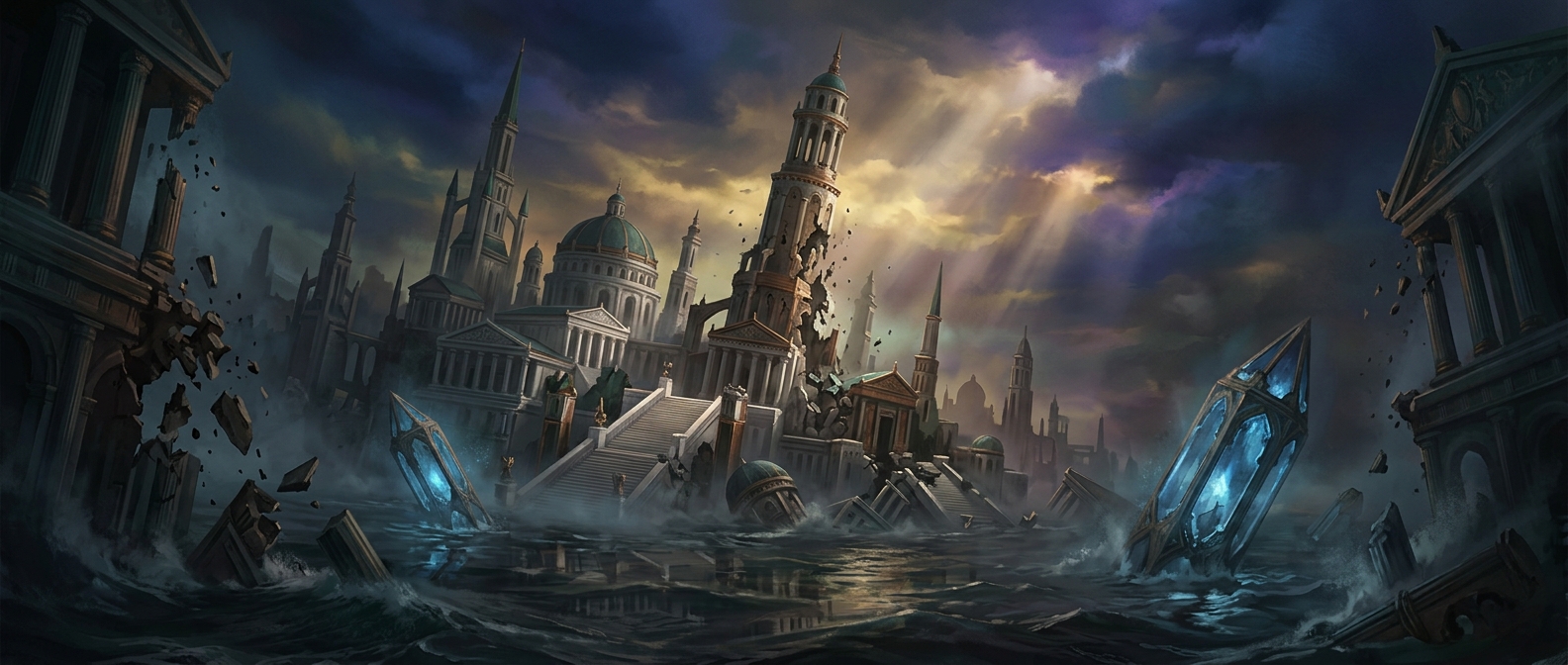
Edgar Cayce, known as the “sleeping prophet,” gave readings while in a trance-like state. In some of his accounts of Atlantis, he described a civilization with technology far beyond its time—including vehicles that floated and were powered by enormous crystals. The crystal was not merely a strange fuel source: in the story, it was a powerful device whose use could turn destructive.
Cayce claimed that Atlanteans overloaded the crystals, and that this helped bring about the island’s destruction. That gives the tale a familiar shape: a society gains extraordinary power, fails to control it, and pays a collective price. The floating cars make the lost civilization feel futuristic; the catastrophe gives its technology a moral consequence.
A claim, not a record of ancient engineering
Cayce’s descriptions belong to his spiritual readings, not to archaeological documentation. They tell us what he claimed about Atlantis, rather than establishing that Atlanteans or crystal-powered vehicles existed. His version combines the older legend of a lost civilization with a warning about the dangers of power used without restraint.
That contrast is what makes the image memorable: the same giant crystal that lets people rise above the ground becomes, when pushed too far, part of the story of their downfall.