What water does—and does not do—to malachite
Malachite is a copper-bearing mineral, but contact with plain water does not make it give off poisonous fumes. The key distinction is between a mineral’s chemical ingredients and the route by which those ingredients could enter the body. A solid stone is not equivalent to loose particles that can be breathed in or swallowed.
That makes the phrase “toxic when wet” misleading: wetness alone is not the danger described here. The more relevant concern is malachite dust or fragments, especially if the stone is cut, ground, or otherwise damaged and particles are inhaled or ingested.
Why handling advice needs a boundary
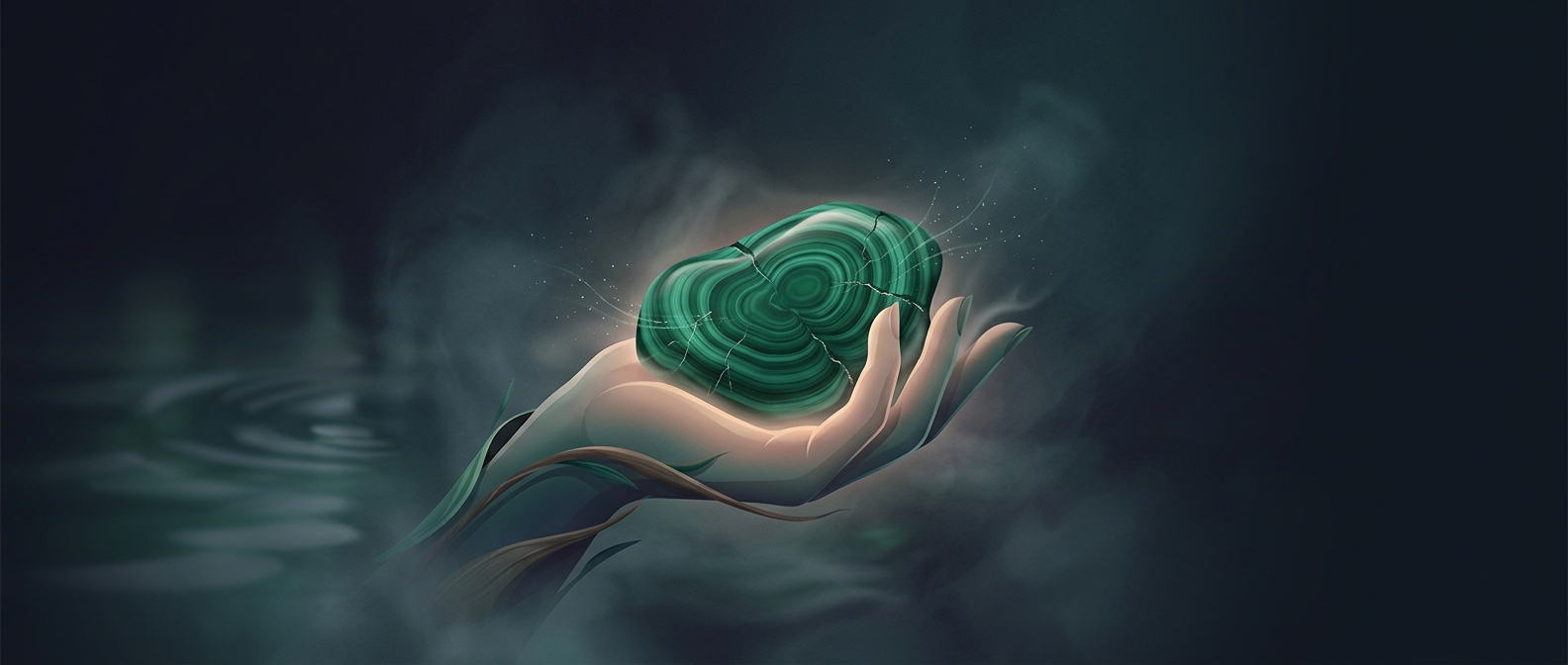
Crystal-healing traditions may recommend holding malachite as part of a ritual or personal practice. That recommendation should not be confused with evidence that the stone has a healing effect, nor does it make every form of exposure equally risky. Handling an intact piece is different from making dust or putting mineral particles into something meant to be consumed.
The practical distinction is simple: water on the outside of a stone does not create toxic fumes, but malachite should not be ground into powder or ingested. A polished stone can be a ritual object; it is not a safe ingredient for a drink or remedy.