Why a Mountain Spirit Became a Martial-Arts Teacher
Tengu stories turn the mountain into a place where ordinary rules—and ordinary limits—fall away. In Japanese folklore, these beings are powerful, elusive residents of the heights. A person who encounters one may face danger, but may also receive knowledge unavailable in everyday life. Martial skill suits that role: it is practical training, yet in a legend it can signal that a student has crossed into a world of unusual discipline and power.
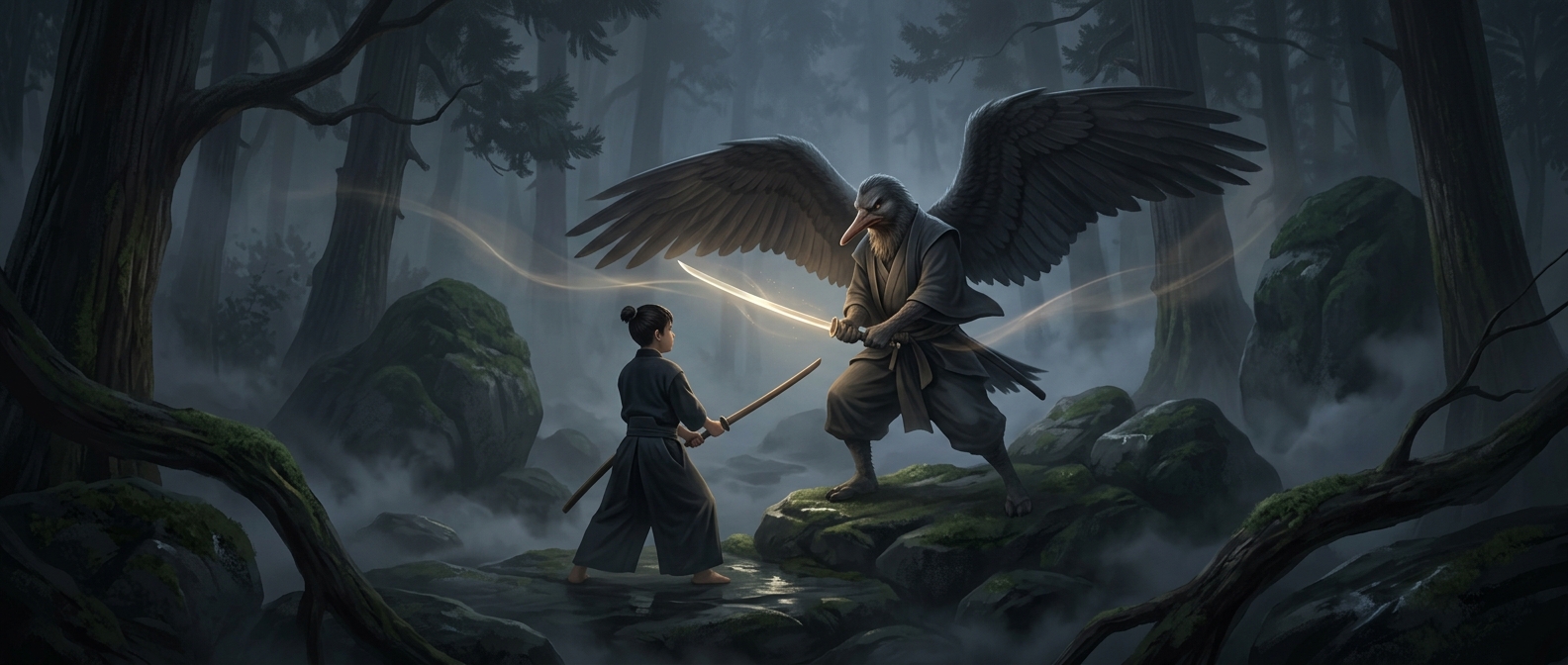
A famous example is the tradition that the young warrior Minamoto no Yoshitsune learned fighting skills from tengu on Mount Kurama. The tale is not a record of supernatural instruction; it gives a legendary explanation for how a gifted hero acquired extraordinary ability.
From Birdlike Spirit to Long-Nosed Figure
Tengu have not always looked the same. Older portrayals emphasize birdlike features, while later images often show a humanlike face with an unusually long nose. They are also commonly associated with the mountains and with the appearance of yamabushi—ascetic practitioners who undertook religious training in remote landscapes. That visual overlap helped make the tengu seem both human enough to teach and strange enough to command fear.
The teacher is never simply a kindly instructor. Tengu can be proud, dangerous, or disruptive, so their lessons carry a warning: skill gained through discipline may bring power, but power without humility invites trouble. That tension is why the image endures—a sword lesson from a tengu is also a test of the student’s character.