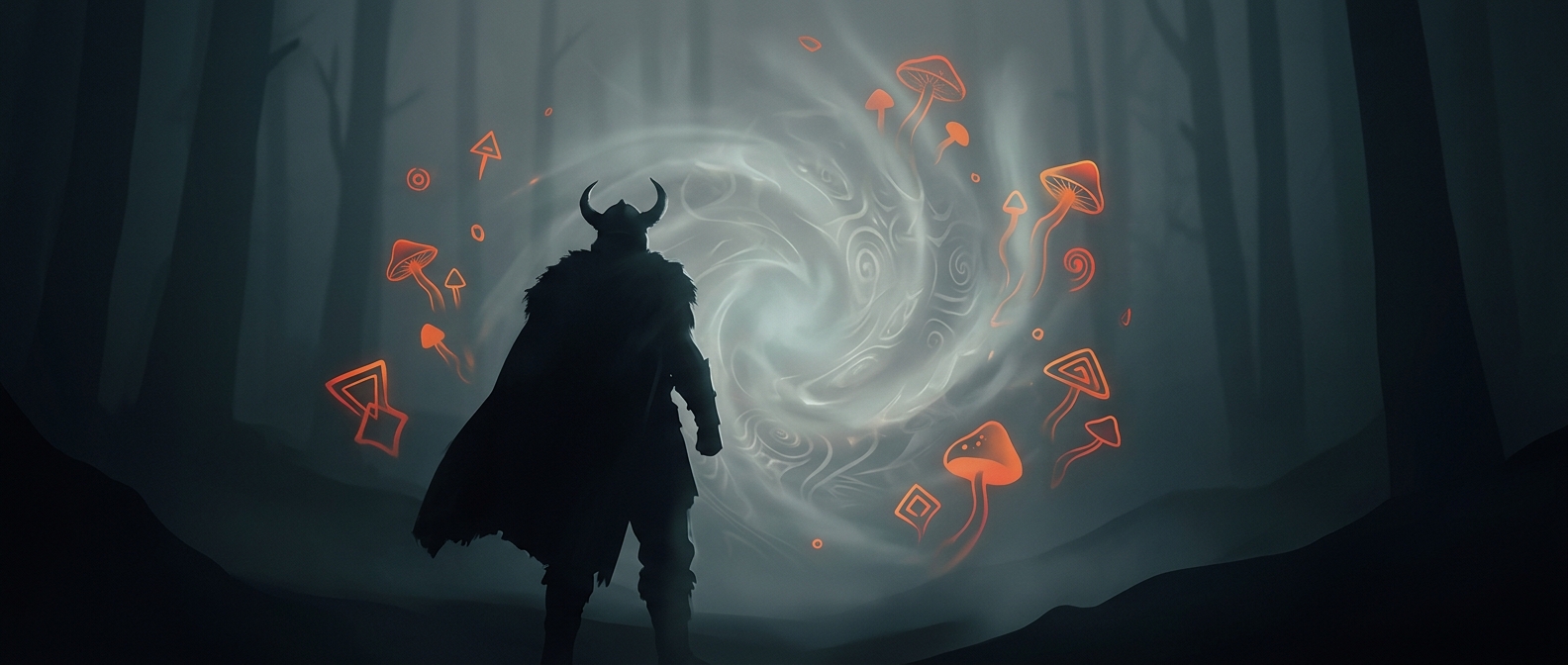
Why the mushroom theory took hold
Berserkers appear in medieval Norse accounts as fighters who entered an extreme, frightening battle state. The descriptions invite a practical question: what could have produced it? One proposed answer is Amanita muscaria, the red-and-white fly agaric. Its intoxicating compounds can alter perception and behavior, making it a plausible candidate for an altered state—not proof that warriors used it.
An unpredictable aid in battle
Fly agaric does not act like a reliable switch for courage or aggression. Its effects can include confusion, distorted perception, nausea, drowsiness, or agitation. The same unpredictability that might help explain reports of unusual behavior could also make a person less coordinated and less able to fight. A drug that unsettles the mind is not automatically a useful battlefield tool.
What the evidence can—and cannot—show
The case rests on interpreting written descriptions, not on a clear record identifying the mushroom in a berserker’s possession. The accounts tell us how extraordinary the warriors seemed to later storytellers; they do not establish what caused that behavior. Ritual, group excitement, or other forms of intoxication have also been suggested, but none turns the mushroom proposal into a settled explanation.
That uncertainty is the point: fly agaric offers a vivid possible mechanism, but the surviving evidence cannot show that berserkers deliberately took it. The enduring image of a warrior transformed by a mushroom is more definite than the history behind it.