Why astrologers gave the nodes a dragon’s shape
The Moon’s orbit is tilted relative to the Sun’s apparent yearly path across the sky. The two paths meet at two points: the lunar nodes. They are locations, not objects in space. When the Sun and Moon line up near a node, an eclipse can occur; elsewhere, the Moon passes above or below the Sun from our viewpoint.
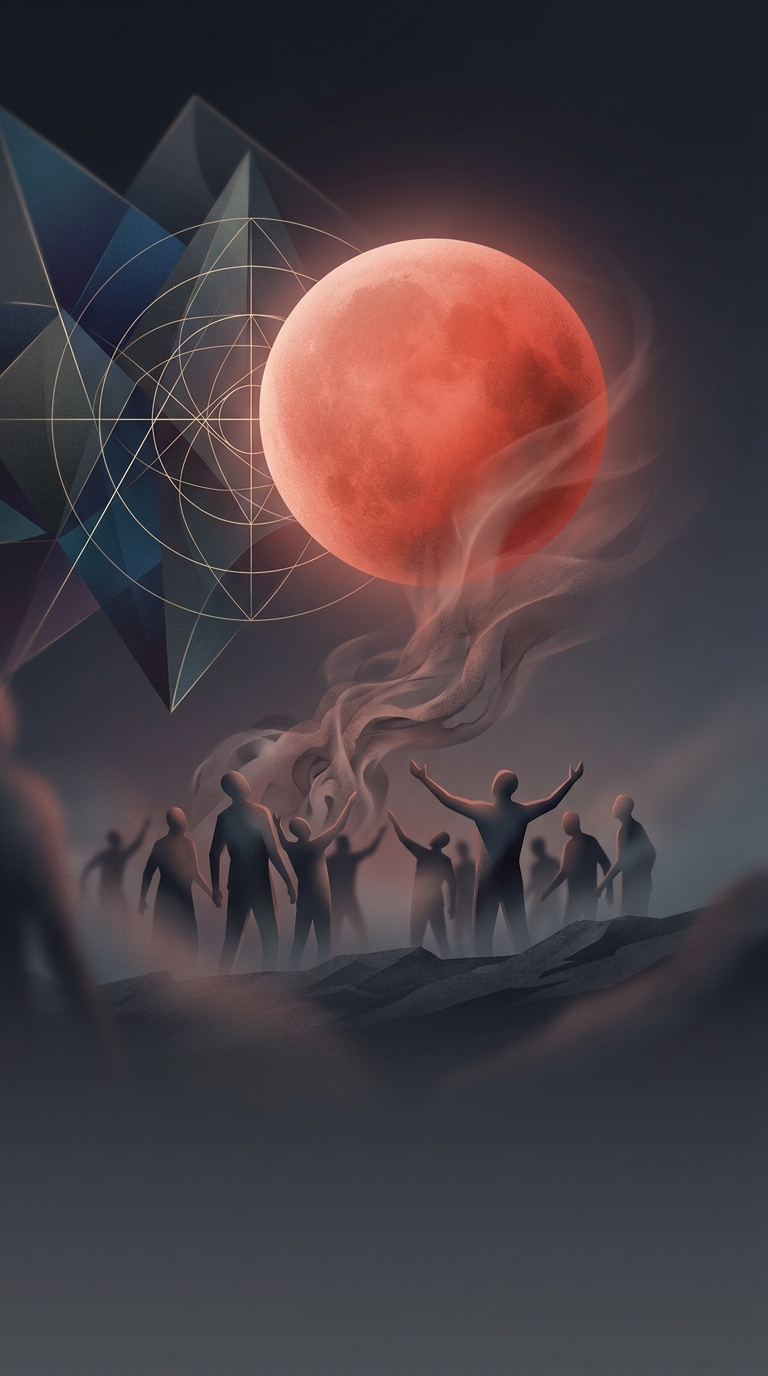
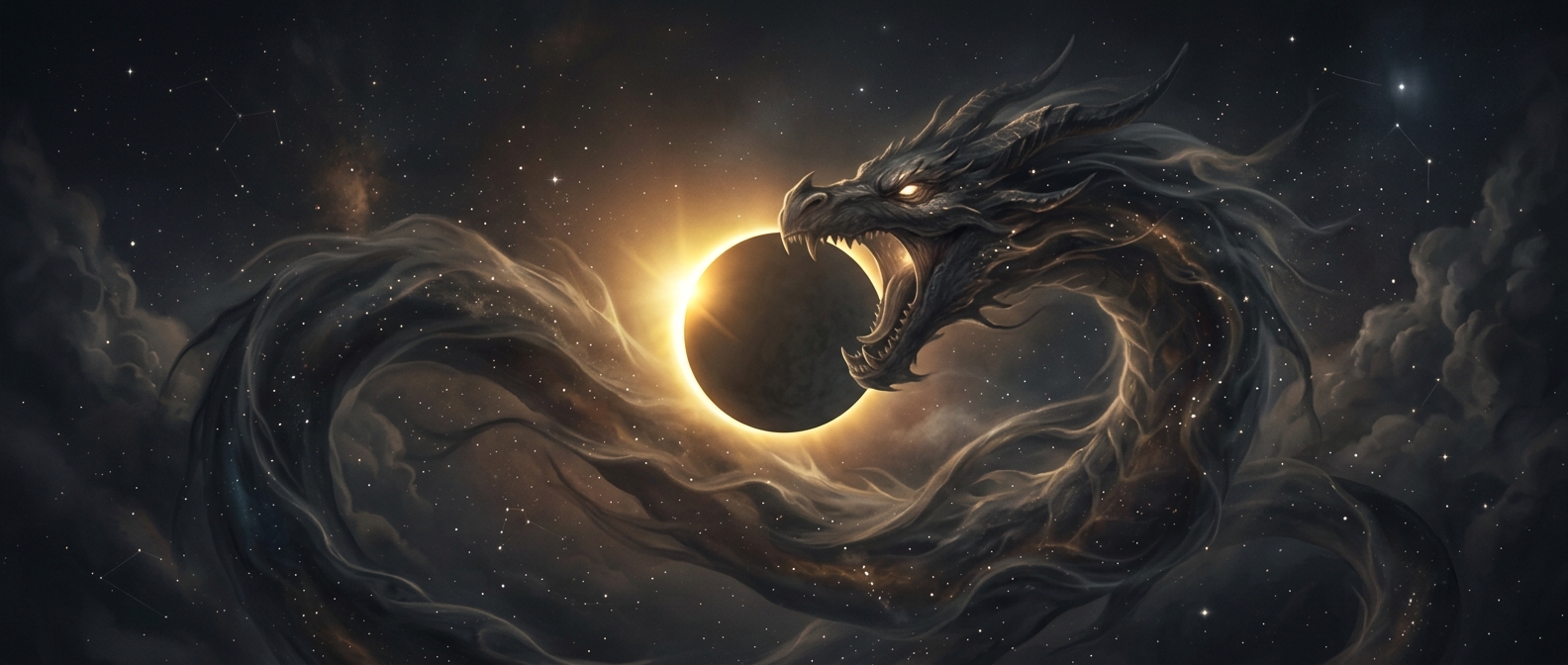
In Indian astrological tradition, these points become Rahu and Ketu, often pictured as a dragon’s head and tail. The image turns an invisible piece of celestial geometry into a memorable story: the dragon swallows the Sun or Moon, only for it to reappear. The mythic language explains the drama of an eclipse, while the nodes describe the alignment that makes one possible.
From eclipse story to karmic symbolism
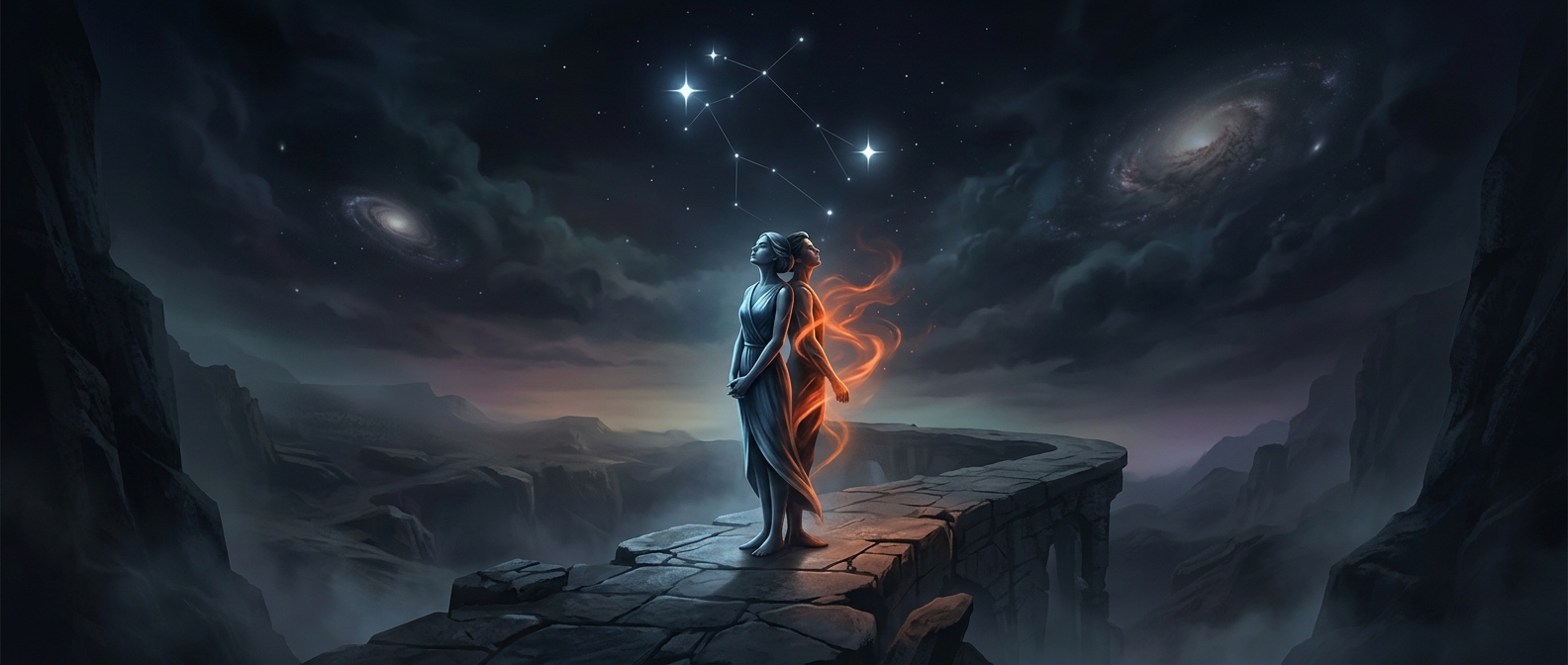
Rahu and Ketu are treated as shadow planets in Vedic astrology, though neither is a physical planet. Their significance comes from their opposite positions in the horoscope and from the idea that the points mark a karmic axis—a tension between patterns associated with past experience and directions of growth.
Interpretations differ among astrologers, but Rahu is commonly linked with appetite, ambition, and unfamiliar pursuits; Ketu with detachment, loss, or spiritual inwardness. These are symbolic readings, not demonstrated effects of astronomical points on personality or fate. The dragon’s two halves make the contrast vivid: one reaches toward what it lacks, while the other is associated with letting go.
The same pair therefore joins two kinds of explanation. Astronomy identifies where an eclipse becomes possible; astrology gives those points a story about desire, consequence, and change. During an eclipse, the “dragon” is not a body crossing the Sun—the image is a way of making the Moon’s otherwise invisible orbital crossroads meaningful.