How a Bird’s Flight Became an Omen
Birds do not carry a single, universal message in divination. Their flight was read through a system of signs: where they appeared, which way they moved, and whether they flew alone or in a group. The same sighting could therefore mean different things in different traditions—or even in different circumstances.
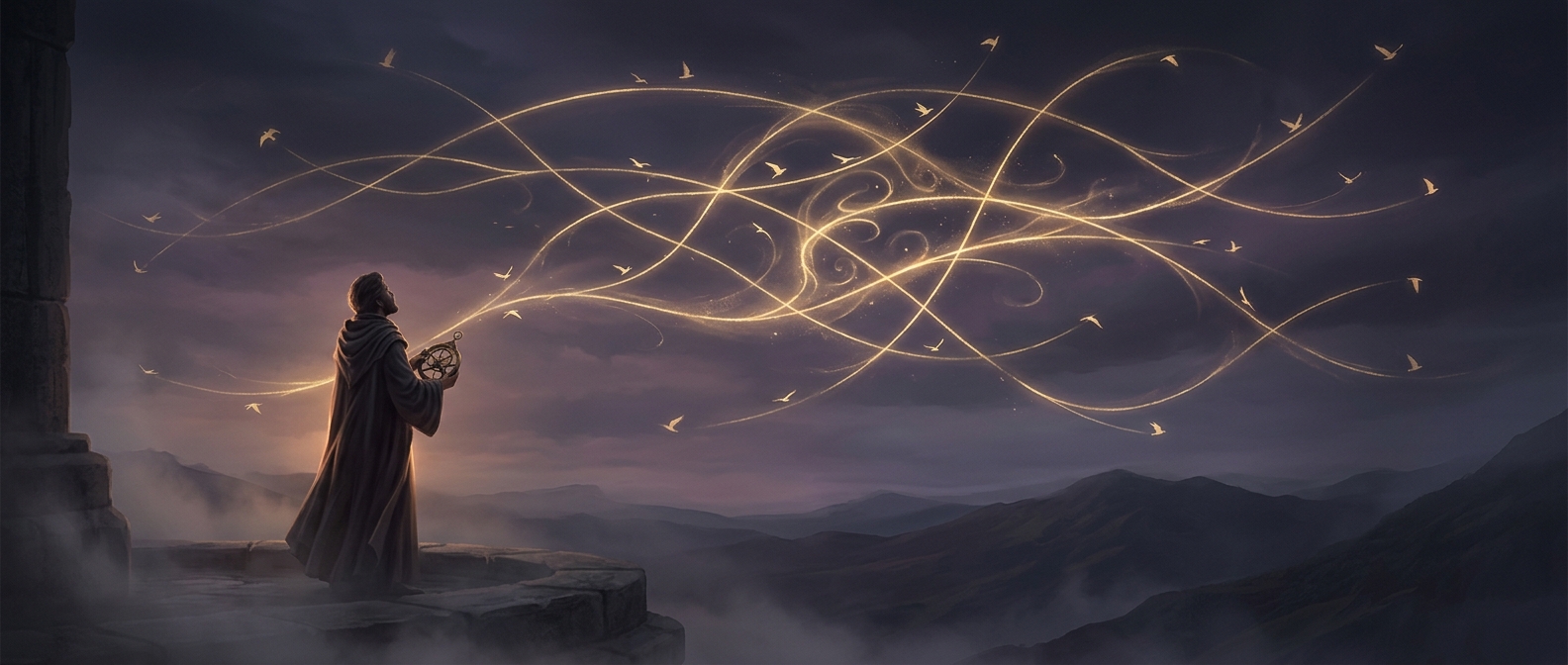
In Roman augury, the practice of interpreting signs from birds, an observer watched a designated part of the sky and judged whether the signs favored a proposed action. The observer was not simply guessing from a bird’s behavior. Ritual rules gave the sighting its meaning, turning an ordinary movement overhead into guidance that people could use when weighing a decision.
Why Direction and Formation Mattered
Direction made the sky seem like a readable map: a bird crossing from one side to another could count as a different sign than one traveling the opposite way. Formation added another layer. A solitary bird, a pair, or a flock presented different patterns for the interpreter to assess. The point was not that every bird had a fixed message, but that the flight’s details mattered within the rules of the divination.
That framework also made interpretation consequential. A favorable sign could reinforce a choice; an unfavorable one could prompt people to delay or reconsider. Bird divination thus connected close observation of the natural world with decisions about human affairs. The flock passing overhead was more than a spectacle: to a reader trained in the tradition, its direction and arrangement could help determine what should happen next.