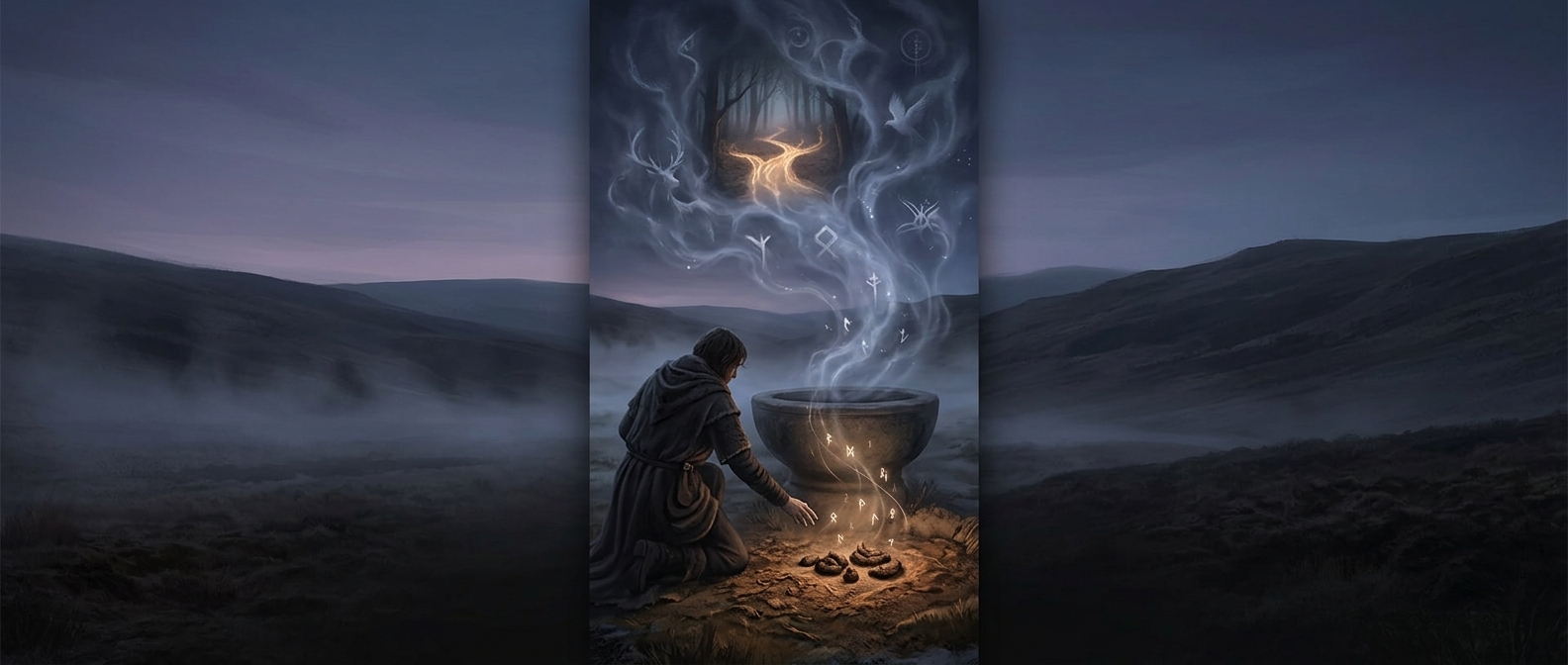
Reading a Sign in What an Animal Leaves Behind
Scatomancy turns an ordinary trace into a prompt for interpretation. A practitioner looks at features such as a dropping’s shape, size, or location and treats them as meaningful signs, rather than as measurements with a fixed scientific meaning. The reading depends on a symbolic framework: a form or position is connected to an idea about what may happen next.
There is no single universal code for these signs. Interpretations can vary with the practitioner and the tradition, so the same detail need not carry the same meaning in every reading. That makes the act less like consulting a chart and more like interpreting an omen: the observer selects details and connects them to a question about the future.
From Observation to Prediction
Animal droppings can offer ordinary clues about an animal’s diet or condition. Scatomancy makes a different move: it treats their appearance or placement as a message about events to come. The material observation may be concrete, but the future-facing meaning comes from belief and interpretation, not from a demonstrated predictive mechanism.
That distinction helps explain why the practice can feel compelling without producing a uniform answer. A sign can invite reflection because someone sees significance in it; its meaning is not independently fixed by the shape itself. The prediction lies in the interpretation, not in the dropping as a reliable forecast.