How a handful of pebbles becomes an answer
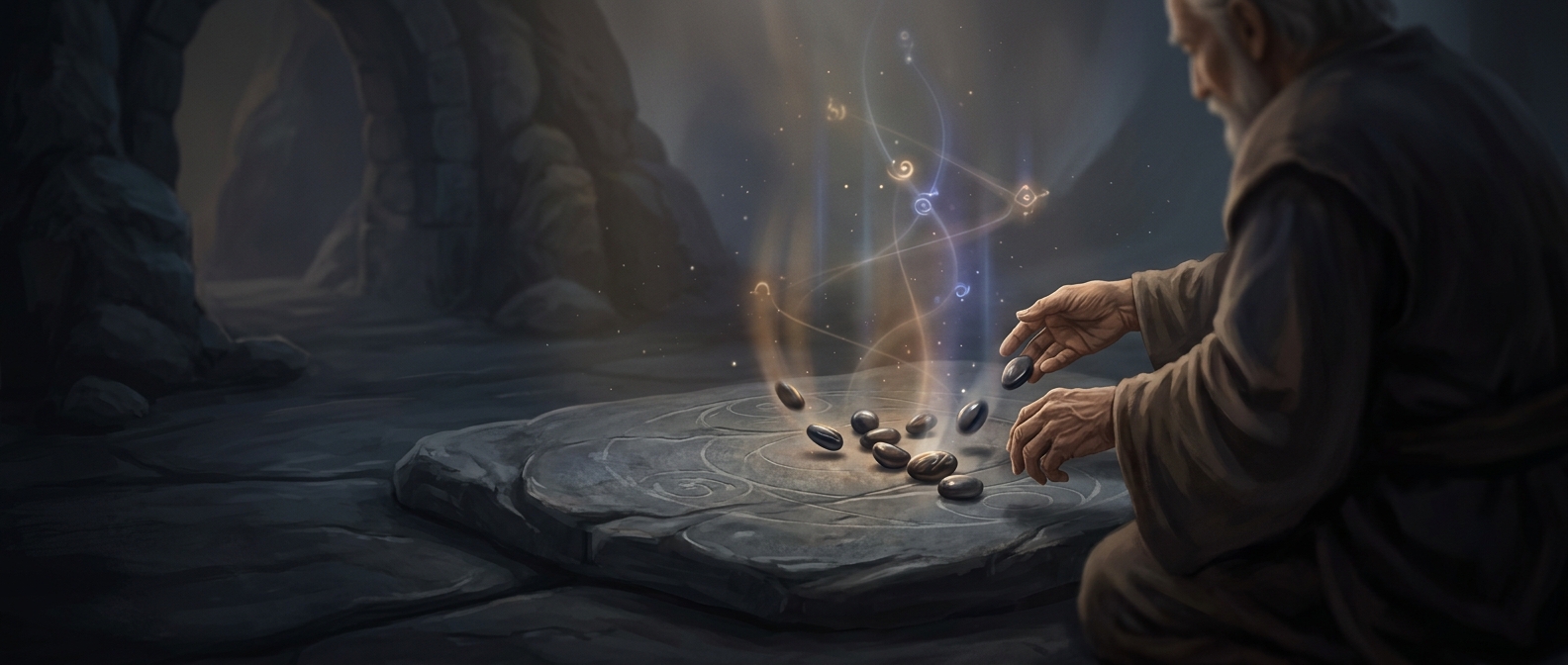
Marked pebbles can serve as a small divination set: each mark gives a stone a symbolic meaning, and the way the stones land supplies a pattern to interpret. The reading depends not just on chance, but on rules that connect particular marks or arrangements with possible answers.
This is similar to dice in one important respect: a throw produces an outcome the person consulting the stones did not deliberately choose. But dice usually settle a question through a numbered result, while a pebble reading asks someone to interpret symbols. The same arrangement may therefore mean little without the tradition or method used to read it.
Why use chance to make a decision?
When a question feels difficult, an unpredictable result can interrupt the urge to keep weighing the same options. The stones do not make the choice for the person; the reading offers a framework for considering it. A hopeful sign might encourage someone to proceed, while a warning could prompt caution or a second look at the problem.
That can make the practice meaningful as a ritual for reflection, even though a throw does not establish what will happen. Its practical force lies partly in how the person interprets the result and brings it back to an everyday concern.
The meaning is in the reading
A handful of marked stones is simple to carry and reuse, but the interpretation is not automatic. It rests on learned associations and the reader’s judgment. The throw creates the pattern; the symbolic system turns that pattern into advice.