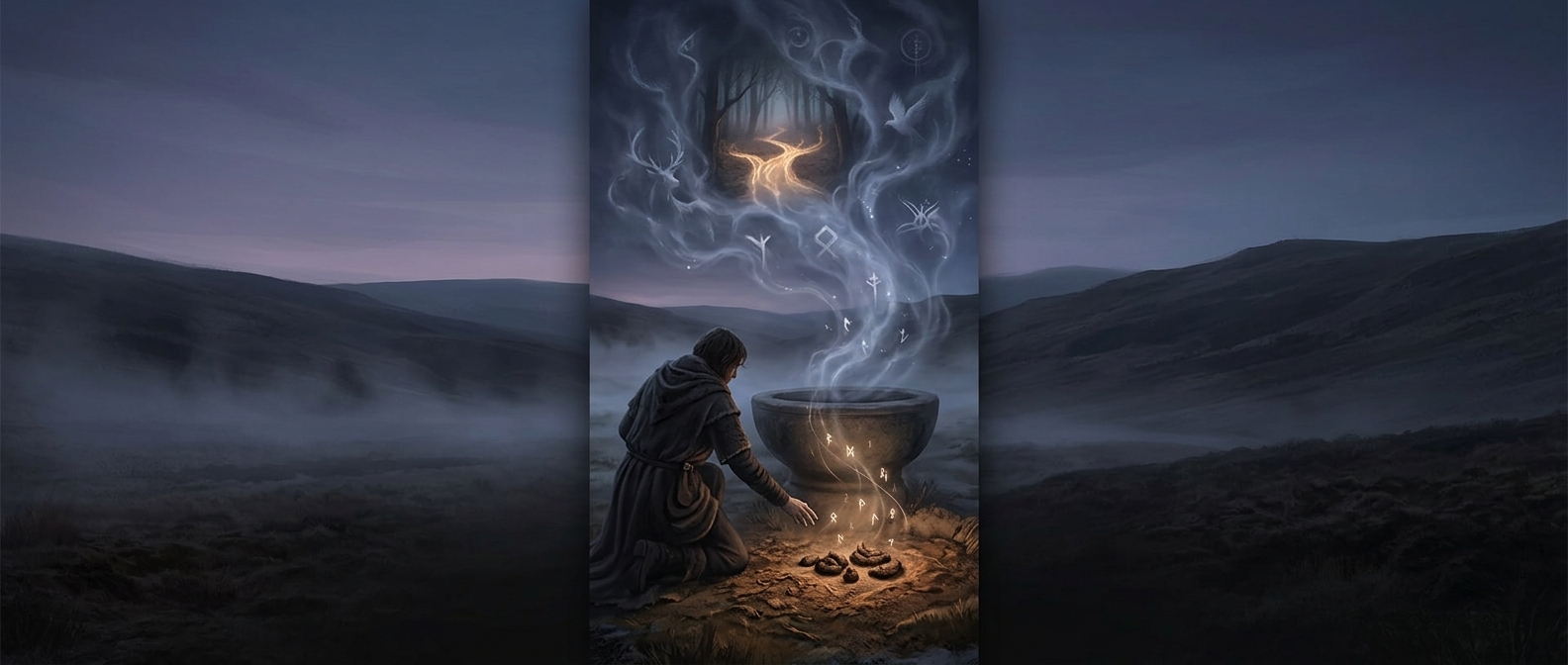
When a Snake’s Movement Became an Answer
A snake offered a diviner something hard to ignore: movement that could be watched and interpreted in real time. Its coils around a stick, its direction through grass, or a pause before it moved could be treated as a sign bearing on a question about the future. The animal was not delivering a message in words; the diviner supplied meaning by reading its behavior within a tradition of signs.
That distinction matters. A snake’s movements have ordinary causes—its surroundings, its body, and what it encounters—but divination gave those movements symbolic significance. The practice turned an unpredictable encounter into a kind of answer, with the diviner acting as interpreter.
The Risk Was Part of the Ritual
The method also depended on getting close enough to observe an animal many people would avoid. That proximity made the encounter vivid, but potentially dangerous: a snake might react defensively, and not every movement was easy to interpret. The diviner’s role therefore involved more than noticing what the snake did. It required deciding which details counted as signs and how they related to the question at hand.
The practice shows how prophecy could begin with something tangible rather than an abstract vision: a living animal, a particular motion, and a human effort to make that motion meaningful. The snake’s path through the grass became important not because it reliably revealed the future, but because a community’s interpretive tradition treated it as a clue.