Why a small magnet can lift a paper clip
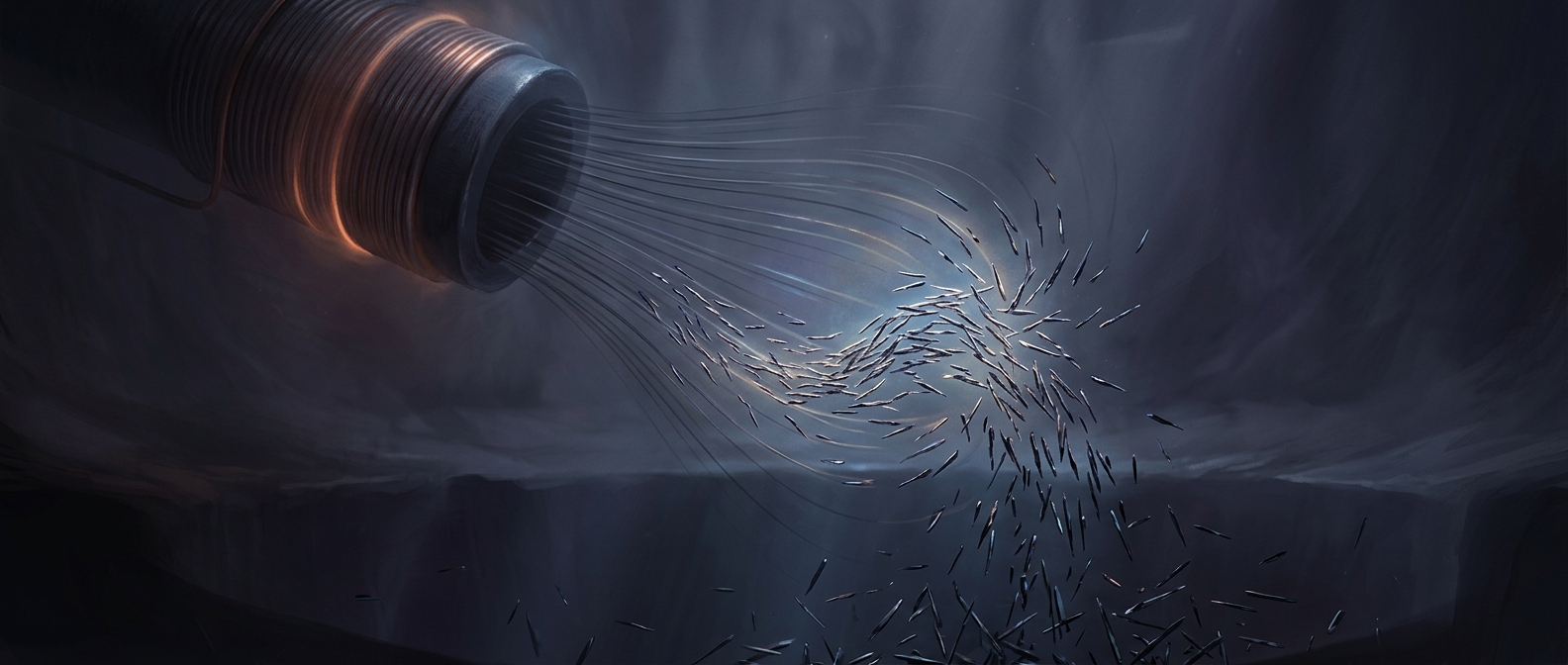
A paper clip resting near a refrigerator magnet is caught between two pulls. Earth’s gravity draws it downward, but the magnet creates a magnetic field that pulls on the clip’s iron. If the magnetic pull is stronger at that distance, the clip moves toward the magnet instead of falling.
The key is that the magnet does not need to overpower Earth as a whole. It only needs to exert more force on this tiny object than gravity exerts on it. A magnet close to the clip can produce that local tug; move it farther away and the magnetic pull weakens rapidly, so the balance can change.
Why gravity still dominates the larger picture
Gravity acts on mass, and its pull always attracts. Because every bit of mass contributes, the effects add up across planets and stars. A magnet, by contrast, acts on particular magnetic materials, such as iron. Its influence is also concentrated near the magnet rather than accumulating across ordinary objects in the same way.
There is another difference: most everyday matter contains positive and negative electric charges in nearly equal amounts, so their electric effects largely cancel at a distance. Magnetic effects also do not simply pile up across all the matter around us. That is why a fridge magnet can lift a clip without lifting the refrigerator—or changing the planet’s gravitational pull.
A close-range contest
The clip wins or loses this contest according to the forces acting on it at that moment. Near the magnet, attraction can overcome the clip’s weight; farther away, gravity can bring it back down. The magnet’s victory is real, but local: it is a strong pull on a small piece of iron, not a force that has defeated gravity everywhere.