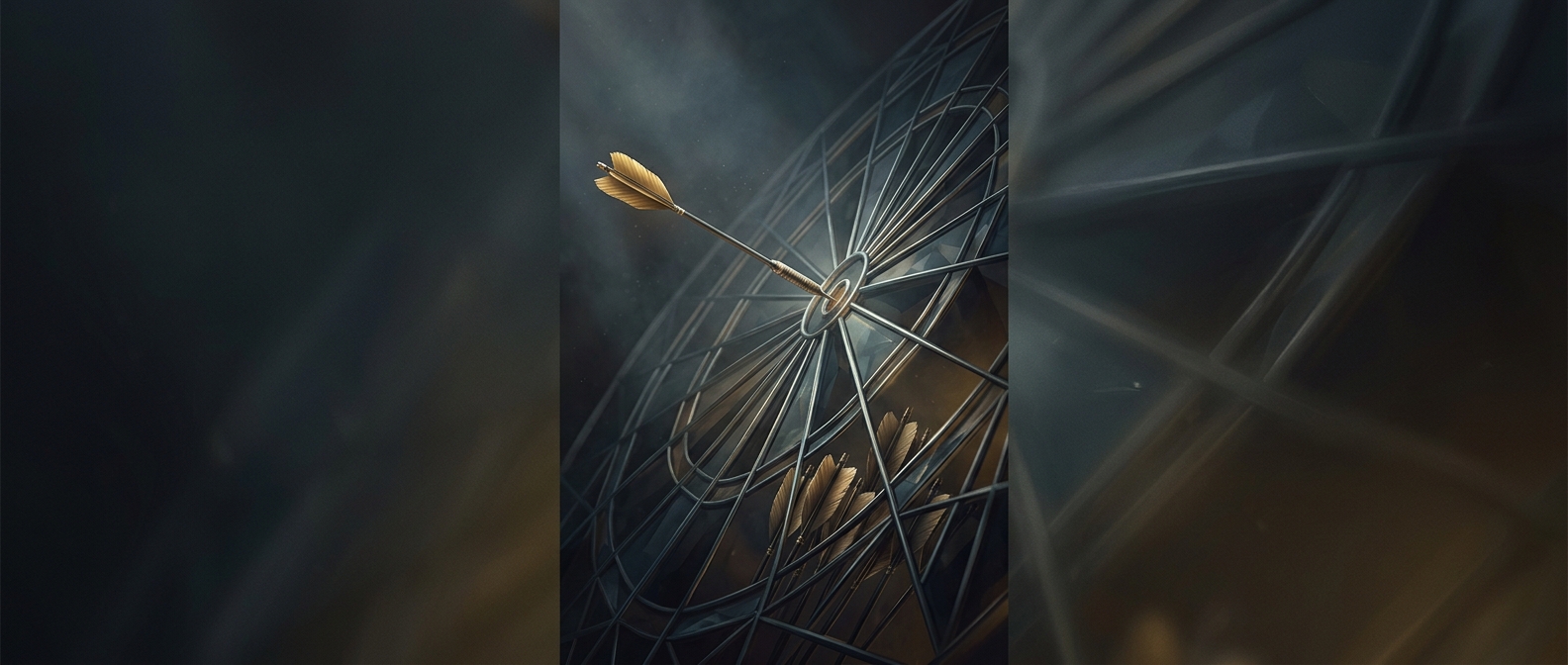
Why a Dart Can Slide Off a Divider
A dartboard’s scoring areas are separated by a network of metal dividers, often called the spider. When a dart hits a divider, the point meets a hard surface rather than the softer board fibers that can grip it. If the wire presents a broad, flat face, the dart can stop abruptly and spring back toward the player.
A sharply ridged profile changes that collision. The point is more likely to meet a sloping face, which redirects it toward the board instead of straight back out. If the point clears the ridge, it can enter the surrounding board material and stay put. The shape improves the odds; it cannot guarantee that every divider hit will score.
A Small Design Change With a Scoring Consequence
The divider is a tiny part of the board, but it affects whether a throw that reaches the target remains there. A bounce-out can erase an otherwise accurate hit, so reducing those rebounds matters in both casual play and competition. The design is a practical compromise: the wire must still mark the boundaries between scoring sections, while presenting as little obstruction to an incoming point as possible.
That is why a dart that strikes metal may not simply ricochet away: the divider’s edge can turn a glancing collision into a path toward the board.