Precision has to survive the shot
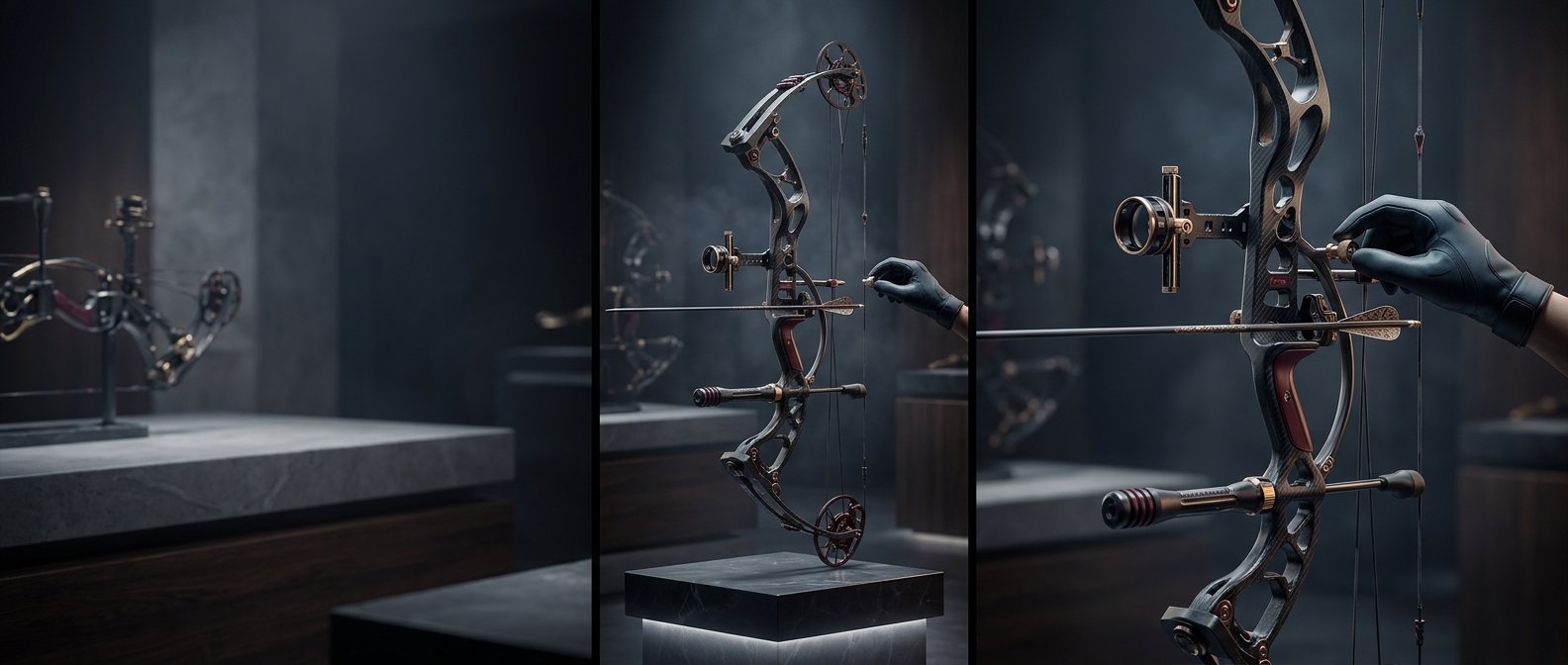
A competition bow is a system of parts, and small movements matter. The riser—the central frame that holds the bow’s limbs, grip and sight—must stay rigid as the bow is drawn and released. If it flexes or vibrates unpredictably, the arrow can leave on a slightly different path. High-end risers use carefully machined aluminum alloys to balance stiffness, low weight and consistent construction. The material is only part of the cost: producing a complex frame to tight dimensions, with mounting points that line up reliably, takes more work than making a simple bar of metal.
Add-ons shape balance and aim
A stabilizer is a rod attached to the bow that helps control how it moves in the archer’s hands. Counterweights let the archer adjust that balance; a sight, sometimes called a scope, provides a reference for aiming. These parts do not make a shot automatic. They change how the bow behaves and what the archer sees, so the archer can tune the setup to their form and preferences.
That tuning is why equipment is often bought piece by piece. A different stabilizer length or weight can alter the bow’s feel, and changing one component may lead an archer to adjust others. Specialized parts also need secure fittings and must hold their settings through repeated use. The price reflects both the hardware and the demands of making it adjustable without making it unreliable.
The payoff has a ceiling
Better-made gear can provide a steadier, more repeatable platform, but it cannot remove errors in the archer’s release, judgment or practice. That creates a clear tradeoff: competitors pay for control over the equipment’s behavior, not a guaranteed increase in accuracy. The expensive setup is valuable because it lets an archer make fine adjustments—and then keep those adjustments consistent from shot to shot.