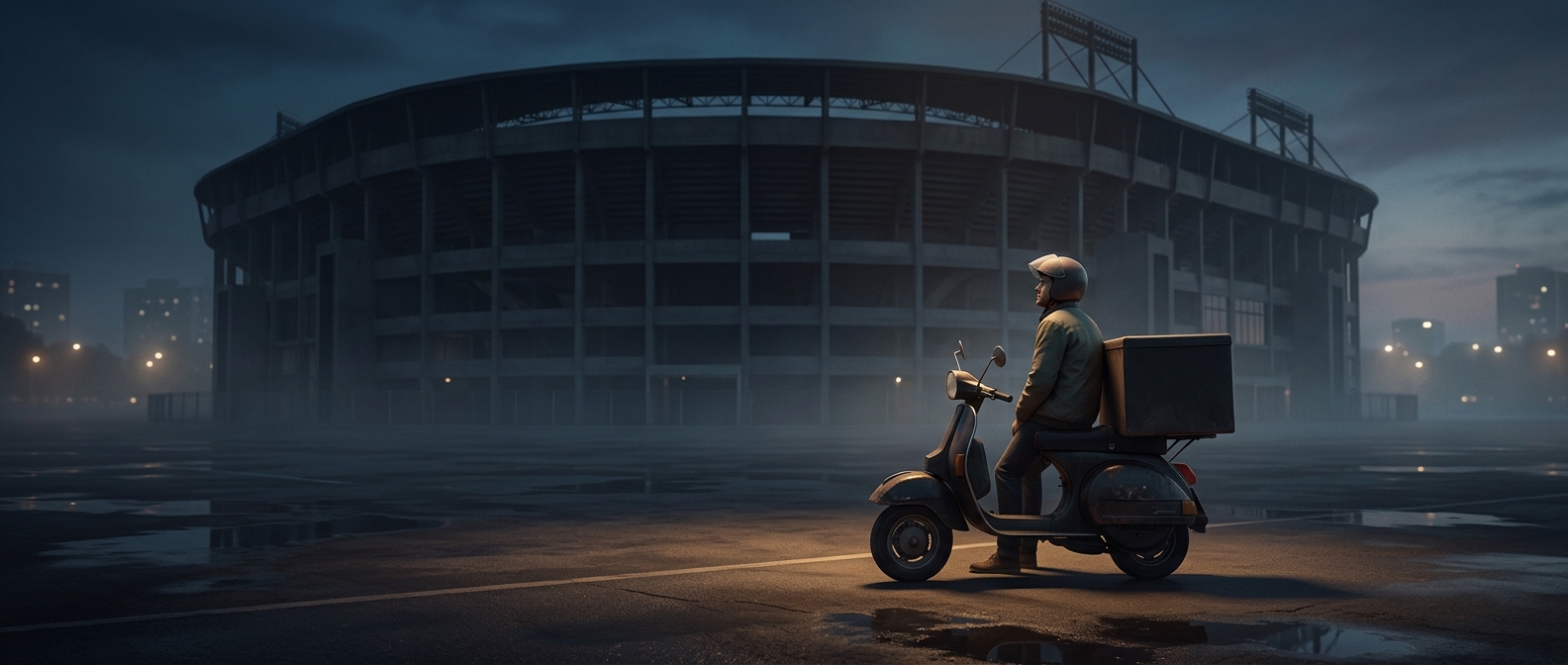
Why a canceled game can leave a shop with costs but no rush
A big game acts like a temporary demand signal: customers expect to watch at home, so they order food at roughly the same time. For a pizza shop, that concentrated window can keep ovens, drivers, and counter staff busy in a way an ordinary Sunday may not. A stoppage that removes the broadcast can change customers’ plans quickly, while the shop’s preparations are already underway.
The mismatch matters because many costs are committed before the first order arrives. Managers may schedule extra workers, buy ingredients, and set aside oven and delivery capacity based on the expected rush. If orders fall short, those expenses do not automatically shrink with sales. Ingredients may still be usable later, but perishable items can spoil, and paid labor or an empty delivery shift cannot be saved for another night.
The risk is concentrated in one evening
Restaurants generally earn money by covering costs across many orders, not by treating every order as pure profit. A busy game night can help spread fixed expenses—such as rent and equipment costs—across more sales. When the rush disappears, the shop loses that chance, even if it avoids some costs by sending workers home or using ingredients on later orders.
The uncertainty is especially awkward because sports schedules create a reason to plan ahead, but a stoppage can arrive after those plans have been made. A shop that staffs and stocks cautiously may be better protected if the game is canceled, but may also be unable to handle the rush if it goes ahead. The practical tradeoff is not simply “more pizza or less pizza”; it is how much capacity to commit before demand is certain.
That is why a canceled broadcast can hit a small restaurant harder than its headline sales loss suggests: it may erase the busiest part of the shift while leaving much of the shift’s preparation bill behind.