When a Number Outgrew Its Sign
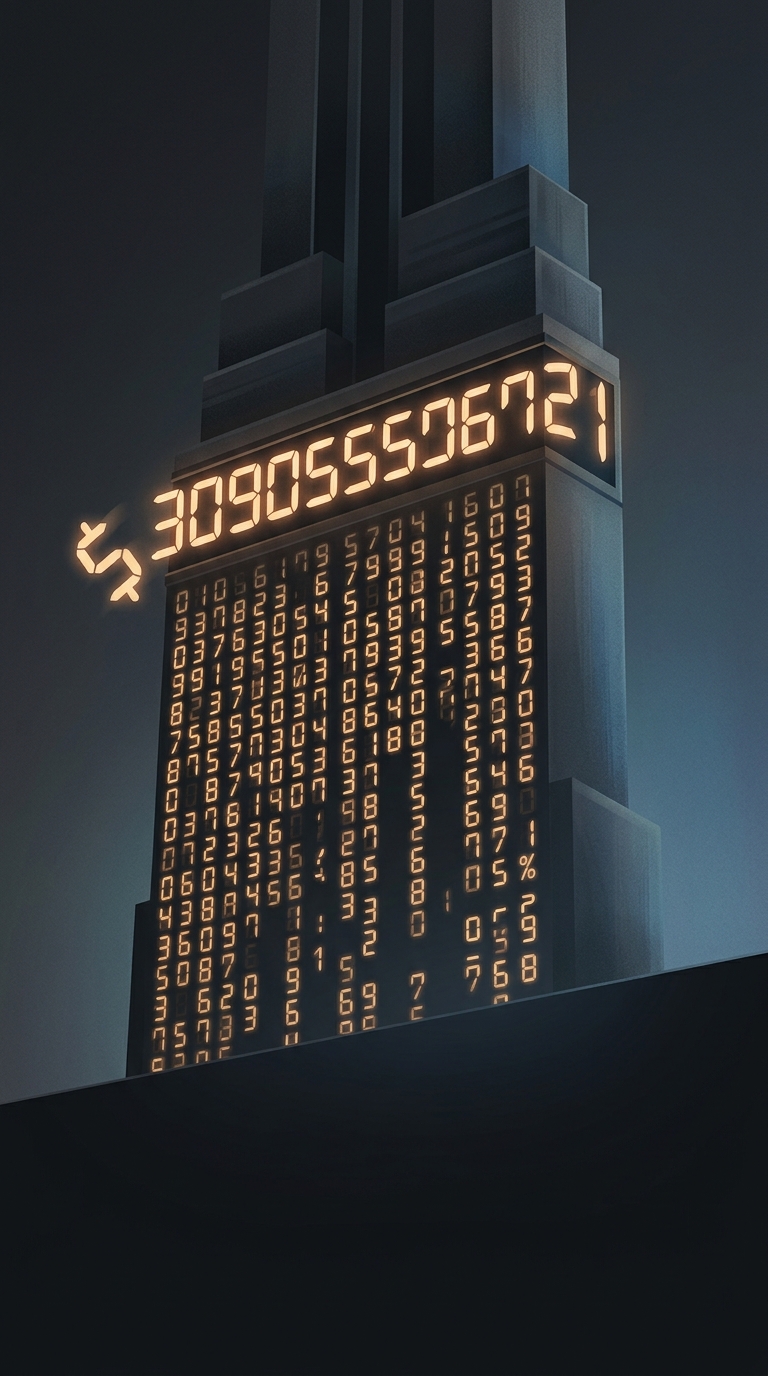
A fixed-width digital display has a simple limit: each numeral needs a slot. When the U.S. debt total crossed into the ten-trillion range, writing it in full required one more digit than the National Debt Clock’s display could accommodate. The dollar sign occupied space too, so the clock’s maintainers removed it rather than abbreviate the figure.
That small design change reveals a basic constraint of public signs: they must represent a changing quantity with hardware built in advance. The debt could keep growing; the display could not gain another slot just by changing its software.
A Stock, Not a Year’s Shortfall
The clock tracks the total federal debt, a running stock of what the government owes, rather than the deficit for a single year. A deficit is the gap between federal spending and revenue over a period; borrowing to cover deficits adds to the debt. That distinction matters because the clock’s number accumulates across years, even as annual budgets and economic conditions change.
The extra digit therefore marked a change in scale, not a sudden one-time bill. Once the total needed fourteen numerals, even the familiar symbol identifying those numerals as dollars became expendable.
The Physical Limit Made the Scale Visible
Removing the symbol solved the immediate space problem but also changed what viewers saw: the amount remained, while its unit had to be understood from the clock itself. The episode is a compact illustration of how a seemingly abstract public figure meets a very literal limit—a growing national total can outgrow the sign built to display it.