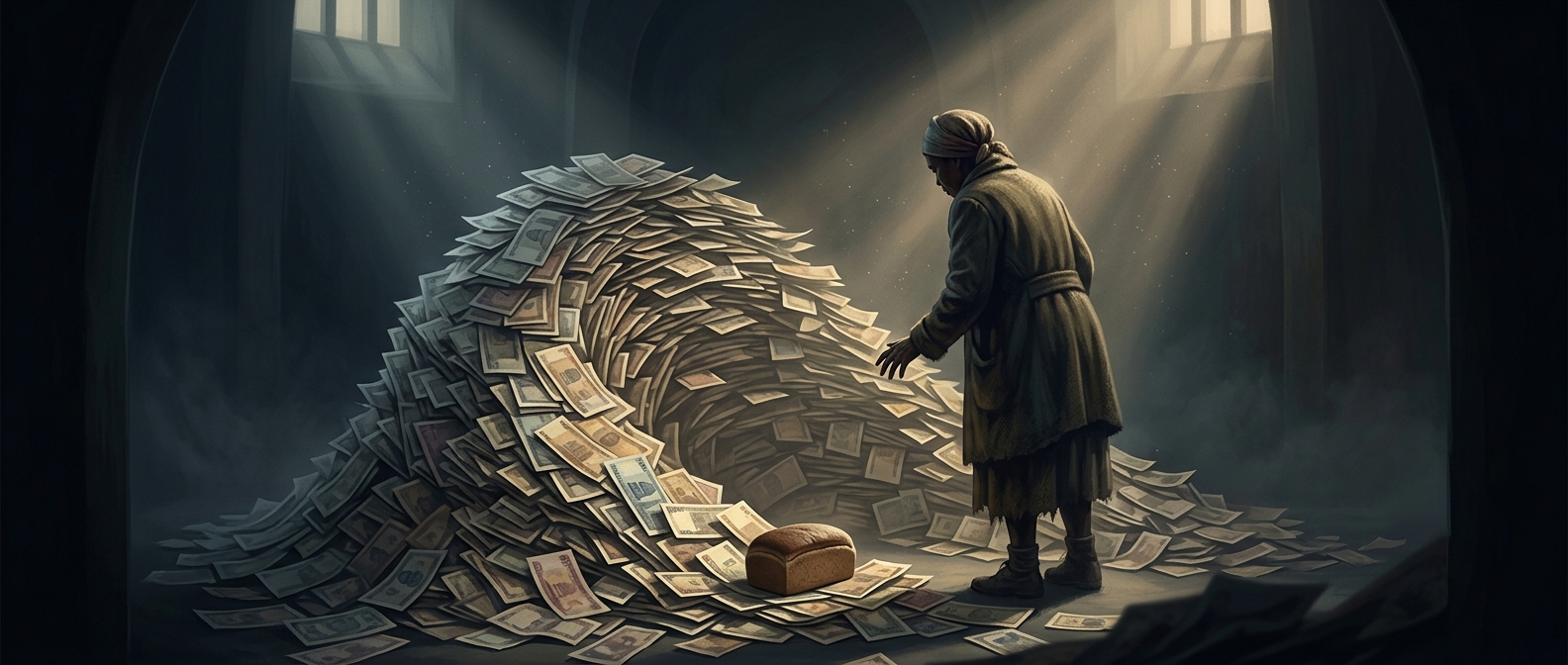
When a trillion stopped sounding enormous
A banknote’s printed number tells you how many currency units it represents, not what those units can buy. In Zimbabwe’s hyperinflation, prices rose so rapidly that ordinary amounts of money became impractical to write or carry. Larger denominations—including a trillion-dollar note—helped people handle transactions on paper, but they did not restore the currency’s purchasing power.
More zeros could not catch up with prices
When prices keep climbing, a paycheck or a wad of cash can lose value between the time it is received and the time it is spent. Businesses may raise prices frequently to keep pace with the cost of replacing their goods. The government can print notes with higher face values, but printing changes the number on the money, not the amount of food, fuel, or other goods available to buy.
That gap is why a trillion-dollar note could still buy very little. Its enormous denomination recorded how far prices and the currency had diverged; it was not evidence of enormous wealth. As confidence in the local money weakened, people increasingly relied on other currencies for transactions, and Zimbabwe eventually abandoned its own currency for everyday use.
The note as a record of collapse
The striking feature of the note is not simply its many zeros. It shows how inflation can make the basic tools of money—prices, wages, and cash payments—harder to use. A bill that looks like a fortune can become a reminder that purchasing power depends on what money can obtain, not on the number printed across its face.