How a Jeweler’s Floor Could Hold Spendable Gold
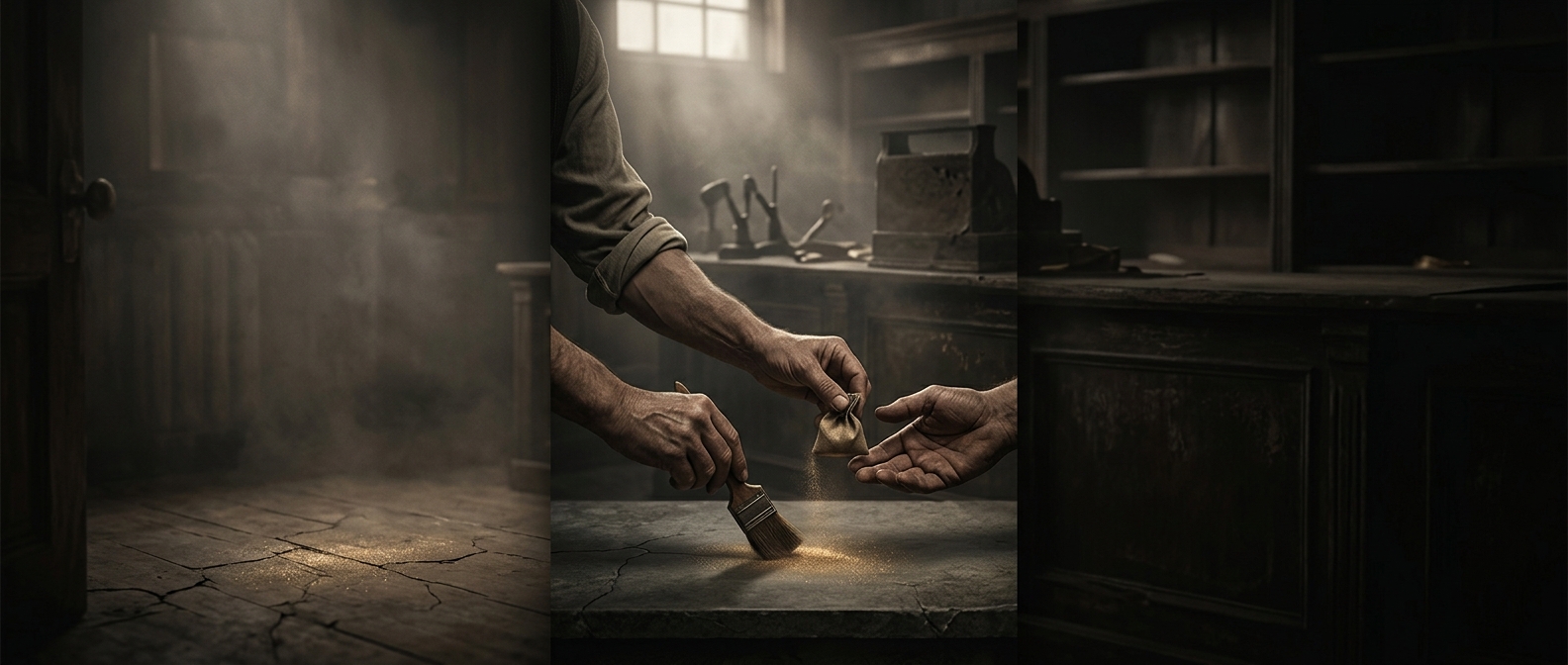
Goldsmiths and jewelers cut, file, and polish precious metal. Those small operations shed particles too fine to collect by hand. Dust settled into floor cracks and mixed with grit, so shops could sweep it up and save it for later recovery. What looked like dirt could contain enough gold to matter.
During the Depression, when cash was scarce, that residue offered a form of value people could potentially trade. Unlike paper money, gold was a physical commodity: its worth came from the metal itself. A tiny amount could help pay for a basic necessity, provided a buyer was willing to accept it.
Why Dust Was Not Quite Like a Coin
Gold dust had no fixed face value. Its usefulness depended on how much actual gold it contained, how pure that gold was, and whether someone could weigh or assess it. The particles were also easy to lose or mix with other material. A shopkeeper accepting them took on the task—and the risk—of figuring out what they were worth.
That made gold dust an improvised kind of pocket change, not a standardized currency. Its value was tangible, but its price had to be negotiated. For people short of cash, the arrangement turned scraps from a jeweler’s work into something exchangeable; for the recipient, it meant converting an uncertain handful of residue into usable metal. The striking part is how little counted: gold did not need to be a coin to buy something, only enough to be recognized and trusted.