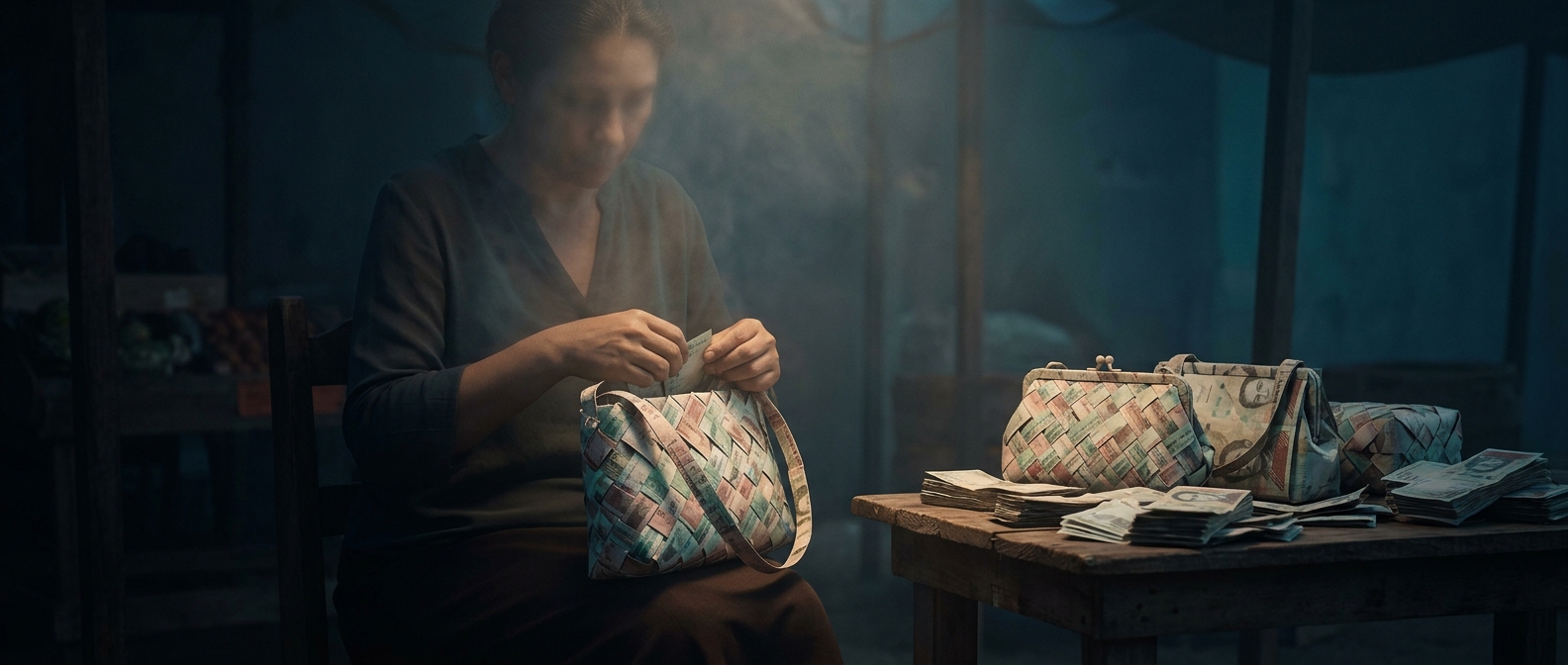
How Worthless Bolivars Became Souvenirs
Inflation changes what money can do before it changes what the notes look like. As prices rose in Venezuela, a stack of bolivars could still be physically substantial while buying very little. The paper remained, but its usefulness as everyday spending money had eroded.
For artisans, that gap created an unexpected material. Notes that had lost much of their purchasing power could be gathered and shaped into handbags or folded into paper swans. The work gave the bills a new purpose: not as a reliable store of value, but as the raw material for a handmade object.
A Different Kind of Value
Tourists bought the pieces as souvenirs, paying for the craft and the story attached to the currency. The notes carried a visible trace of economic upheaval; turning them into something portable and recognizable made that history tangible.
This did not reverse inflation or restore the bolivars’ buying power. It was a small adaptation to the conditions inflation created: artisans could make saleable goods from paper whose value in ordinary transactions had collapsed. A handbag made from banknotes thus held two kinds of value at once—little purchasing power in its bills, and a new value in the labor and meaning built into the finished object.