Why Some Households Keep Cash Outside the Bank
Cash at home offers immediate control: it can be used without a bank card, account access, or an electronic payment network. For people who distrust financial institutions, have had trouble opening or maintaining an account, or simply want an emergency reserve, that direct access can feel more dependable than a balance on a screen.
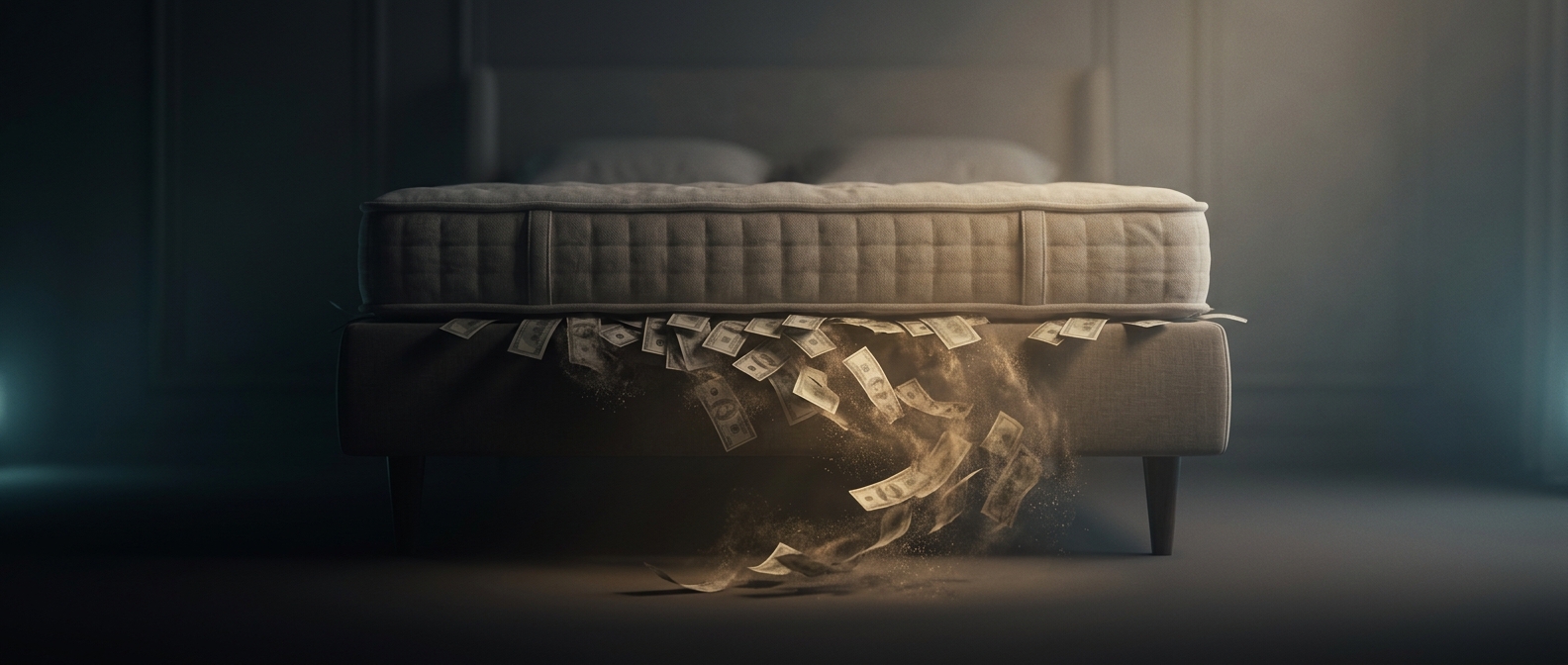
The tradeoff is that convenience comes at a cost. Money in a drawer or coffee can earns no interest, and it is exposed to theft, fire, and loss. A bank account can make funds easier to protect and use for bills or transfers, but it also requires trusting the institution and meeting its practical requirements. A household’s choice reflects which risks feel more immediate.
What Happens When Cash Leaves the Banking System
When a bank customer withdraws cash and keeps it, the money no longer sits in that person’s deposit account. The bank cannot use that particular deposit as part of its funding, and the cash is unavailable for ordinary electronic payments. It can still circulate if the owner spends it; it is only kept out of the banking channel while it remains hidden or stored.
That distinction matters: a cash stash is not automatically invisible to every form of measurement. Currency totals can be counted, but those totals do not reveal whether bills are in a shop’s till, a traveler’s wallet, or a household hiding place. Researchers therefore cannot simply look at a national cash figure and identify how much is stored at home.
Security Purchased at a Price
A home reserve can provide a sense of independence, especially when access to an account is uncertain. But it also places all the practical burden of safeguarding the money on its owner. The same feature that makes cash feel dependable—having it physically close—can make a lost or stolen stash difficult to recover. A hidden reserve buys immediate access, but not the protections or financial services that come with keeping money in an account.