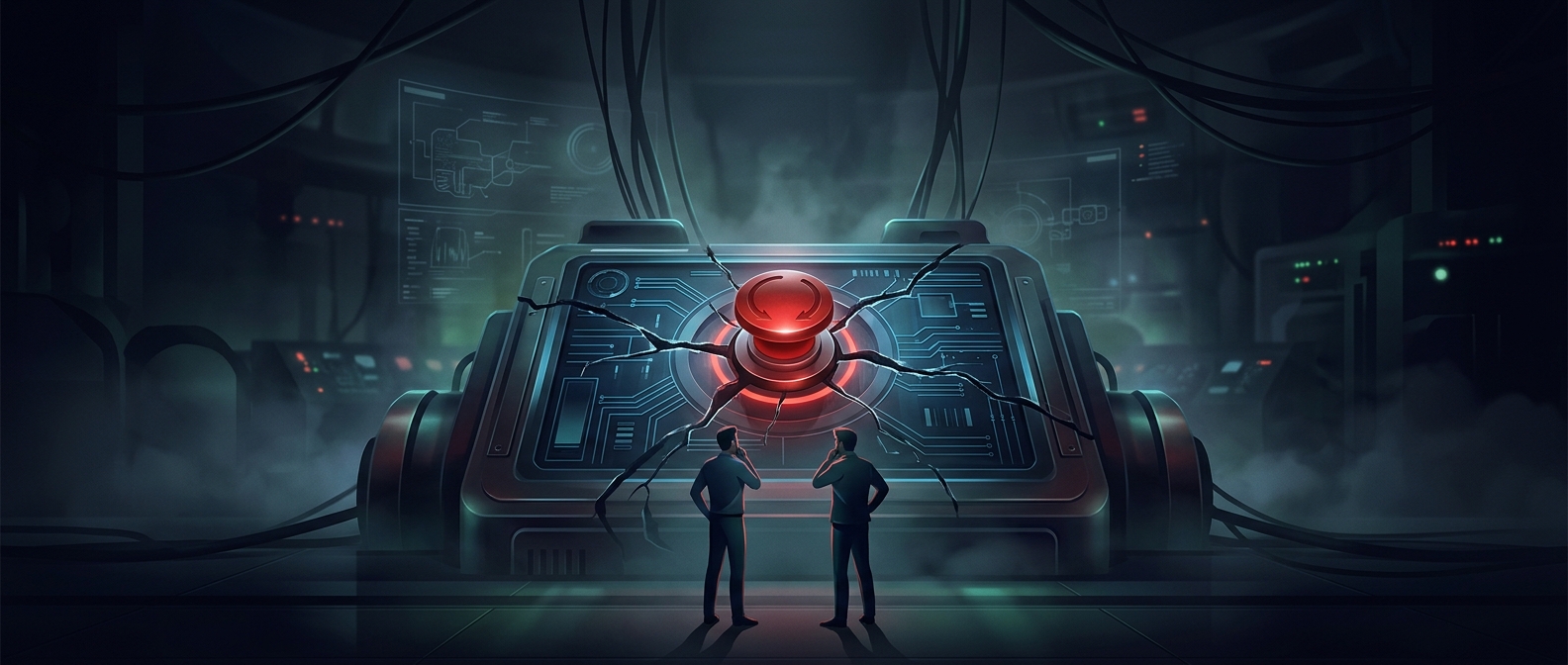
Why software needs a chance to close
A running program is not just code waiting to stop. It may be midway through writing a file, updating a database, sending a message, or handling a user request. If power or a process disappears at that moment, the operation can be left incomplete: a file may be truncated, a payment recorded without its confirmation, or a message removed from a queue before another service receives it.
That is why many systems distinguish a graceful shutdown from a forced stop. A graceful shutdown tells a program to stop accepting new work, finish or safely abandon work already underway, save important state, and release resources. “State” means information the program needs to resume correctly, such as an unfinished task or a record of what it has already processed.
The shutdown travels through a chain
Modern services often rely on other services. A web server might depend on a database, a cache, and a message queue. Stopping one component can strand work in another: requests may still be arriving, background jobs may be waiting, or a dependent service may be trying to reconnect. The order and timing of shutdown therefore matter as much as the final stop itself.
Engineers build safeguards around that uncertainty. Systems may stop routing new requests to a component before asking it to exit, allow a limited period for in-flight work to finish, and then force a stop if it does not respond. They also design operations to be repeatable—so that retrying a task after an interruption does not charge a customer twice or create duplicate records. Logs and health checks help reveal whether shutdown completed cleanly or left work behind.
A forced stop is sometimes the safest option, especially when a process is stuck or causing damage. But the decision is a tradeoff: waiting can prolong an outage, while stopping too quickly can turn one failing component into several inconsistent ones. The practical goal is not to avoid the off switch; it is to make sure the system knows what to do the moment it is pulled.