How rust weakens a coffee harvest
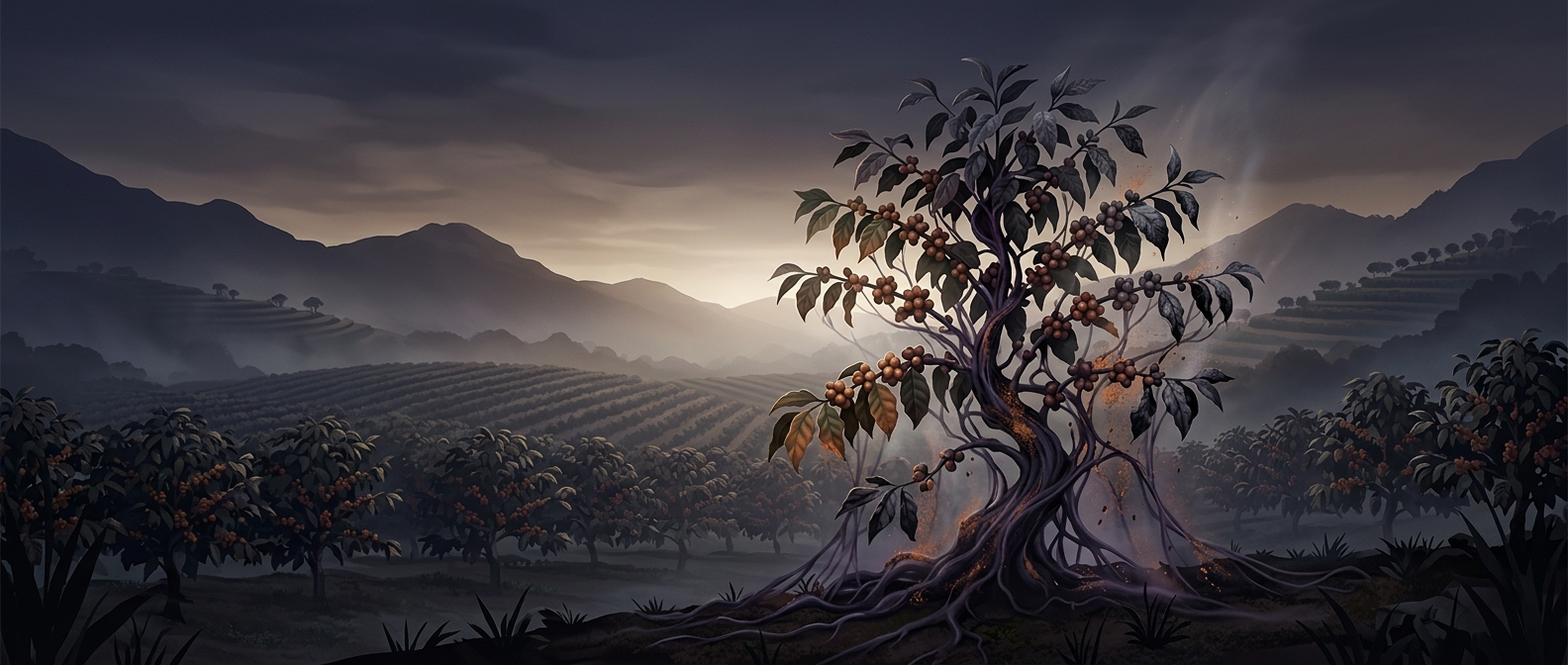
Coffee leaf rust is caused by a fungus, Hemileia vastatrix. It infects coffee leaves, producing yellow-orange patches and eventually causing leaves to fall. With fewer healthy leaves, a plant has less capacity to make the sugars that support new growth and developing coffee cherries. A badly affected tree may yield less, and repeated damage can weaken it for future seasons.
The fungus spreads through spores—tiny reproductive particles—that can travel on air currents or in rain and water. Once rust takes hold in a growing region, spores can move between nearby farms; movement of infected plants can also carry the disease farther. That makes the problem larger than the loss of a single plot, especially where coffee farms are closely connected.
Why the damage reaches beyond the farm
Arabica supplies much of the specialty and premium coffee market, but cultivated Arabica has relatively little genetic variation. In practical terms, many plants share traits that make them susceptible to the same disease. A rust-resistant plant could help, but replacing established trees takes time, and growers must also consider whether a new variety produces beans buyers want and suits local growing conditions.
For farmers, rust can mean lower sales just as they face costs for monitoring, treatment, or replanting. If disease reduces harvests across a region, buyers may have fewer beans to source, and prices or availability can shift. The risk to a morning cup is therefore not that one infected tree empties a coffee shop; it is that a fungus can erode production across farms that depend on similarly vulnerable plants.