Why jasmine’s harvest follows the night
Jasmine’s perfume comes from volatile molecules: small aroma compounds that readily escape into the air. As a flower warms in sunlight, these compounds can evaporate faster, changing how much fragrance remains available for extraction. The blossoms also release their scent as they open, so the useful harvest window is brief. Picking before the day heats up helps preserve the flowers’ fresh aroma for perfumery.
A narrow window shapes the work
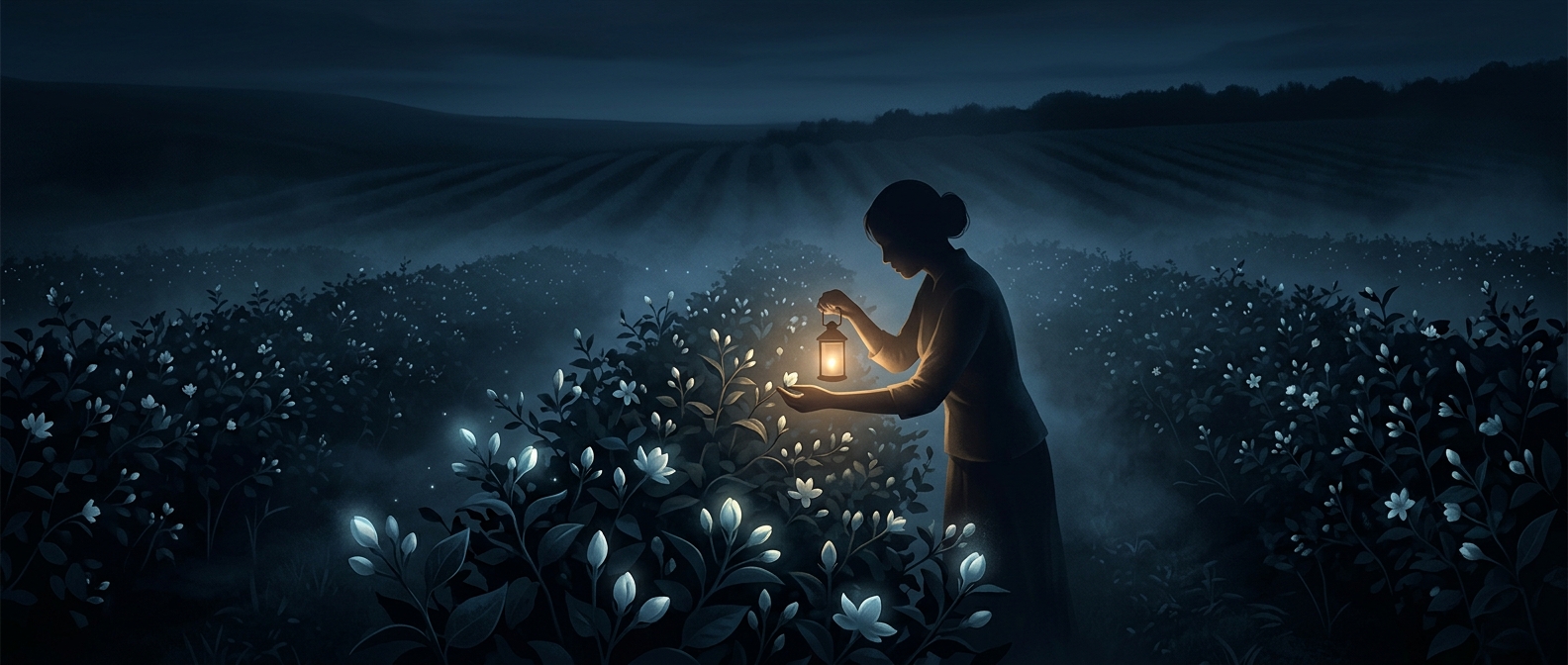
Jasmine flowers are small and delicate, making careful picking difficult to mechanize. Workers must gather them by hand while the blossoms are at the right stage, often during hours when most other agricultural work is not being done. Once picked, the flowers need to reach processing promptly; waiting in the heat can undermine the reason for harvesting so early.
That schedule affects the cost of the finished perfume. Producers have to organize labor around a short, inconvenient window and handle a perishable crop quickly. The extra expense is not simply a premium for a rare scent: it reflects the work required to capture a fragrance that can diminish between the flower opening and its processing. In a bottle of high-end perfume, the night shift is part of the production process.