Why the harvest begins years before the bottle
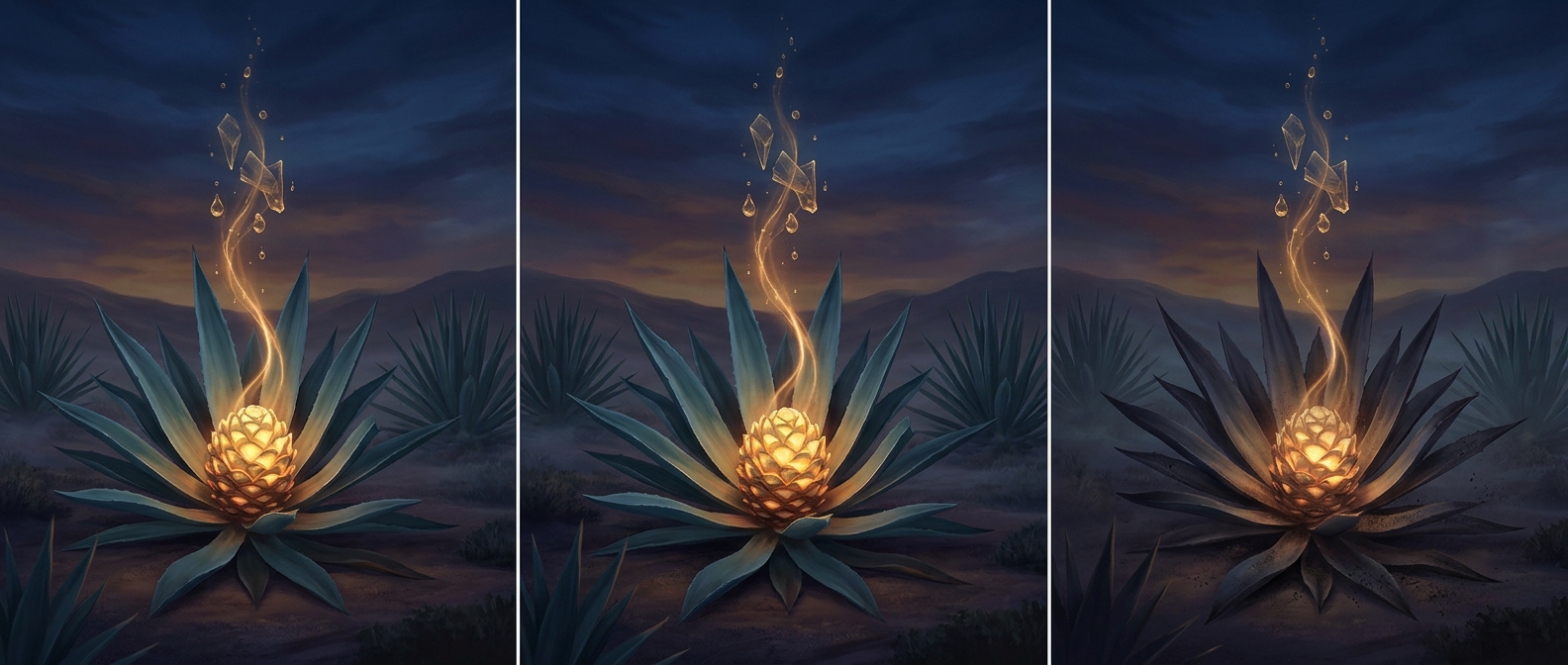
Blue agave is valuable for what it stores in its central core, often called the piña because it resembles a pineapple after the leaves are cut away. The plant builds up carbohydrates there over years. At harvest, the leaves are removed and the core is taken to be cooked, which turns stored carbohydrates into sugars that yeast can ferment. The resulting alcohol is then distilled into tequila.
That sequence makes agave farming unusually slow to adjust. A grower deciding how much to plant today is making a bet on demand years in the future. If many farmers plant more after prices rise, those plants cannot be rushed to harvest when the market later needs them. By the time the larger crop is ready, demand or prices may have changed.
A crop with a long memory
Unlike an annual crop that can be replanted for next season, harvested agave represents years of land, labor, and care committed to one outcome. A shortage can therefore be difficult to fix quickly, while a glut can leave growers with mature plants that are ready at the same time. Distillers, growers, and workers all feel those swings, though not in the same way: distillers need dependable supplies, while farmers bear the risk of waiting for a market that may shift.
The striking consequence is that tequila’s supply is partly shaped by decisions made long before anyone orders a drink. Each harvest is the end of a multiyear forecast—and once the core is cut, that particular plant cannot provide another crop.