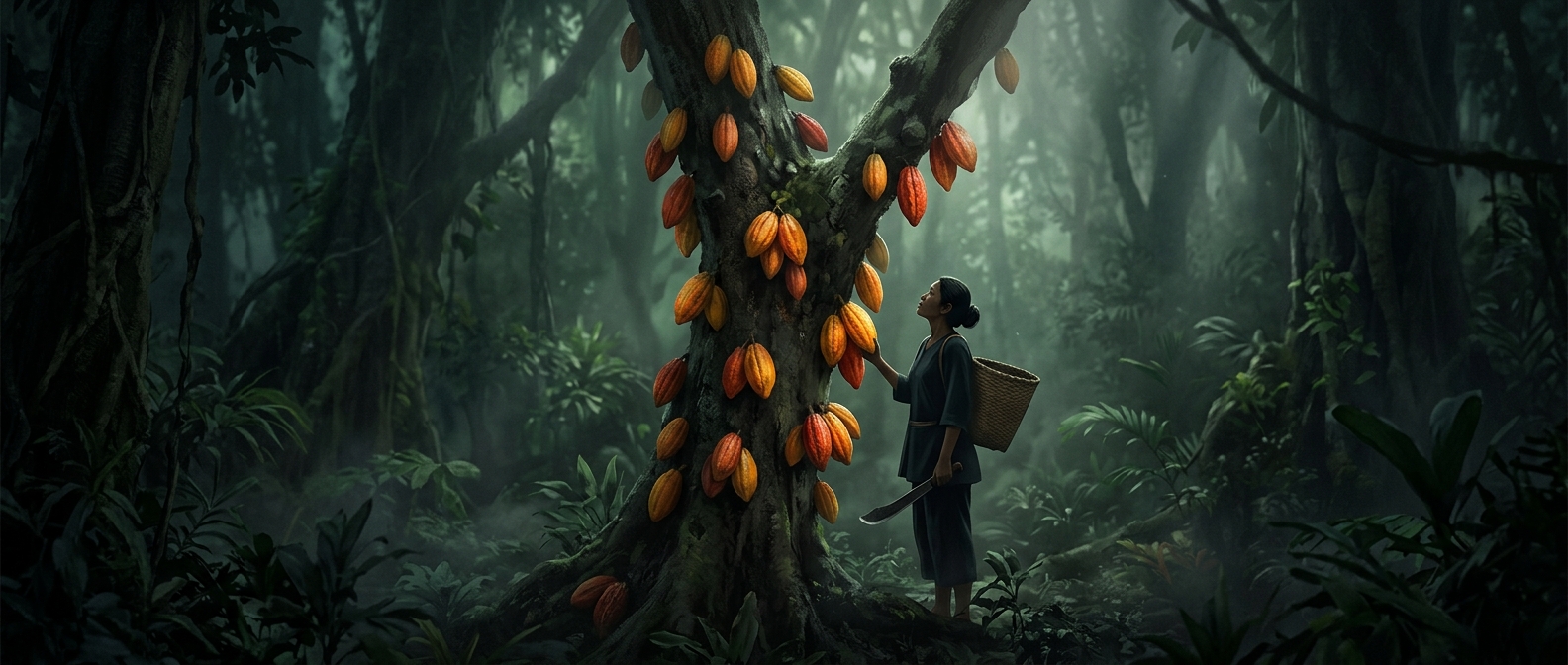
The trunk is part of the next harvest
A cacao pod begins as a tiny flower emerging from a rough patch on the tree’s trunk or a thick branch. That patch, called a flower cushion, can produce many flowers over time—and, if one is pollinated, a pod. So the spot that holds this season’s fruit may also be where later crops begin.
A cut can cost more than one pod
Harvesters usually cut a ripe pod from its short, sturdy stem rather than pulling or twisting it off. Pulling can tear the stem area; a careless blade can gouge the trunk or damage the flower cushion. Because cacao trees produce fruit repeatedly from these same areas, injury can reduce their ability to bear pods there in the future.
The practical challenge is to cut through the tough stem without cutting into the living tree. Farmers use sharp knives or hooked harvesting tools suited to the height and position of each pod. A low pod may be easy to reach, while one higher on the trunk or tucked among branches calls for a different angle.
Why careful harvesting matters
A damaged tree is not simply a lost harvest for the day: it may mean fewer chances for fruit from that spot in later seasons. That makes harvesting a balancing act between speed and care, especially when many pods are ripe at once. The unusual growth pattern has an economic consequence: each pod has to be removed without sacrificing the tree’s next opportunity to produce one.