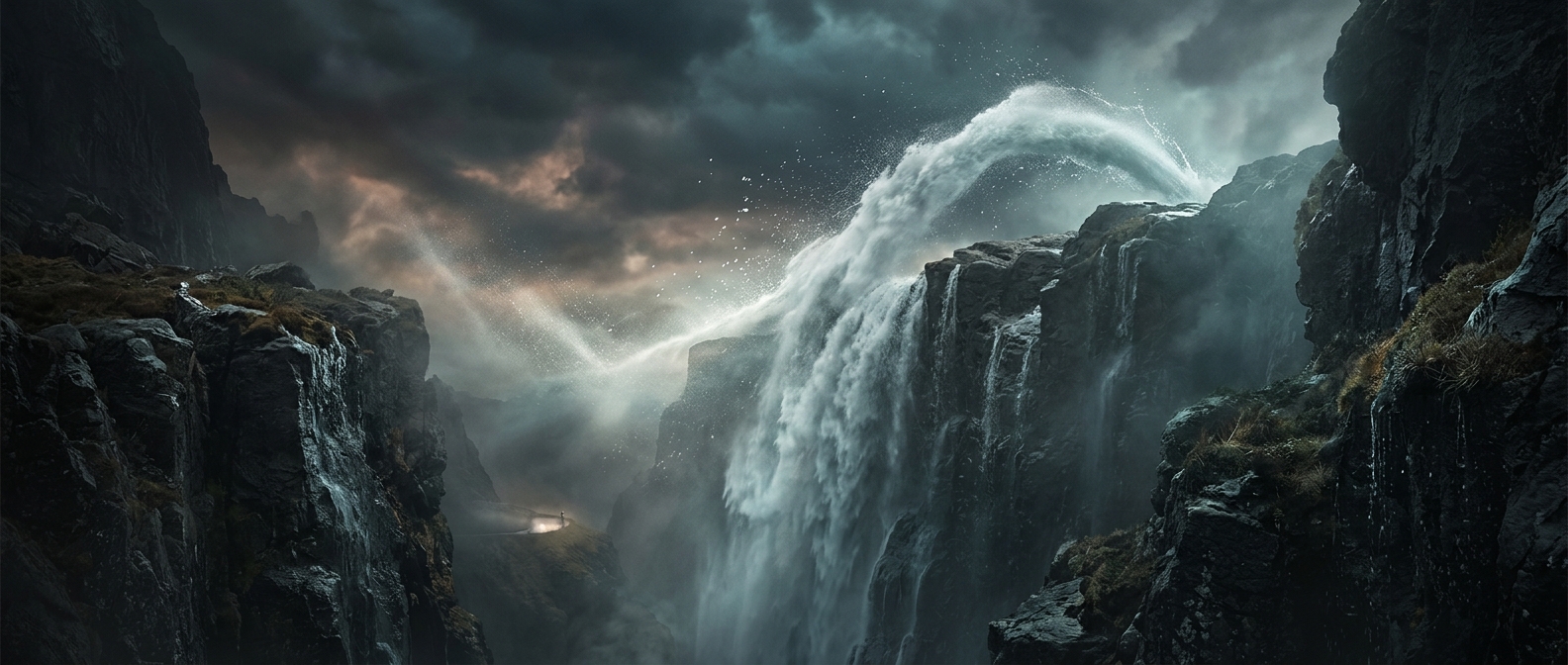
How Wind Can Turn a Waterfall Upside Down
A waterfall is falling water, but its path is not fixed once it leaves the cliff. In a powerful gust, air moving across the edge can push against the falling stream. If the water is already breaking into droplets, the wind can carry those lighter drops upward and back over the rock, creating the striking impression that the falls are climbing into the sky.
The effect is strongest where exposed cliffs funnel or channel gusts across the waterfall. The wind does not cancel gravity; it supplies enough sideways and upward force to redirect some of the water before it reaches the ground. Heavier streams are harder to lift, so the scene may include water still falling alongside a plume of spray blowing back.
A Reversed Appearance, Not Reversed Gravity
The spectacle depends on a balance between the waterfall’s flow and the wind. A strong, sustained gust can make the water fan out and travel uphill through the air, while a change in wind direction lets it fall normally again. From a distance, the moving spray can look like a continuous stream running backward, even though individual droplets are being swept along by the air.
That is why the phenomenon can be dramatic but temporary: the waterfall’s direction seems to change with the gusts, not because the water has stopped obeying gravity.