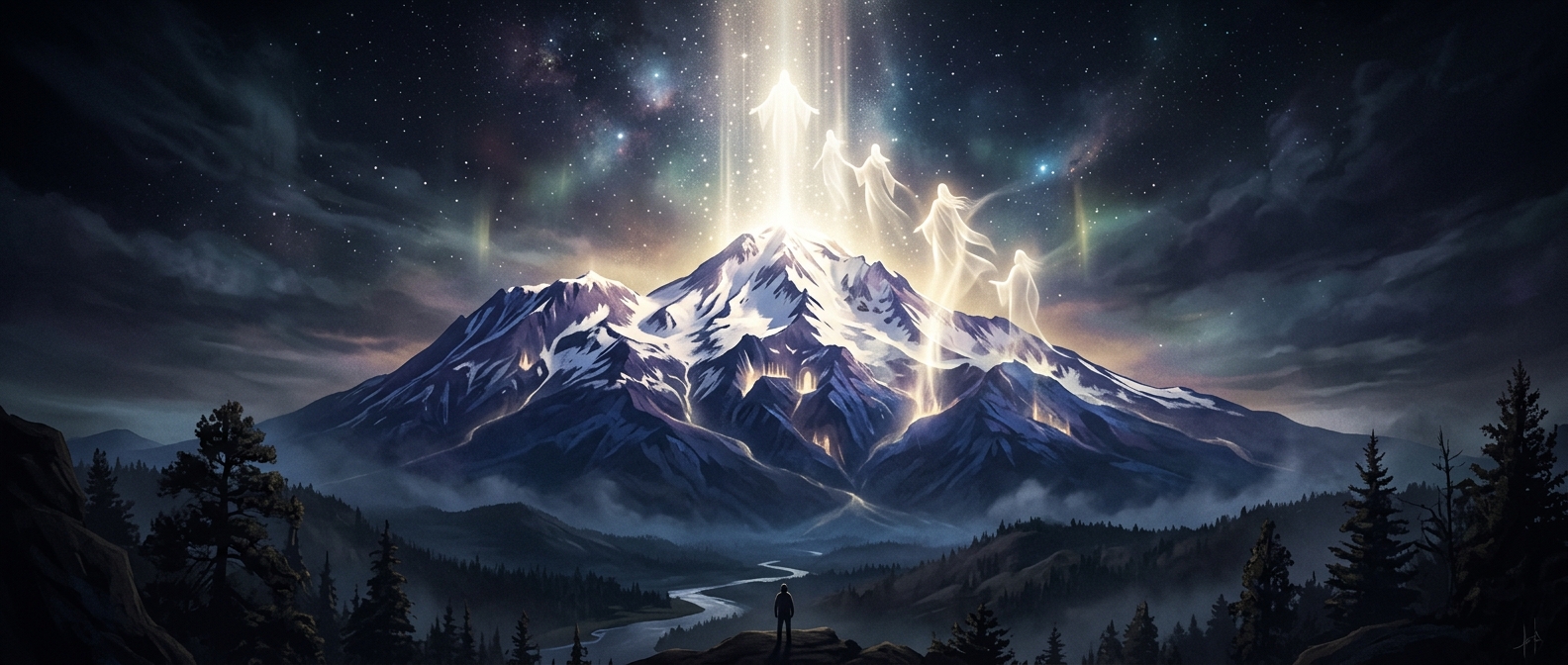
Why Mount Shasta Became a Hidden Sanctuary
The story that ascended masters dwell inside Mount Shasta belongs to modern spiritual belief, not to a documented account of the mountain’s geology or history. In this tradition, “ascended masters” are enlightened spiritual beings thought to have advanced beyond ordinary human life. Mount Shasta, a striking volcanic peak in Northern California, is imagined as a place where such beings can remain unseen while guiding people.
A Mountain Made for Spiritual Meaning
Mountains have long served as symbols of distance from everyday life: they rise above settlements, can be difficult to reach, and often feel set apart from the surrounding landscape. Shasta’s size and isolation make it especially easy to picture as a threshold between the visible world and a hidden one. New Age interpretations turn that sense of remoteness into a specific claim: that a concealed spiritual community exists within the mountain.
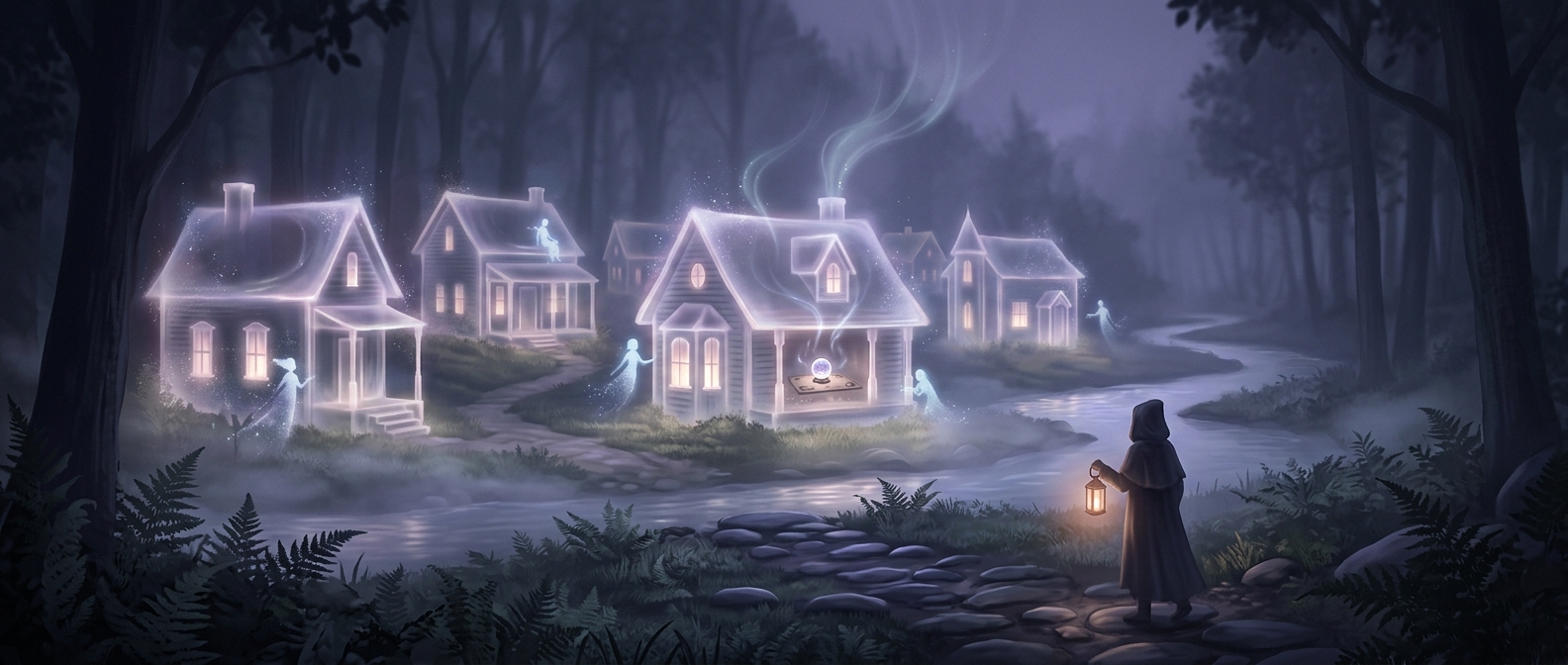
The idea is associated with “Lemurians,” beings said in some versions of the story to descend from the lost continent of Lemuria. Accounts differ, but they commonly describe an underground refuge or city and connect it with enlightened teachers. These details are elements of a spiritual narrative; they are not evidence that a hidden civilization has been found inside the volcano.
Belief, Place, and the Unseen
For believers, the mountain is more than scenery: it becomes a focus for meditation, pilgrimage, and the hope of contact with a wiser presence. The hidden setting also helps explain why the beings are not encountered by ordinary visitors. Their inaccessibility is part of the story’s meaning, not a claim that a tourist can verify by looking into a crater.
That blend of dramatic landscape and invisible guidance is what gives the legend its staying power: Mount Shasta can be visited, but the sanctuary believers imagine there remains beyond ordinary sight.