How mange changes a coyote’s appearance
Severe mange can make a familiar wild animal look like something unknown. In sarcoptic mange, tiny mites burrow into the skin, triggering intense itching and inflammation. Affected coyotes may scratch until they lose much of their fur; their skin can become thick, scabbed, and wrinkled. With its coat gone, an animal may look unusually gaunt, pale, or misshapen—especially when glimpsed briefly or at night.
The change is more than cosmetic. A badly affected coyote may be weakened and behave differently from a healthy one, adding to the impression that it is an unfamiliar creature. But the visible signs are not unique to one animal or disease, so appearance alone cannot establish what a witness saw.
Why the resemblance feeds Chupacabra reports
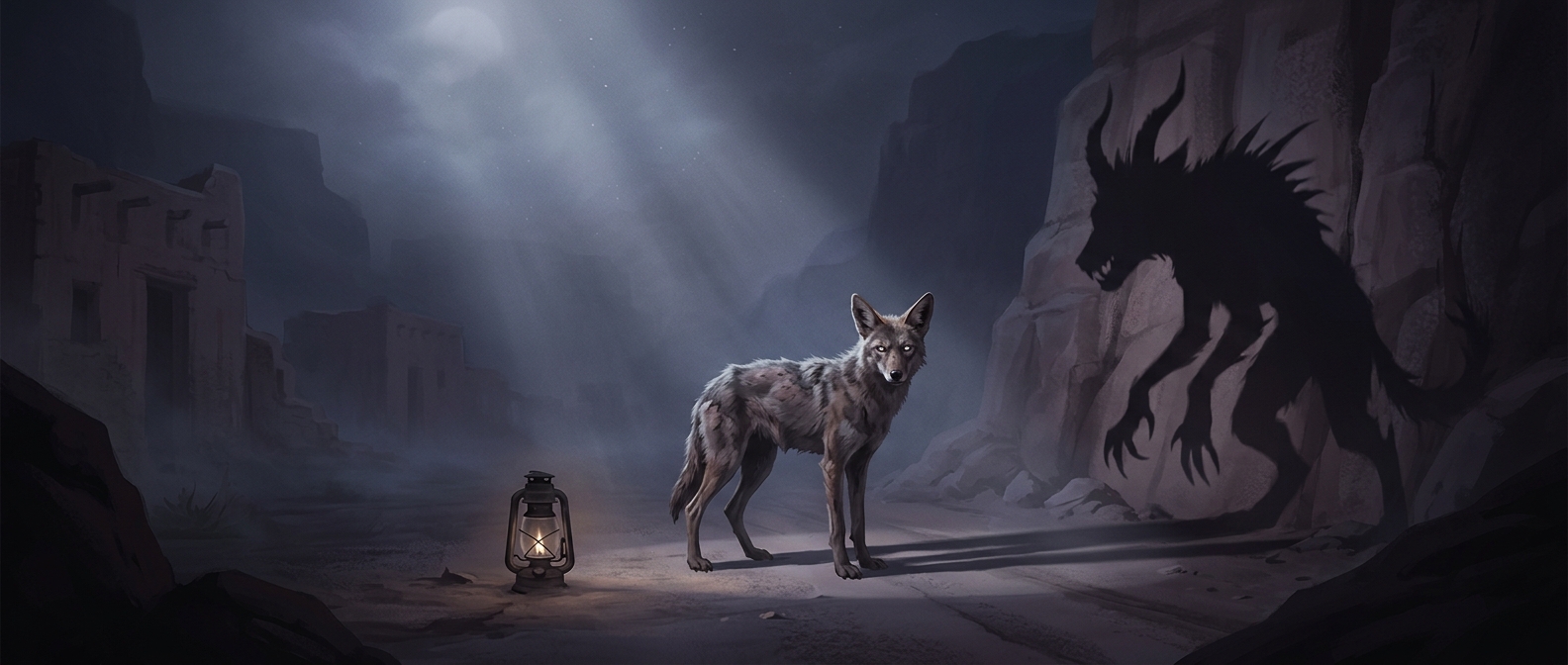
Descriptions of the Chupacabra vary, but some accounts emphasize a hairless, unsettling animal. A mangy coyote can fit that impression far better than the sleek, furred coyote people expect. If it is seen near livestock, the setting can make an already strange-looking animal seem connected to a frightening story.
That does not mean every reported Chupacabra has been explained this way. The narrower point is that a severe skin disease can radically alter an ordinary animal’s outline, making a fleeting sighting difficult to recognize. In some cases, identifying the animal as a coyote turns a seemingly monstrous silhouette into a familiar predator in distress.