A Word Written on Clay
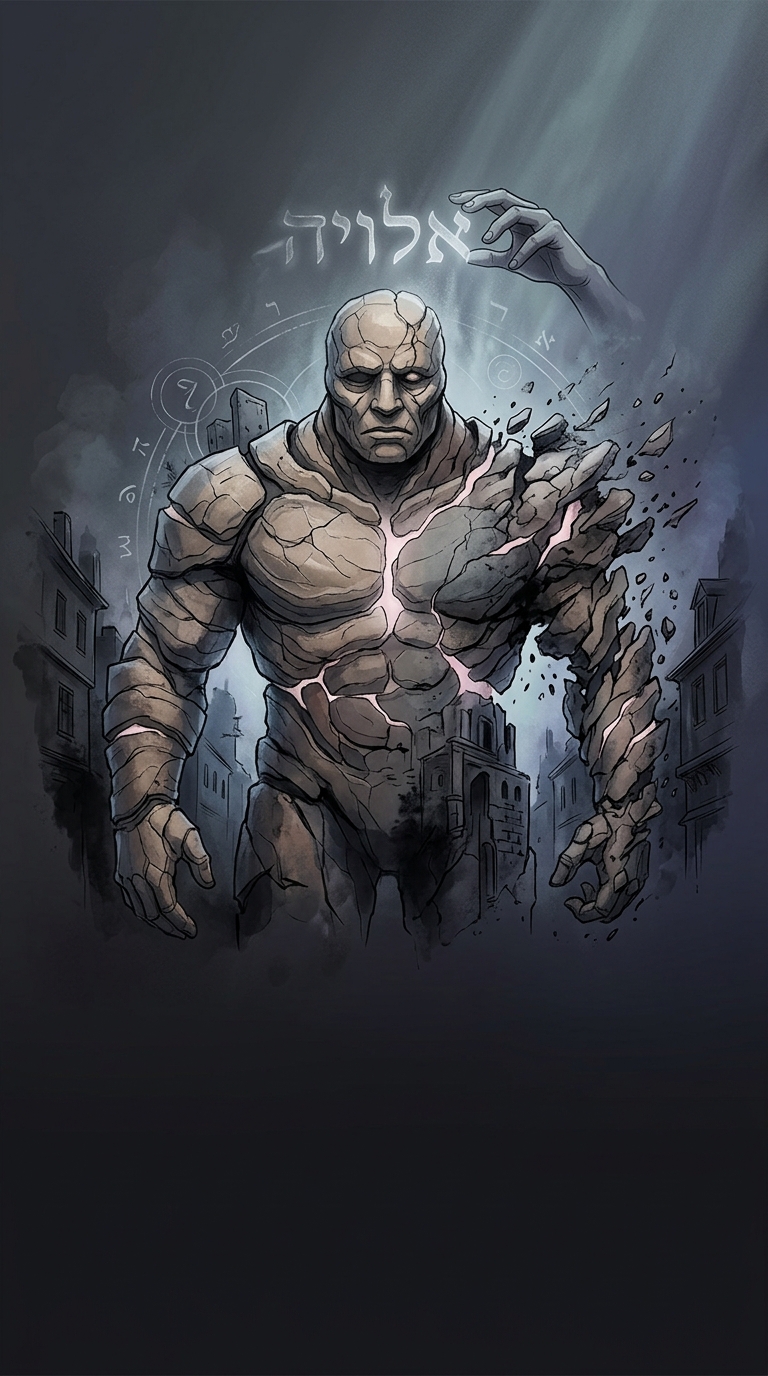
The forehead mark turns the golem’s creation into an act of language. In Jewish folklore, a golem is an artificial human made from earth or clay; in some versions, sacred words or letters give the otherwise lifeless figure motion. The mark is not a mechanical switch. It represents the belief, within the story, that divine power could be approached through the careful use of holy language.
The Mark Could Also Be a Warning
One well-known version uses the Hebrew word emet, meaning “truth.” In that telling, removing the first letter leaves met, meaning “dead,” and the golem becomes lifeless again. This detail is not shared by every golem story, but it makes the creature’s dependence on its inscription easy to see: its life is bound to a word that can be undone.
That dependence also gives the tales their tension. A servant made to protect or help people may become dangerous if its maker cannot control it. The forehead mark is therefore more than a magical detail; it is a visible reminder that creating power brings responsibility—and that the means of bringing something to life may also be the means of stopping it.