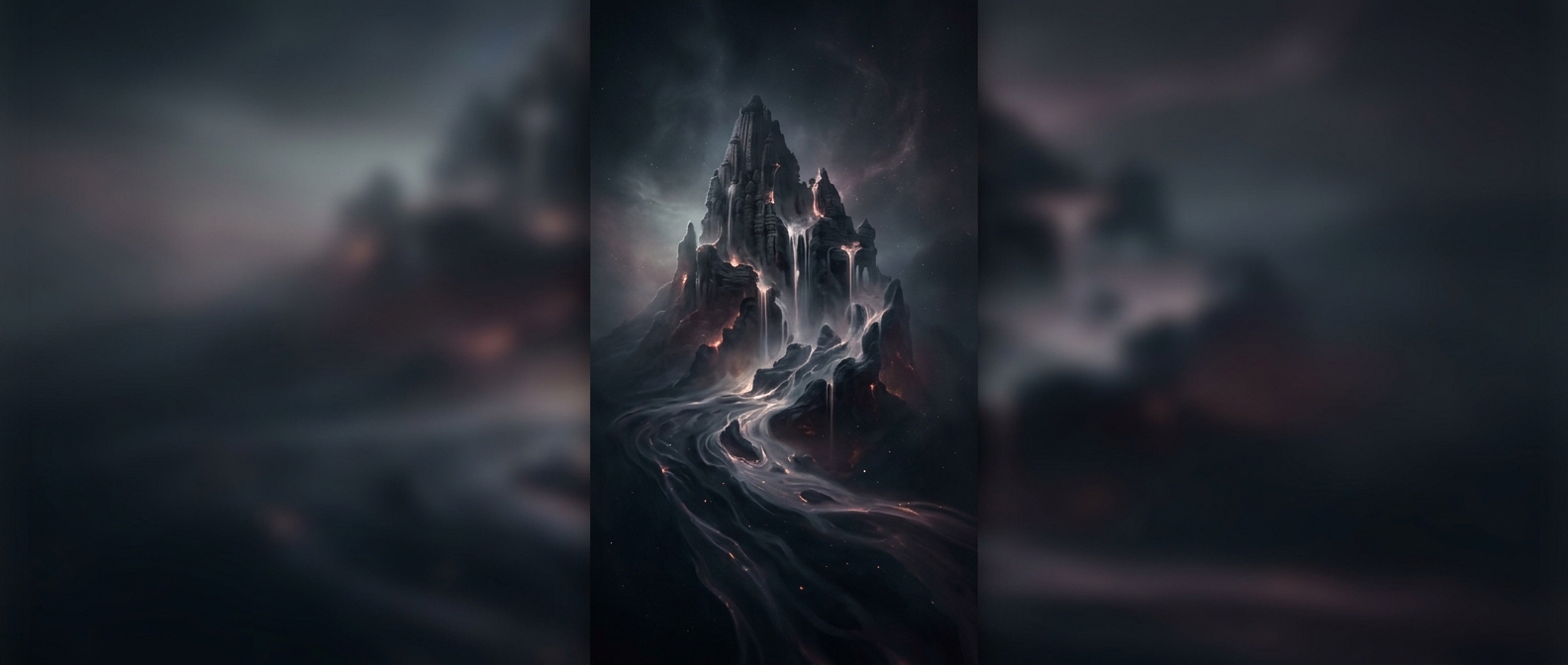
What “Pralaya” Means in Hindu Cosmology
Pralaya is a Sanskrit term for dissolution or withdrawal. In Hindu cosmological traditions that describe the universe as cyclical, it names a phase in which the manifest world ceases to exist in its familiar form. The idea is not simply that objects melt; it is that the ordered universe—its forms, distinctions, and worlds—recedes into a more fundamental, unmanifest state.
The precise account varies across texts and schools. Some describe dissolution as part of a recurring cosmic rhythm: worlds come into being, endure, and eventually dissolve, rather than unfolding through one final end. In that framework, pralaya is a transition between phases of existence, not necessarily permanent nothingness.
From Many Forms Back to a Source
The image of matter dissolving points to a change in how reality is expressed. Things that seem separate and stable lose their distinct forms and return to what the cosmology treats as their underlying source. Later creation can bring differentiated forms into view again. The striking implication is that the familiar world is temporary without being meaningless: it is one phase in a larger cycle.
These accounts are religious and philosophical ways of describing cosmic order, not claims established by modern physics. Their force lies in the reversal they imagine: the universe’s complexity does not simply vanish into a void; it is gathered back into an undifferentiated state from which another world may emerge.