Why the Jiangshi Moves by Hopping
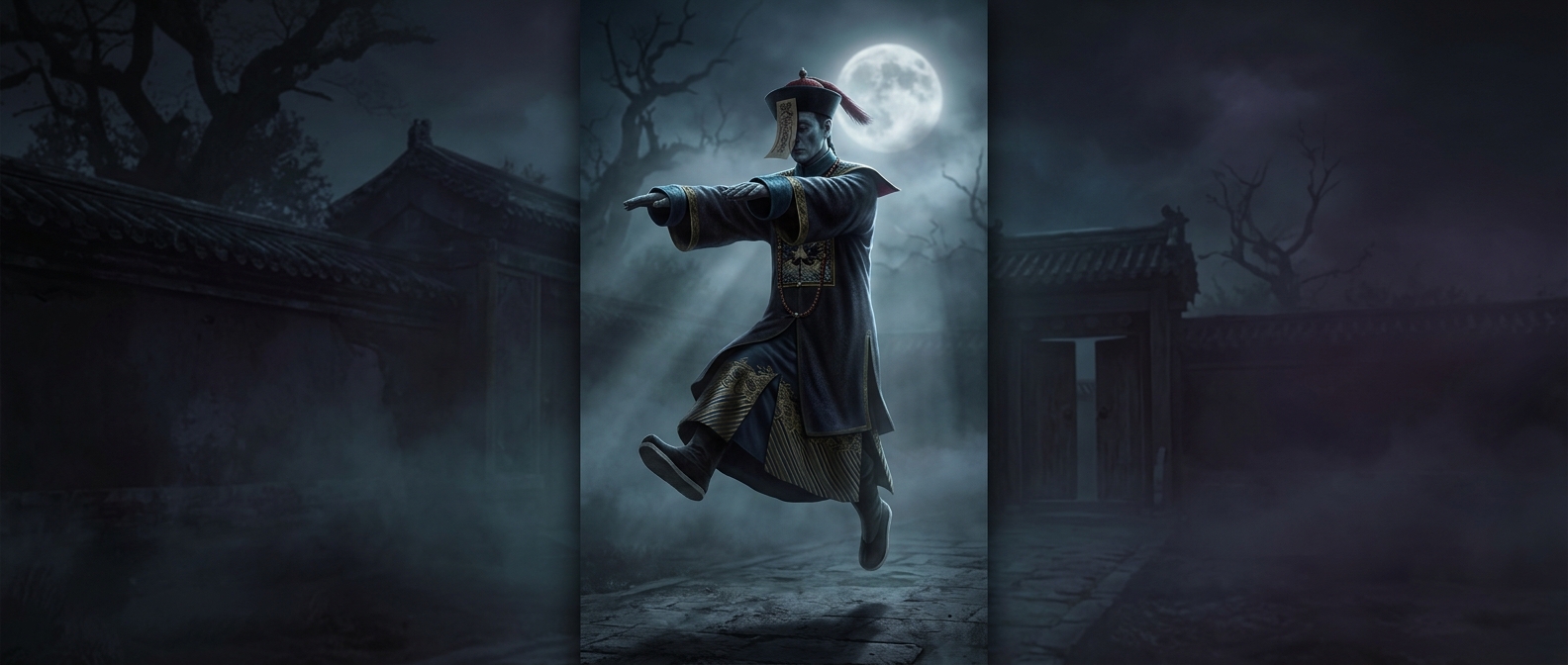
A jiangshi is a reanimated corpse from Chinese folklore, often called a “hopping vampire” in English. In familiar depictions, it does not walk with an ordinary stride: its body seems too stiff to bend naturally, so it advances in repeated hops. The name itself combines characters meaning “stiff” and “corpse,” making bodily rigidity central to the image.
The outstretched arms reinforce that stiffness. Rather than swinging freely like a living person’s, they stay fixed in front of the body, turning each movement into a rigid, awkward lurch. The result is instantly recognizable—and easy to stage in stories and performances: a pursuer that is frightening not because it moves quickly, but because it keeps coming in the same unnatural rhythm.
A Folklore Image, Not a Medical Explanation
The hopping is part of the creature’s traditional supernatural portrayal, not a claim about how real bodies move after death. Details vary across stories and later screen versions, but the fixed posture and bouncing gait have become a compact visual code for the jiangshi. A few stiff hops can identify the creature before it needs to be named.