A Bathroom’s Neglect, Given a Tongue
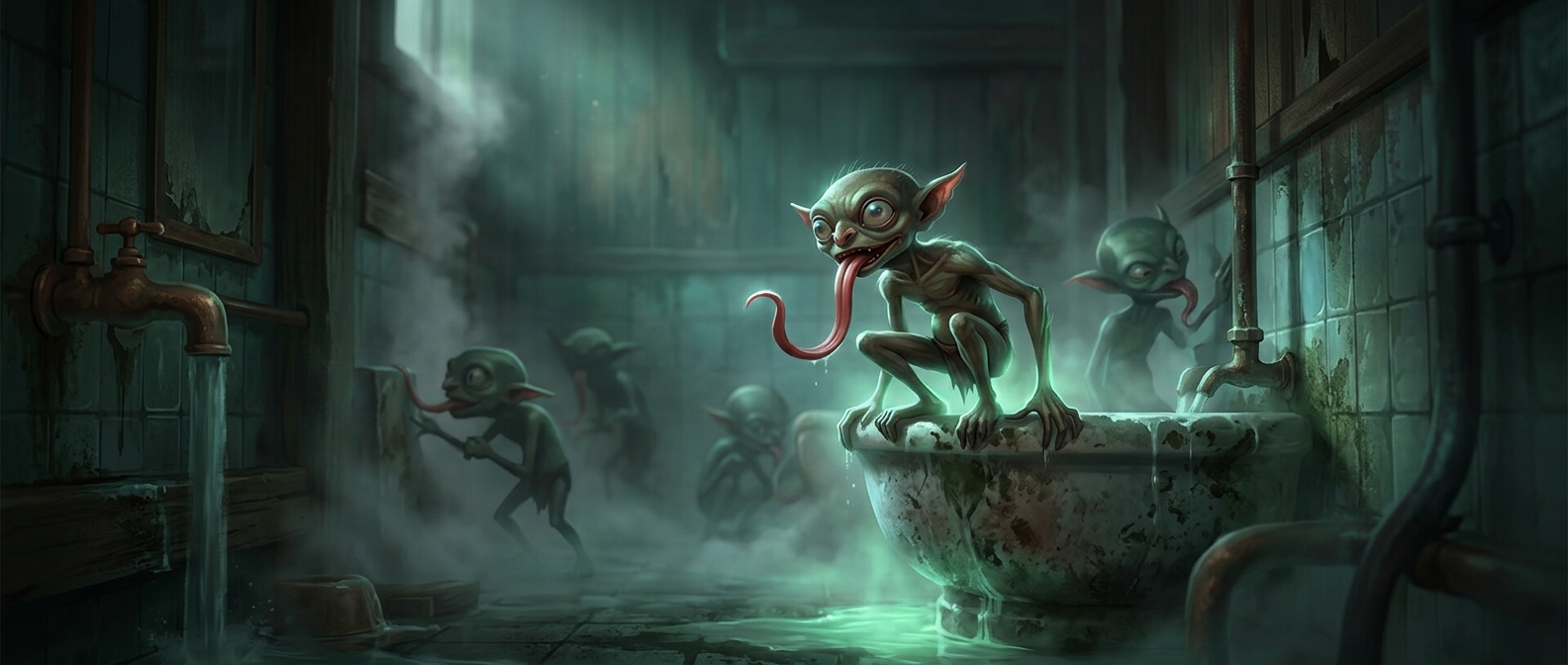
The akaname belongs to the Japanese tradition of yōkai—supernatural beings that can embody strange, unsettling, or comic parts of everyday life. Its name is commonly written with characters meaning “grime” and “lick,” a blunt description of the creature’s nighttime habit: feeding on dirt in an unclean bathroom.
That habit makes the monster’s setting part of its meaning. A bathroom is private and easily overlooked; grime there is evidence of chores postponed. The akaname turns that small, familiar embarrassment into something eerie: if the room is left filthy, a creature might come to enjoy it.
A Folktale That Makes Dirt Vivid
The story gives an ordinary household problem a memorable shape. Instead of an abstract warning to clean, it offers a goblin with a revolting appetite. The image can amuse as much as it disgusts, making the lesson easy to picture without requiring a grand adventure or a distant haunted place.
The akaname is a figure from folklore, not a scientific explanation of bathroom dirt. Its lasting appeal lies in that compact transformation: neglected grime becomes a visitor’s feast, and a routine cleaning task acquires a hint of the uncanny.