Why astrologers track a planet’s path twice
A planet’s retrograde is an apparent change in direction, not a literal reversal through space. Viewed from Earth, planets usually move eastward against the background stars. Because Earth and the other planets travel around the Sun at different speeds, their changing positions can make one planet seem to slow, stop, and move backward for a time.
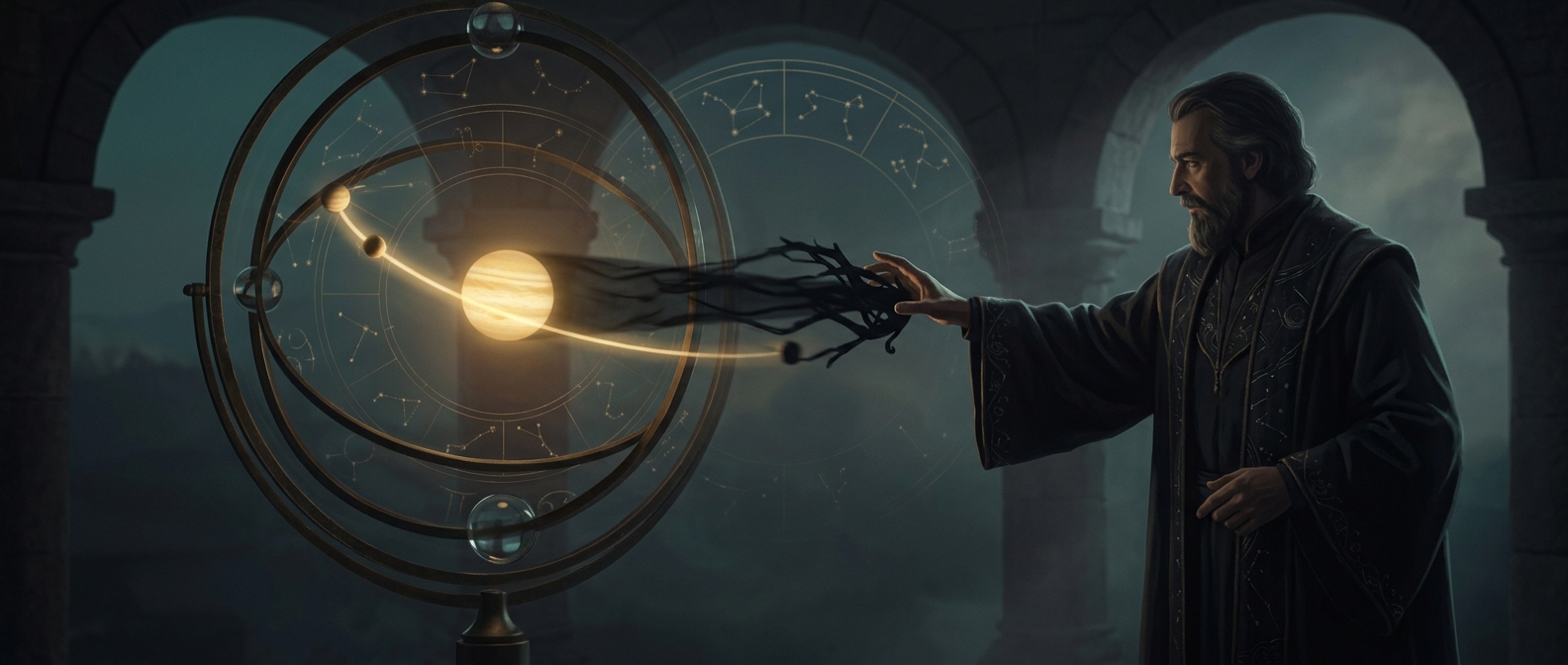
Astrologers map that apparent backward motion onto a range of zodiac degrees. The planet first passes through that range while moving forward, retraces it during the retrograde, then crosses it again after resuming its usual apparent direction. The first and final crossings mark the boundaries of the shadow period.
How the shadow widens the story
In astrological practice, the retrograde itself is not the only time assigned meaning. Events that happen during the earlier crossing may be described as foreshadowing what comes up again during the backward pass; events during the final crossing may be framed as the issue’s resolution or aftermath. That gives practitioners a longer interpretive window in which to connect disruptions to the planet’s motion.
The celestial pattern supplies dates and boundaries, but the meaning attached to them is an astrological interpretation. The same sequence can therefore make a retrograde story seem to begin before the planet appears to reverse—and linger after it has turned forward again.