When a mirror was a costly household object
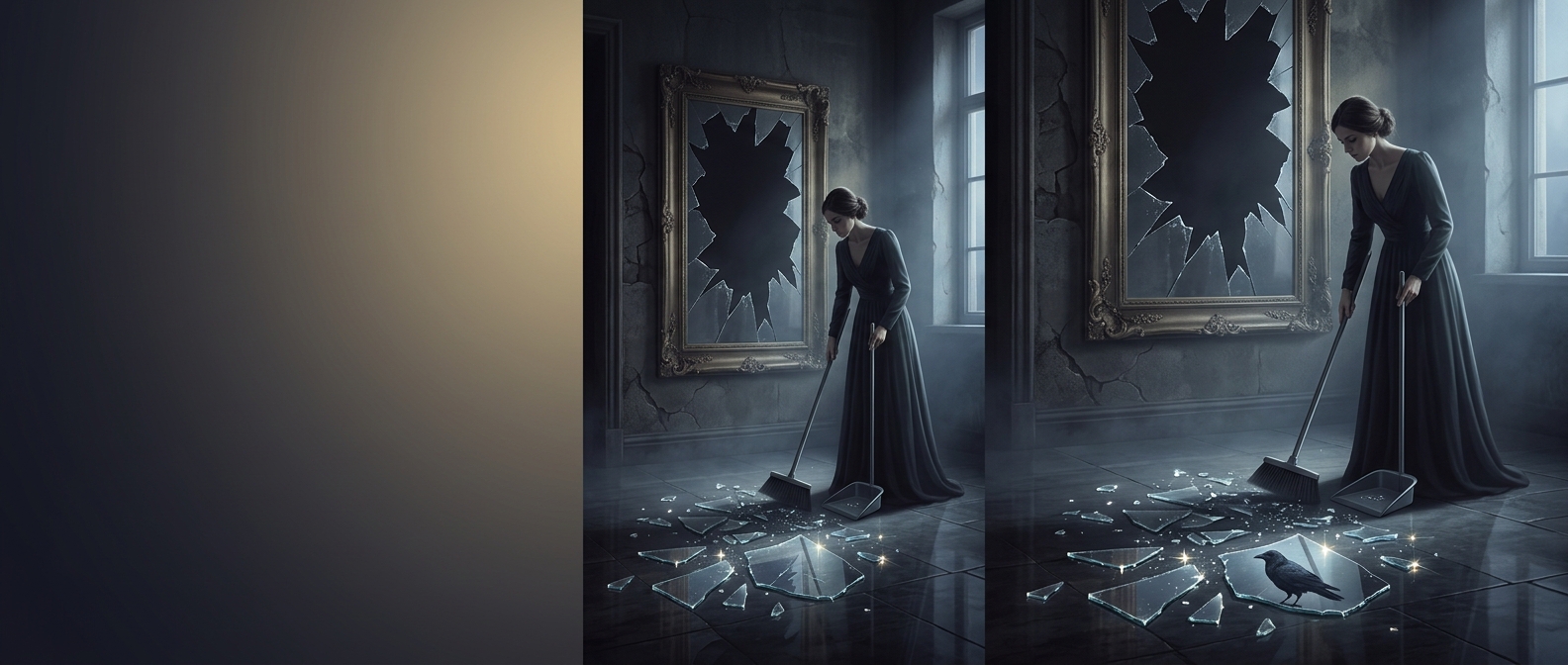
A glass mirror depends on a reflective layer behind the glass. In older silver-backed mirrors, that layer was made with silver, and producing a clear, usable mirror was costly. If one shattered, the loss was not just a few pieces of glass: replacing the object could mean a substantial expense.
That cost gives the broken-mirror warning a practical shape. A story about years of bad luck turns an ordinary accident into a memorable consequence—one that might also make people handle an expensive possession more carefully.
Why the curse lasted in the story
The familiar seven-year span is part of the legend, not a demonstrated effect of breaking glass. The reported explanation is economic: the supposed misfortune reflected the burden of replacing a valuable mirror. The superstition made a household loss sound like a sentence, while the real trouble was much more immediate: a damaged object and a floor that needed sweeping.