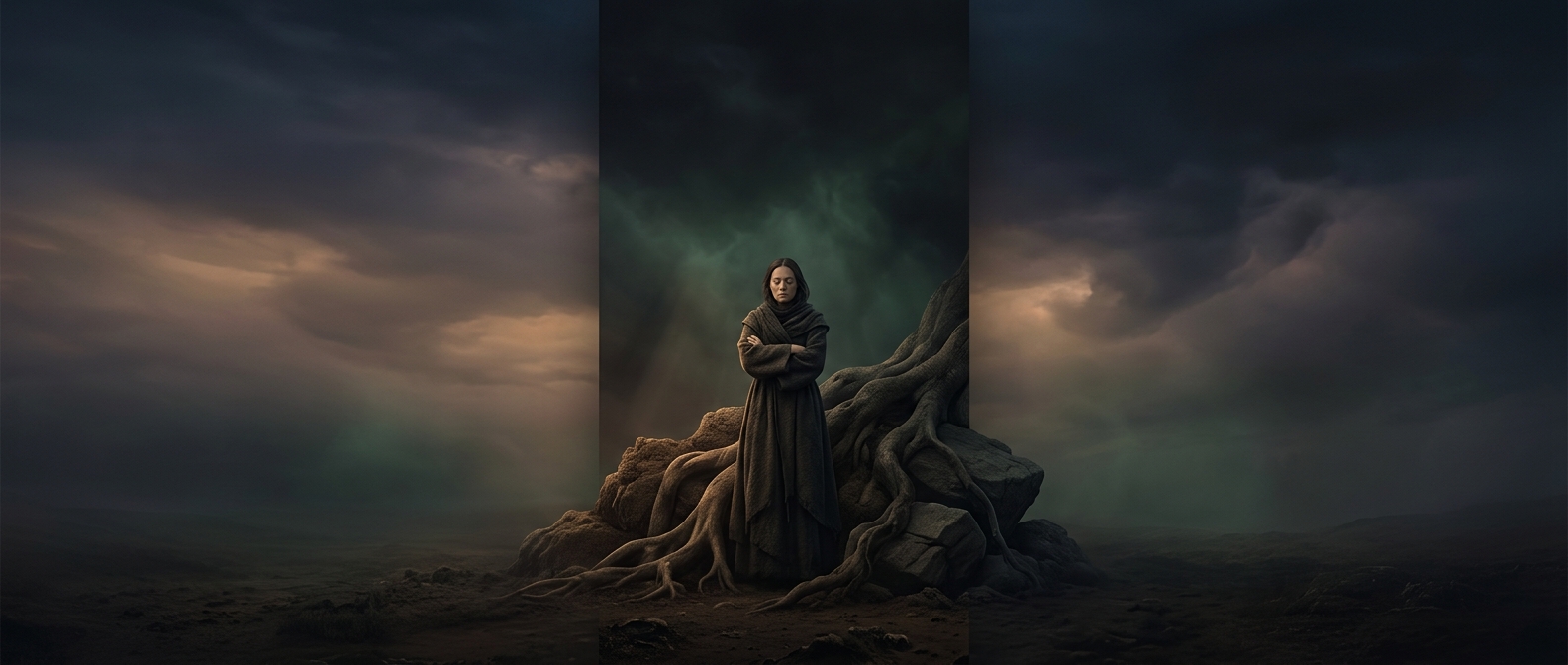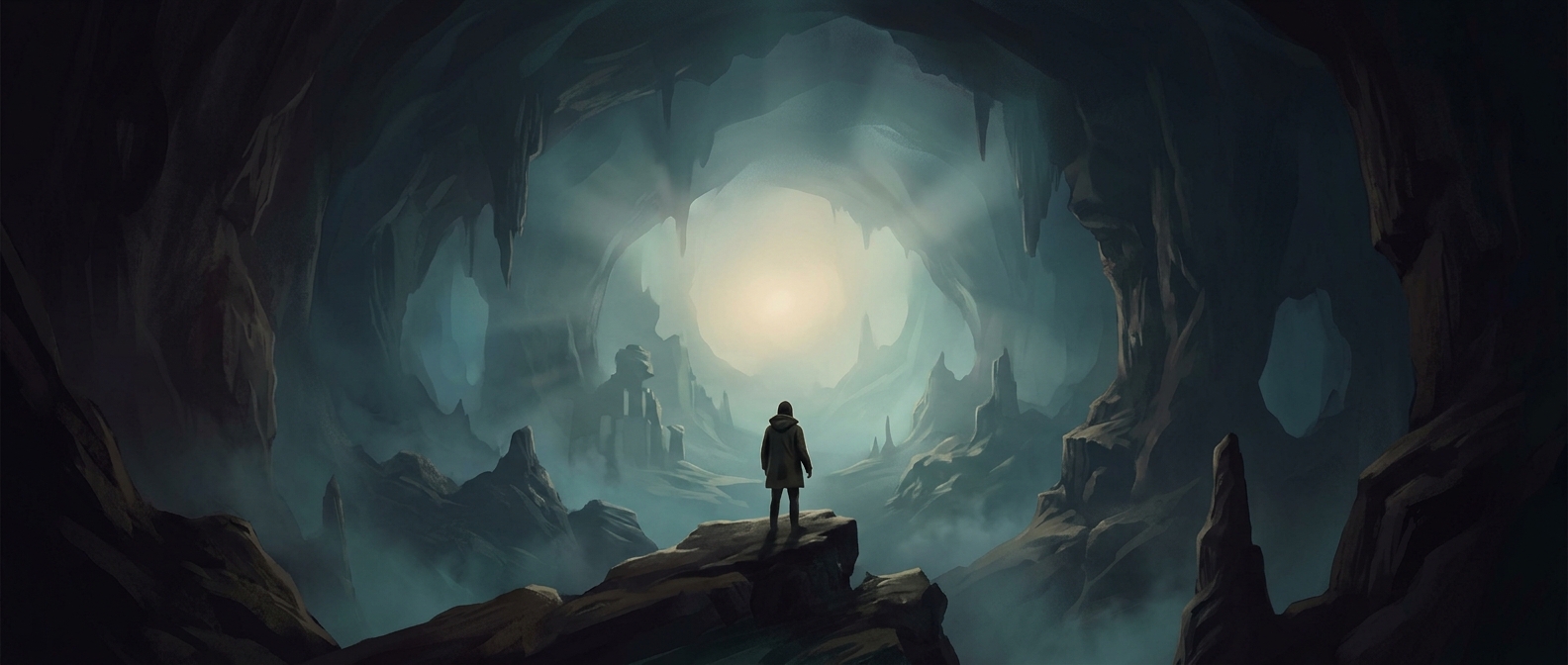
The idea began as a model of a hidden interior
“Hollow Earth” is not one fixed story. Some versions imagine a shell surrounding a smaller inner world; others add openings near the poles, inner suns, or inhabited lands. The shared move is to treat the ground beneath our feet not as a deepening mass of rock, but as the roof of another world.
In the 17th century, astronomer Edmond Halley proposed that Earth might contain nested shells, partly to account for changes in its magnetic field. Later versions turned that speculative structure into a setting for exploration and hidden civilizations. The theory’s details changed, but its appeal stayed concrete: familiar features of the planet could be recast as clues to places humans had not reached.
Why the interior is not an empty space
Modern evidence gives scientists ways to investigate far below the deepest boreholes. Earthquakes send waves through the planet, and those waves change speed or direction depending on the material they cross. Their patterns reveal layers, including a solid inner core and a liquid outer core—not an enormous open interior. Earth’s mass, gravity, and magnetic field also fit a dense, layered planet.
That evidence does not make the imagined inner world meaningless as a story. It shows why the claim is different from ordinary exploration: the proposed landscape would have to exist inside a planet whose measurable behavior points to rock and metal instead. The enduring twist is that Hollow Earth stories place a whole unknown geography where geology finds the machinery of the world itself.