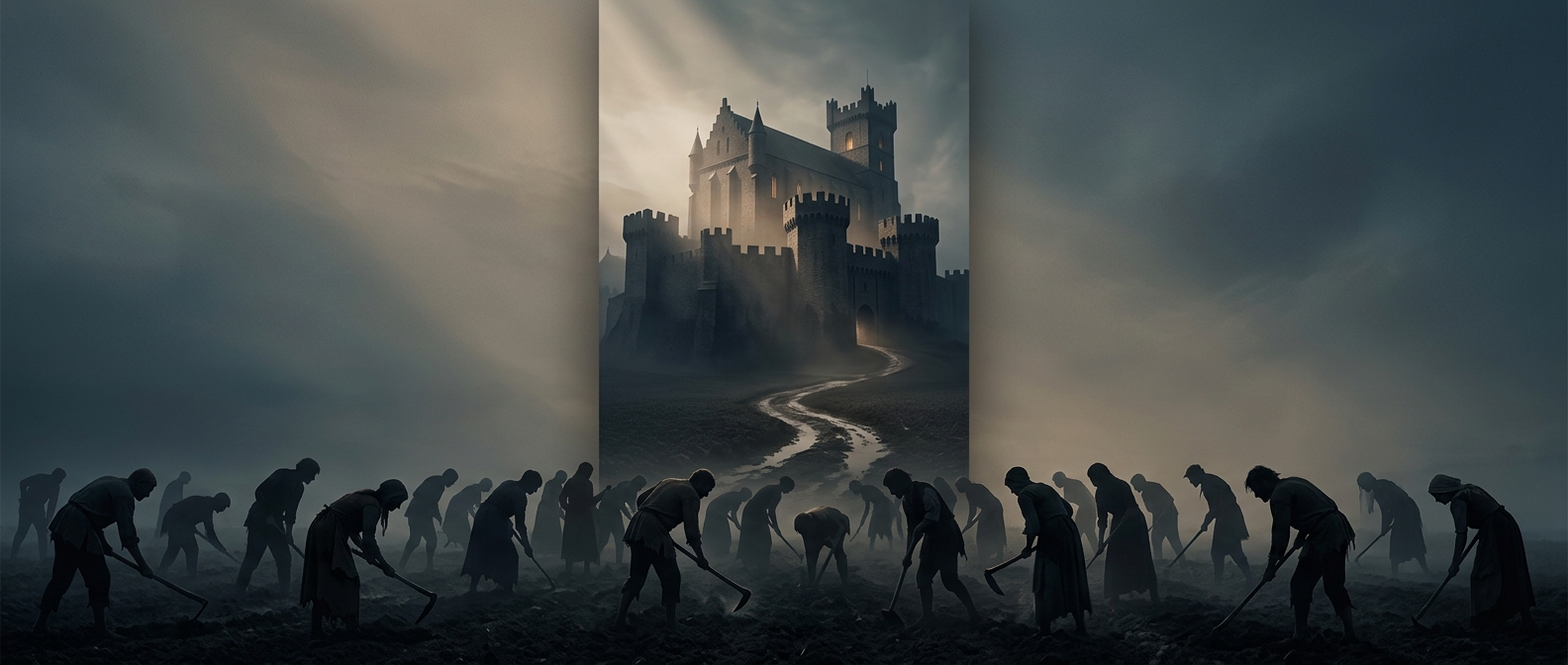
How a manor turned labor into military power
A lord’s estate was not just land; it was a system for collecting a dependable share of what people produced. Peasant households worked their own holdings to feed their families, but also owed dues to the lord. Those obligations might include days laboring on the lord’s fields, delivering grain or livestock, or paying rent in money or goods.
The crucial economic advantage was that these payments arrived without the lord having to hire workers at a wage for every task. Labor dues could bring in crops, maintain fields, and support construction or upkeep. Produce could feed a household at the castle or be exchanged for supplies. The same stream of resources helped sustain armed retainers and the horses, equipment, and provisions needed for military service.
Why tenants could not simply refuse
A peasant’s claim to use a plot was often bound up with obligations to the lord, while legal and social arrangements limited the ability to leave. In many places, people also depended on the manor for access to land, protection, and local dispute resolution. These ties did not make the work voluntary: refusing a demand could threaten a household’s livelihood and standing.
The precise duties varied by region and period, and not every peasant owed the same mix of labor and produce. But the underlying bargain was starkly unequal. A lord could build wealth and project force because many households surrendered part of their working time and harvest before deciding what they could keep. A castle’s stone walls thus rested on a less visible foundation: recurring claims on the labor and food of the surrounding countryside.