From a Weapon for Hire to Work for Hire
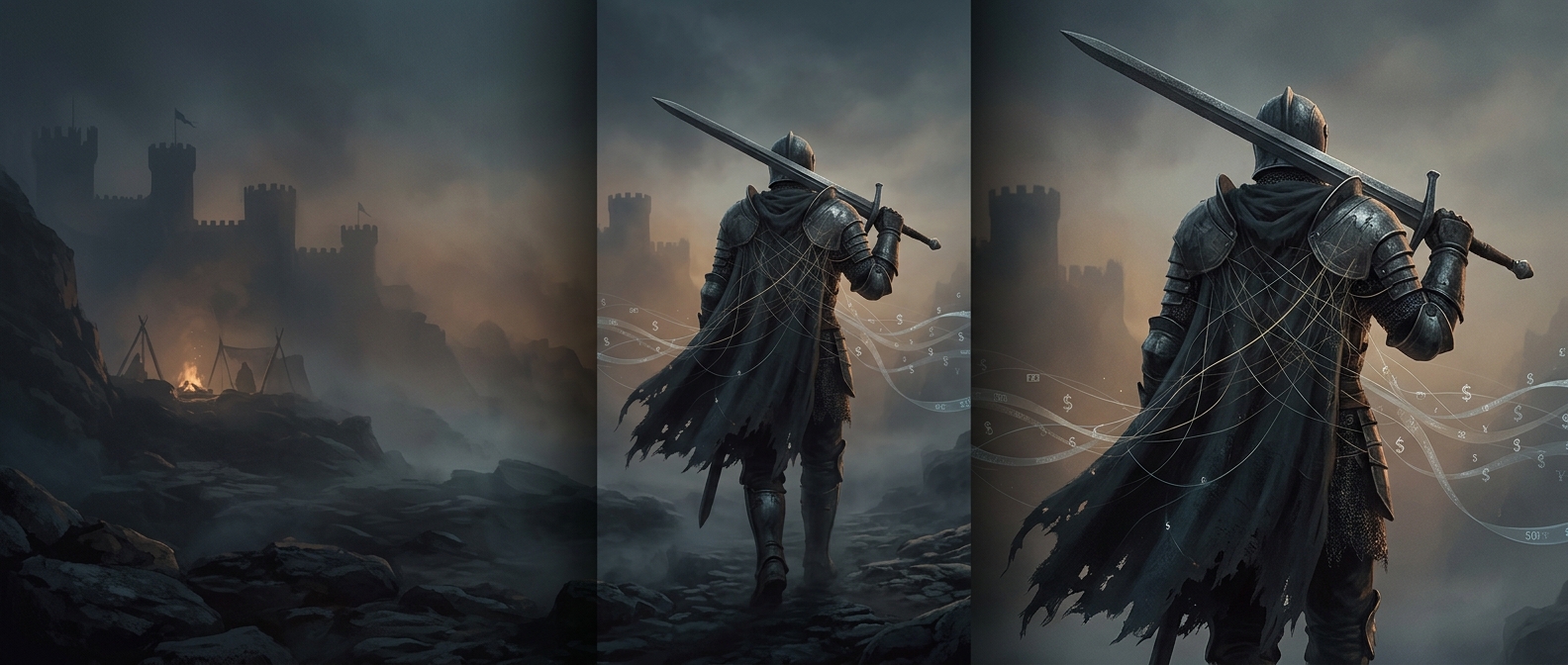
In Ivanhoe, Walter Scott used “free lances” for mercenary fighters who were not bound to a particular lord. The image captures the essential arrangement: a person offers a service to whoever will pay, without lasting loyalty to one employer. Over time, the expression shifted from hired combat to independent work.
What Changed—and What Stayed
A modern freelancer sells professional services without joining an employer permanently. The work might be writing, design, consulting, or another skill, but the underlying bargain resembles the older one: clients hire someone for a particular need, and the worker remains free to take other engagements.
That freedom changes the business relationship. Instead of one organization providing a continuing job, the freelancer must find and negotiate separate assignments. Clients gain access to expertise without making a permanent hire; the freelancer gains the ability to choose among clients and projects, but must manage the gaps and uncertainty between them.
The “Free” in Freelance
Here, “free” does not mean the work is unpaid or effortless. It points to independence from a single master. The term’s long afterlife is a reminder that work arrangements can outlast the tools and settings that first gave them names: the modern freelancer has kept the hired-for-a-job relationship, minus the lance.