Why a squirrel divides its food supply
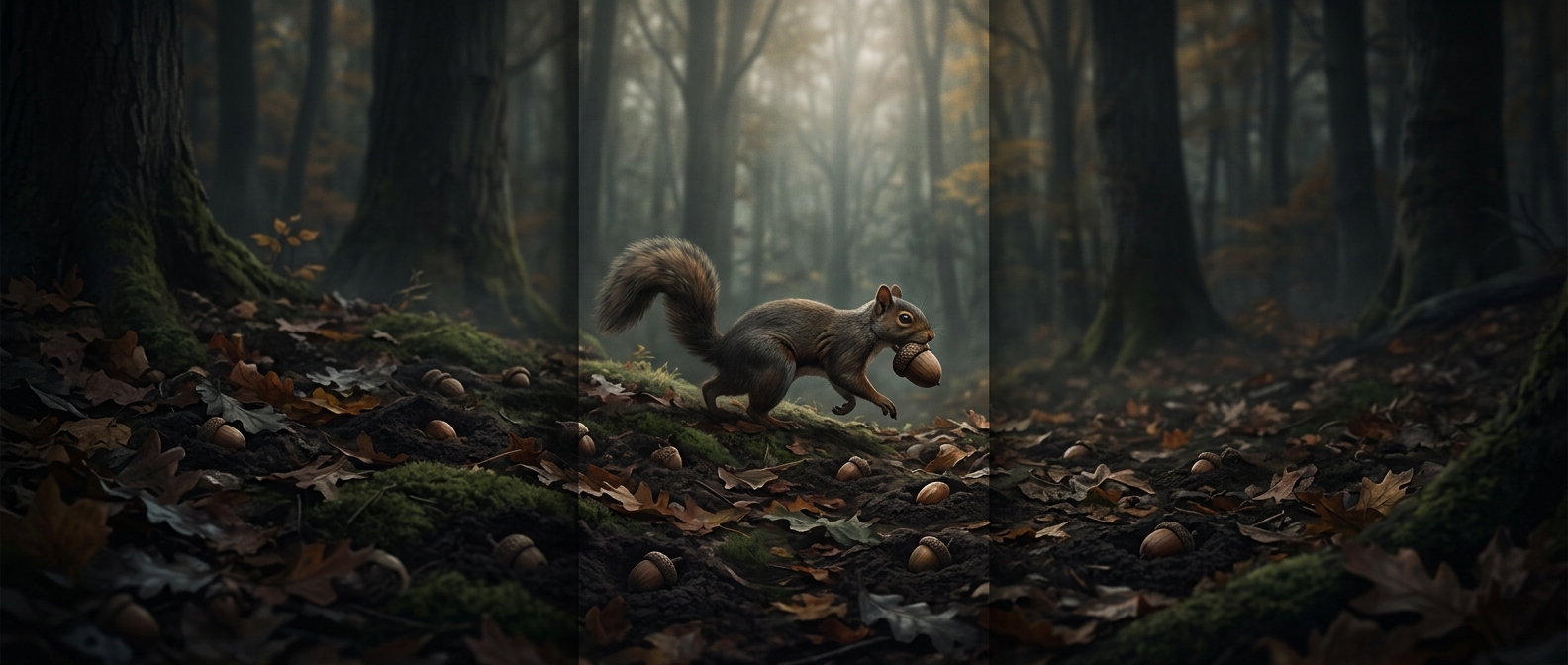
A squirrel that carries an acorn away from the tree is making a tradeoff. A single large store would be easy to revisit, but it would also give a rival—or a hungry squirrel—the chance to take the whole supply. Scattering food spreads that risk: finding one buried acorn does not reveal where the others are.
This strategy is called scatter-hoarding. Instead of keeping food in one central larder, an animal hides individual items in separate places. The acorn’s size makes each one valuable enough to move and bury, while spreading them out makes the collection harder for another animal to locate all at once.
Finding a cache later is not automatic
A squirrel must recover its food across a landscape full of similar-looking ground. It can use remembered locations and surrounding landmarks to narrow the search. But memory is imperfect, and other animals may move or uncover a cache in the meantime. The system works even when it is not flawless: a squirrel can recover some of its stores without finding every one.
That occasional miss has consequences beyond the squirrel. An acorn left underground may have a chance to sprout, so buried food can also help move oak seeds away from the parent tree. The forest’s future can depend on a squirrel’s small navigation error: one forgotten acorn is no longer dinner, but it may become a seedling.